
The unlikely Europeans – how the threat of Russia won over Eurosceptics
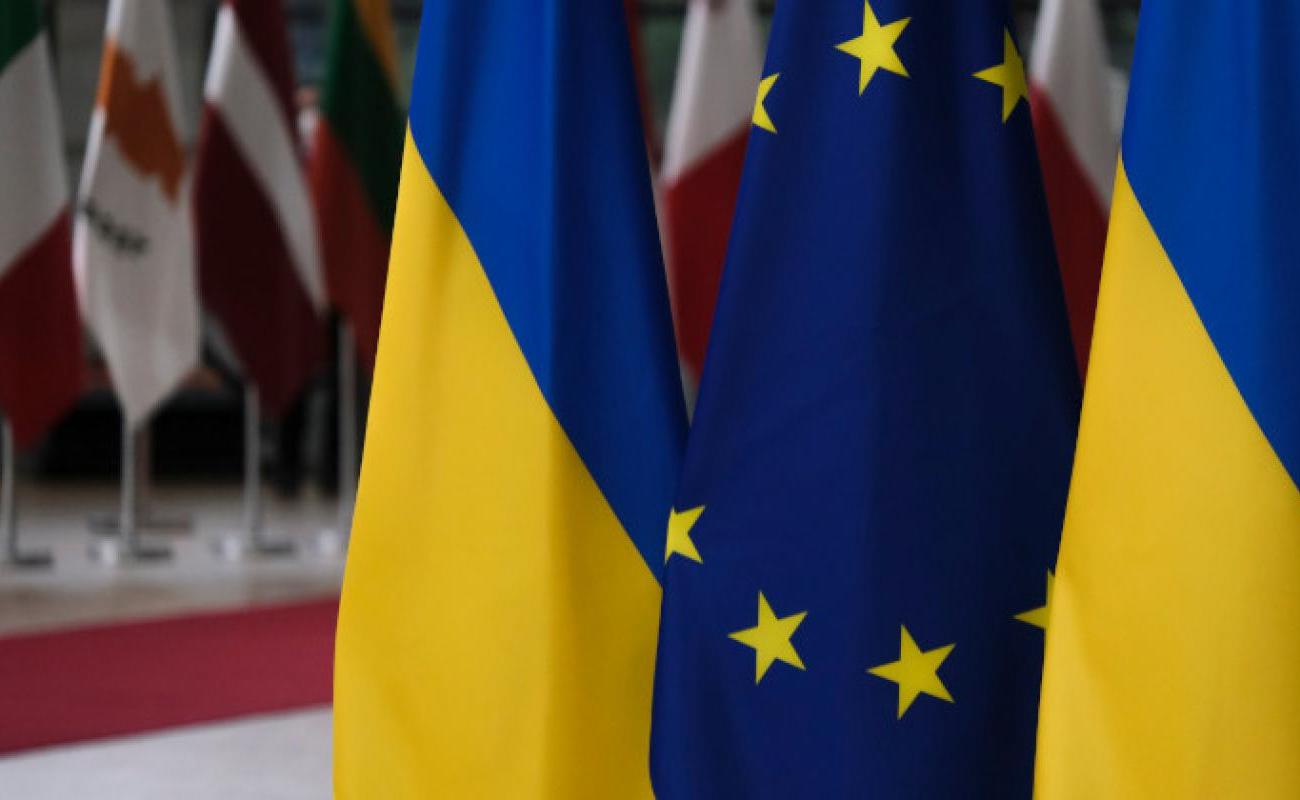
Did Russia’s full-scale invasion of Ukraine change people’s views about the EU? Using survey data collected in the immediate aftermath of the invasion, Julia Schulte-Cloos and Lenka Dražanová document a surprising shift in attitudes among those who were previously sceptical about the EU.
Russia’s full-scale invasion of Ukraine in 2022 was an upheaval for Europe. The EU and its member states appeared united. Right after the invasion, the EU coordinated an unprecedented package of sanctions, activated a mass protection directive for Ukrainian refugees and began discussing a common European army. But did ordinary citizens follow suit? And did those who had always been the most sceptical of the EU start to change their minds?
In a new study, we set out to answer these questions. Analysing survey data from 16 countries collected just five weeks after Russia’s 2022 invasion, we found challenges to a widely held assumption in the study of European politics: that strong national identities are inherently at odds with support for European integration.
Our research shows that an external security threat can lead even the most nationally minded Europeans to see value in the European project. The EU’s future may therefore depend less on persuading sceptics to abandon their national identities and more on demonstrating that European cooperation serves those identities in dangerous times.
Rallying around a supranational flag
For years, scholars of European integration have operated under the so-called “post-functionalist” framework. This argues that as the EU has expanded its reach into areas that touch on national sovereignty, such as migration, fiscal policy and foreign affairs, public opinion has become a constraint on further integration. In particular, citizens with strong, exclusive national identities tend to be the most resistant to integration, a pattern scholars have called the “constraining dissensus”, which acts as a structural brake on the European project.
On the other hand, when a country faces an external crisis, citizens tend to unite behind their leaders and institutions. This concept of “rallying around the flag” is well established in political science. Historically, military threats have been among the most powerful forces driving the emergence of the modern state by creating functional demands for collective defence.
But what happens when war returns to Europe? Russia’s full-scale invasion of Ukraine in 2022 provides a critical historical test for what happens when Europe faces an external military threat.
Post-functionalist theory would predict that exclusive nationalists – people who identify strongly with their nation and not with Europe – would remain firmly sceptical of the EU. In contrast, “bellicist” and social identity accounts suggest that external threats can shift how citizens perceive supranational entities such as the EU, leading them to view it less as an identity threat and more as a necessary collective protection.
To test how people in Europe felt about the EU, we used the Solidarity in Europe (SiE) survey data from 16 European countries collected just five weeks after Russia’s invasion. Crucially, the survey asked respondents whether they perceived Russia as a threat, as well as questions about European pride and support for an EU army. For our analysis, we used a causal forest algorithm. This machine learning method allowed us to go beyond average effects and identify which groups responded most strongly to the perceived threat.
The strongest shift came from exclusive nationalists
On average, our results show what one might expect. Europeans who perceived Russia as a threat expressed greater pride in being European and more support for a common European army than those who did not.
However, the more interesting finding lies in who the association was the strongest for. It was not citizens who already felt European, since they were already supportive of the EU and had limited room to move further. Rather, the strongest association between Russian threat perceptions and European pride was found among exclusive nationalists, that is, individuals who feel attached exclusively to their own country and do not identify as European.
This suggests that the external threat did not simply amplify existing pro-European sentiment. Instead, it appears to have triggered a cognitive reframing among those who would normally view the EU as a threat to national sovereignty, leading them to perceive it as a protector.
Importantly, this pattern was not limited to affective orientations such as pride. Exclusive nationalists who perceived Russia as a threat also expressed greater support for establishing a common European army. In this policy area, sovereignty concerns have traditionally made their support difficult, since it implies a transfer of core state powers to the European level. The fact that the shift extends to concrete policy preferences suggests that the attitudinal patterns were coupled with tangible demands for deeper integration.
To rule out that the Russian invasion simply triggered a generalised need for group belonging, we conducted a placebo test examining national pride. If the invasion merely activated an indiscriminate “rally around the group” response, we would expect exclusive nationalists also to exhibit particularly high levels of national pride when perceiving Russia as a threat.
We found no such pattern. While Russian threat perceptions did have a small positive effect on national pride overall, this effect was considerably weaker than for European pride and, importantly, showed no significant heterogeneity by national identity type. This points to the EU’s distinct function as a security provider that the nation-state alone cannot fulfil.
The effect was especially pronounced in Central and Eastern Europe, the region most directly exposed to the Russian threat and where exclusive national identities tend to be strongest. In these countries, the EU appears to function as what we describe as a “dual shelter”, referring to both a geopolitical buffer against military threats and an economic safety net, with each logic reinforcing the other. Citizens who would otherwise be unlikely to express pride in EU membership showed markedly higher levels of European pride when they perceived Russia as a danger.
What does this mean for the future of European integration?
These findings carry several implications for how we think about the EU’s political future. First, they suggest that the constraining dissensus is not a permanent condition. It is contingent on the type of issue at stake.
When integration is framed around cultural and regulatory questions, exclusive nationalists are likely to oppose. But when it is framed in terms of hard security, the same individuals can become supporters. In other words, external threats can, under certain conditions, override identity-based resistance to further European cooperation.
Second, our results highlight the importance of Central and Eastern Europe in the EU’s evolving identity politics. These are the member states where the gap between national and European identification is typically widest, and where we also found the rally effect was strongest. The Russian threat has made the EU’s security dimension most salient in precisely the region where it matters most.
Third, and more cautiously, rally effects are often temporary. Research on national-level rallying suggests that the boost in support tends to fade as the immediate shock dwindles.
Whether the shift we document in our analysis will persist depends on whether the EU can translate the initial rally into sustained and credible security provision or whether the threat perception itself endures. With the war in Ukraine continuing and European defence spending rising, the conditions for a more lasting shift may be more favourable than in past crises.