
1,769 pages of hypocrisy: How Belarus and Russia blame West for their own rights violations
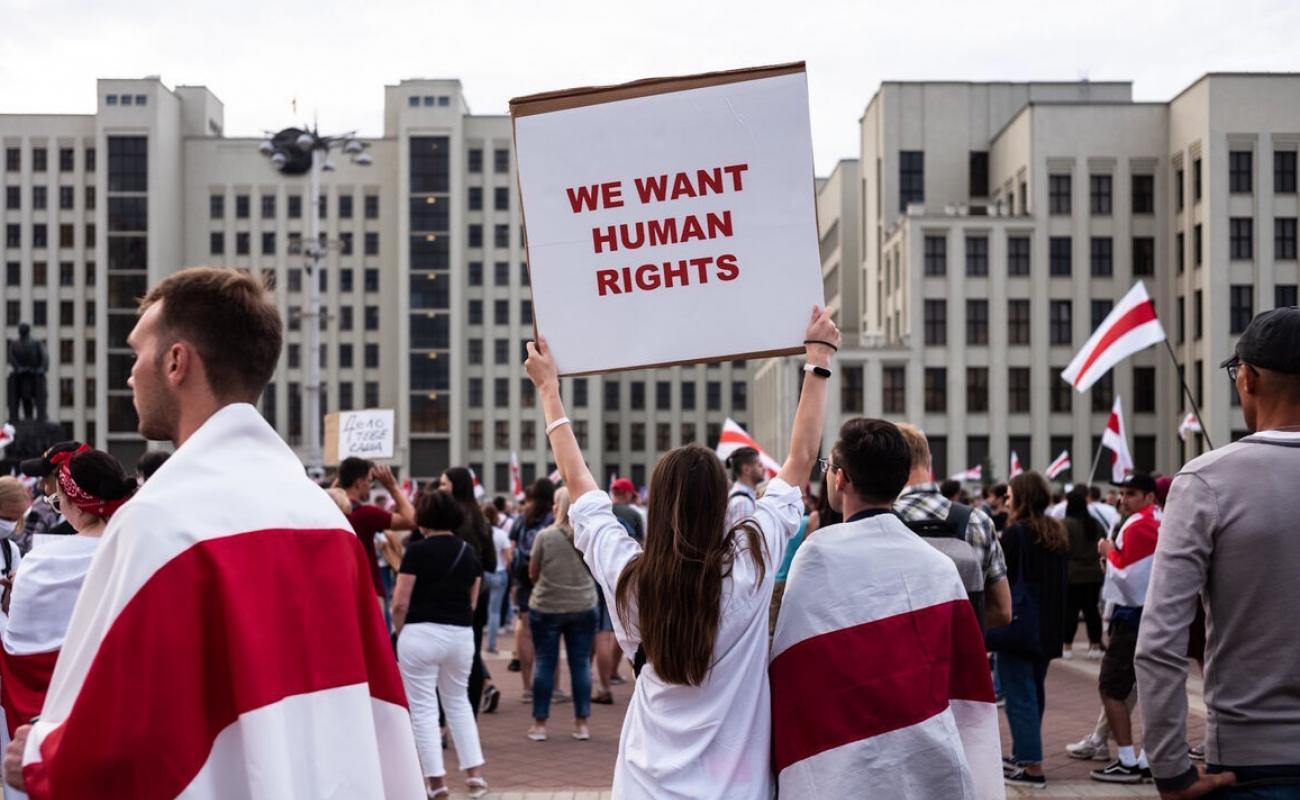
The Foreign Ministries of Belarus and Russia have released a joint report on the human rights situation in various countries. The first word that comes to mind after reading it is "hypocrisy." This extensive report, comprising nearly 1,800 pages, conveys one main idea: human rights violations occur everywhere except in Belarus and Russia.
It is the third report of its kind, following publications from 2024 and 2025. The document examines the human rights situation in 42 countries, as well as in the European Union and Kosovo. According to the authors, the report aims to highlight the human rights conditions in nations that portray themselves as models of democracy while criticizing other countries.
Censorship – only applied to others
Media freedom is a central theme of the report. The document asserts that Western countries, which present themselves as models of democracy, actually impose restrictions on journalists, shut down media outlets, and use criminal prosecution against members of the press.
One of the most notable examples comes from Germany. The report states: "One of the most high-profile cases of 2025 involves David Bendels, the editor-in-chief of the right-wing conservative online portal Deutschland-Kurier. He was sentenced to seven months of suspended prison time for posting a meme of then German Interior Minister Nancy Faeser on social media."
In France, the detention of journalists during protests and the use of force against press members have faced criticism. In Latvia, the criminal prosecution of journalists who collaborated with Russian state media is a notable example.
The concept of "media freedom" is nonexistent in Belarus. According to the Belarusian Association of Journalists, there are currently 21 media representatives imprisoned, and 42 Belarusian media projects have been classified as "extremist formations." Following the 2020 elections, at least 600 journalists were forced to leave the country. Many of these journalists continue to face criminal charges in their absence, along with property seizures, frozen bank accounts, and pressure on their relatives.
Journalists in Belarus are facing severe sentences. This year, Uladzimir Yanukevich and Andrei Pakalenka, the heads of the BAR24 news portal and former leaders of the independent newspaper Intex-press, were each sentenced to long prison terms of 14 and 12 years, respectively, on charges of treason. Additionally, journalist Pavel Dabravolski received a 9-year sentence in a maximum-security colony on the same charge.
You can protest, but not everyone can do so
The right to peaceful assembly is a central theme in the report. The introduction emphasizes that "the protection of freedom of expression and peaceful assembly" is a crucial aspect of the human rights system. However, there is a significant paradox: this right is being addressed by diplomats from countries where participating in a peaceful demonstration can lead to detention, criminal charges, and even prison sentences.
The report highlights cases from Germany, France, Great Britain, Moldova, and Ukraine as examples of violations of the right to assemble. In Berlin, the document notes that demonstrations supporting Palestine were banned, and police used force against participants. In France, there is criticism regarding the dispersal of protests and the application of special measures. Great Britain faces scrutiny for the mass detention of protest participants, while Moldova has received criticism for banning individual rallies.
Lastly, Ukraine is noted for imposing restrictions on freedom of assembly under martial law. The right to peaceful assembly is increasingly being subjected to unjustified restrictions, according to the report. Its authors claim that authorities are using bans and forceful methods to suppress protest activities.
The authors of the report do not mention that after 2020, Belarus became one of the countries in which the right to peaceful assembly was effectively eliminated. According to human rights activists, over 35,000 people were detained following the elections, most of whom were arrested for participating in peaceful protests. Holding rallies was effectively banned, and participation in them could result in administrative or criminal penalties. During the suppression of protests after the 2020 presidential election, the victims of violence included not only the participants in the demonstrations.
Political persecution – everyone but themselves
Political persecution is a key focus of the report. The authors contend that in many countries, criminal prosecution is often used as a means to suppress political opponents, journalists, and civil society activists. The document states, "The politicization of the judicial system and the use of criminal prosecution as a tool of pressure are becoming enduring trends.
Germany, France, Poland, Moldova, the Baltic states, and Ukraine are highlighted as examples. The section on Germany discusses a criminal case involving members of the climate movement Letzte Generation. In Moldova, it addresses the persecution of opposition members, while in the Baltic states, it mentions criminal cases against individuals accused of collaborating with Russian state structures. The authors conclude that "criminal law is increasingly being used to suppress political dissent."
This section highlights a stark contrast to the situation in Belarus. According to the Viasna Human Rights Center, since 2020, at least 9,914 individuals have faced criminal prosecution for political reasons, and at least 8,590 of them have been convicted, including those convicted in absentia.
As of the end of June 2026, there were 859 political prisoners still in prison. The number of former political prisoners had risen to 3,867. However, human rights activists point out that following a series of pardons, the number of people imprisoned for political reasons is gradually increasing again due to new criminal cases being filed.
I sympathize with other people's NGOs, but not for my own
A dedicated section of the report focuses on non-profit organizations. The authors highlight that in many countries, authorities impose restrictions on NGOs' activities through legislation, inspections, and control over funding. They argue that these measures "create a risk of arbitrary, discriminatory, and politically motivated decisions."
Examples include Georgia, where the law on foreign influence is criticized; Slovakia, where, according to the authors, state control over non-governmental organizations is increasing; and the United States and European Union countries, where NGOs, according to the report, face politically motivated checks and restrictions on funding.
It is important to note that the independent non-profit sector in Belarus has been nearly eradicated. From 2020 until the end of June 2026, at least 2,044 non-profit organizations—such as public associations, trade unions, foundations, and other non-governmental institutions—have been liquidated in the country. Among those affected are the organization "Protection of Birds of the Fatherland," which focused on bird conservation; the charitable association "Hope for Children," which provided support to socially vulnerable children; the Belarusian Public Association of Victims of Political Repressions from the 1920s to the 1980s; the "League of Midwives"; and many other organizations that assisted cancer patients, orphans, and victims of the Chernobyl disaster.
Foreign extremism vs. domestic terror
The authors argue that the struggle against extremism serves as a tool to exert pressure on rights and freedoms in Western countries. In the section focusing on the European Union, it is stated that "under the pretext of combating disinformation and extremist illegal content, as well as legal content that is said to promote radicalization, a large-scale purge of the information space is being conducted."
Restrictions on individual political movements and internet sites serve as key examples in this context. For instance, the section on Moldova highlights a ruling by a Chisinau court that labeled the black-yellow-white flag of the Russian Empire as "extremist." The authors of the report argue that such rulings represent an overly broad interpretation of the law concerning extremism.
In Belarus, legislation regarding extremism has become a primary tool for political repression in recent years. According to the Viasna human rights center, by the end of June 2026, the list of individuals deemed "involved in extremist activities" included 6,745 people, while the list of "extremist formations" comprised 373 organizations and initiatives. Human rights activists observe that the pace of designating organizations as "extremist formations" is continuing to accelerate. In the first half of 2026, 46 new entities were added to this list, compared to 41 during the same period the previous year. On average, the list of individuals "involved in extremist activities" is updated with nearly 100 new names each month.