
The Current Situation In Belarus: An Overview – Analysis
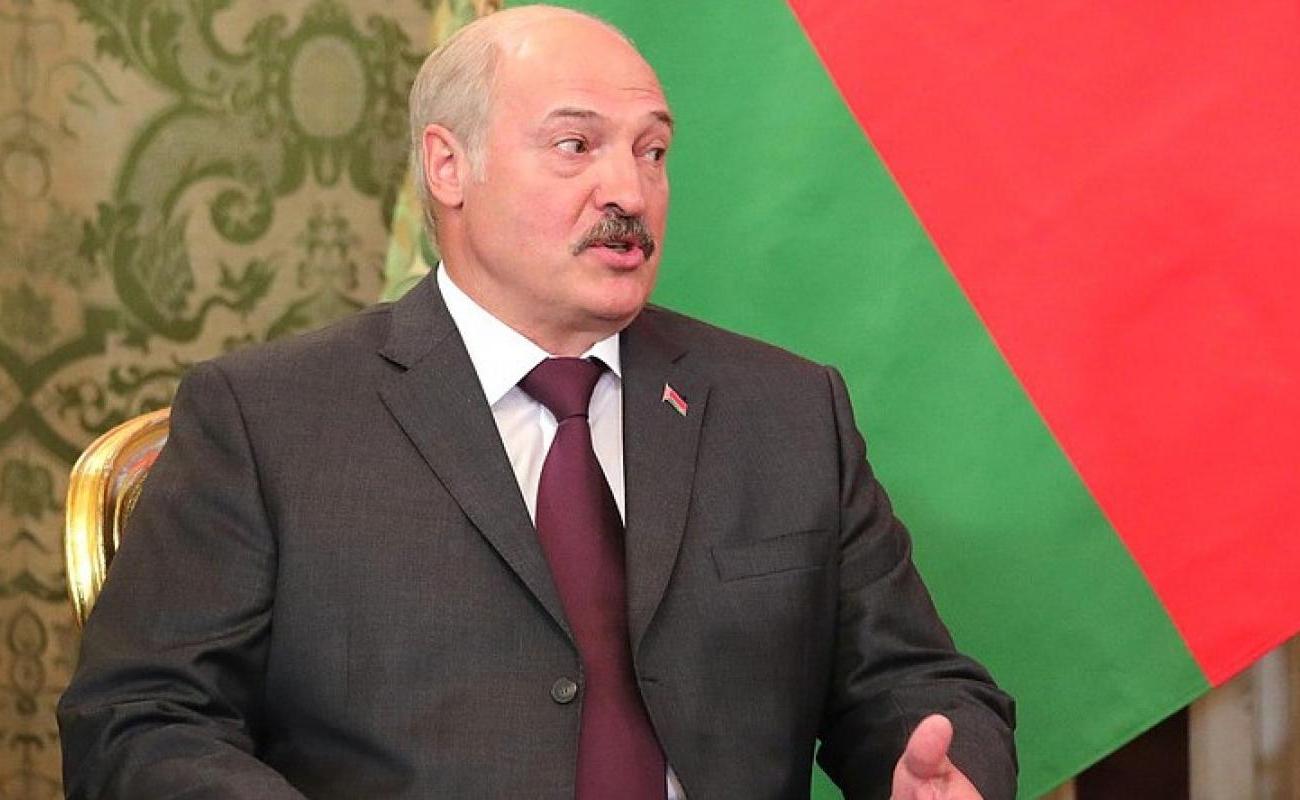
Belarus, located in eastern Europe, is a close ally of Russia. Belarus’s leader, Alexander Lukashenko, has served as president for more than 31 years. Belarus’s already substantial dependence on Russia increased further starting in 2020, when a government crackdown on political opposition and civil society that UN human rights monitors called “unprecedented” and “catastrophic” led to U.S. and European sanctions. Lukashenko’s government has provided support to Russia’s war against Ukraine, including by allowing Belarus to be used as a launchpad for the invasion in 2022. The Biden Administration condemned Belarus’s support for Russia’s war against Ukraine and joined the European Union (EU) in imposing further sanctions.
During the second Trump Administration, U.S. officials have engaged with Belarus as part of an effort to mediate an end to the Russia-Ukraine war. The Administration also has attributed the release of detained U.S. citizens and dozens of political prisoners to U.S. engagement and has lifted some sanctions on Belarus.
Members of the 119th Congress may assess aspects of U.S. policy toward Belarus, including the potential costs and benefits of Trump Administration engagement with Belarus, the role of Belarus sanctions in promoting U.S. policy goals, implications of Belarus’s alliance with Russia for U.S. and European security, and U.S. engagement with Belarus’s democratic movement abroad.
Political Background
Belarus, previously part of the Soviet Union, became independent after the Soviet Union’s dissolution in 1991. First elected president in 1994, Lukashenko established an authoritarian system of governance. Lukashenko was reelected to a seventh presidential term in January 2025, in an environment that observers generally considered nondemocratic. Per official results, Lukashenko received 87% of the vote with 86% turnout; four nominal competitors each received 2%-3% of the vote. The EU and other U.S. allies issued a joint statement condemning Belarus’s “sham presidential elections.” Belarus’s most recent parliamentary elections, to the lower chamber of the National Assembly, were held in 2024 with the participation of pro-government parties and candidates (elections to the upper chamber are indirect).
The 2020 government crackdown in Belarus was a response to the rise of the country’s largest opposition movement since independence. The movement arose out of protests against seemingly widespread electoral fraud in that year’s presidential election, in which opposition candidate Sviatlana Tsikhanouskaya mounted an unexpectedly strong campaign against Lukashenko after authorities barred and imprisoned other potential candidates, including Tsikhanouskaya’s husband Siarhei Tsikhanouski. The official pronouncement that Lukashenko won the 2020 election with 80% of the vote led to protests. The crackdown that followed led to larger protests that, at their height, attracted hundreds of thousands.
In neighboring Lithuania, Tsikhanouskaya formed a Coordination Council, “a collective representative body of the democratic part of Belarusian society,” and a United Transitional Cabinet, a self-declared interim government in exile. In 2023, a Belarusian court sentenced Tsikhanouskaya in absentia to 15 years in prison for allegedly “conspiring to overthrow the government.”
Since 2020, Belarusian authorities have further tightened restrictions against the exercise of human rights and freedoms. The ongoing government crackdown has led to more than 50,000 arrests or detentions; 8,000 convictions; and 4,370 political prisoners (including more than 1,150 still in prison as of January 2026), according to the Human Rights Center Viasna, a nongovernmental organization. Between 300,000 and 600,000 people have fled Belarus since 2020, according to estimates cited by UN human rights monitors.
Starting in July 2024, Belarusian authorities initiated a series of prisoner pardons. As of December 23, 2025, authorities had freed a total of 569 detained persons (including those who completed their prison sentences), according to Viasna. In June 2025, Tsikhanouski was released after five years in prison. Others released include opposition figures Viktar Babaryka, Mariya Kalesnikava, and Maksim Znak; Radio Free Europe/Radio Liberty journalist Ihar Losik; and human rights activist and Nobel Peace Prize laureate Ales Bialiatski. A few U.S. citizens and dozens of other foreign nationals also have been freed. About 190 of those pardoned were expelled from Belarus immediately upon release. At the same time, hundreds of other individuals have been newly imprisoned or sentenced to house arrest.
In 2022, constitutional amendments altered the status of a 1,200-member All-Belarusian People’s Assembly (composed of appointed delegates), elevating it to the “highest representative body of people’s power.” The amendments grant the assembly authority to appoint members of Belarus’s Constitutional Court, Supreme Court, and Central Election Commission, as well as to remove the president under certain conditions. The assembly selected Lukashenko as its chairperson.
Relations with Russia
Belarus and Russia are members of a supranational union state that the two governments established in 2000 to promote their countries’ integration. Belarus also is a member of a Russia-led security alliance, the Collective Security Treaty Organization; the Russia-led Eurasian Economic Union; and, since 2024, the Russia- and China-led Shanghai Cooperation Organization.
Following Belarus’s 2020 crackdown, the Russian government reportedly offered Belarus more than $1 billion in loans, and the two governments committed to deepening their integration within the union state framework. The U.S. Defense Intelligence Agency’s 2025 Worldwide Threat Assessment stated that Russia is “expanding its nuclear posture to Belarus [ … ].” Russia and Belarus share an air defense system and frequently hold joint military exercises.
Belarus has provided support for Russia’s war against Ukraine. In 2022, Russian troops who had remained in Belarus after concluding joint military exercises constituted part of Russia’s initial invading force. The Belarusian government permitted Russia to launch missile strikes and deploy bombers from Belarus. It has provided military equipment to Russia, hosted Russian forces, received children that Russian authorities removed from occupied Ukraine, and reportedly helped Russia evade sanctions.
Belarus’s already strong economic dependency on Russia has increased since 2022. Belarus relies heavily on subsidized natural gas and oil from Russia. In 2024, about two-thirds of Belarus’s trade was with Russia, up from about 50