
Russia’s imitation game
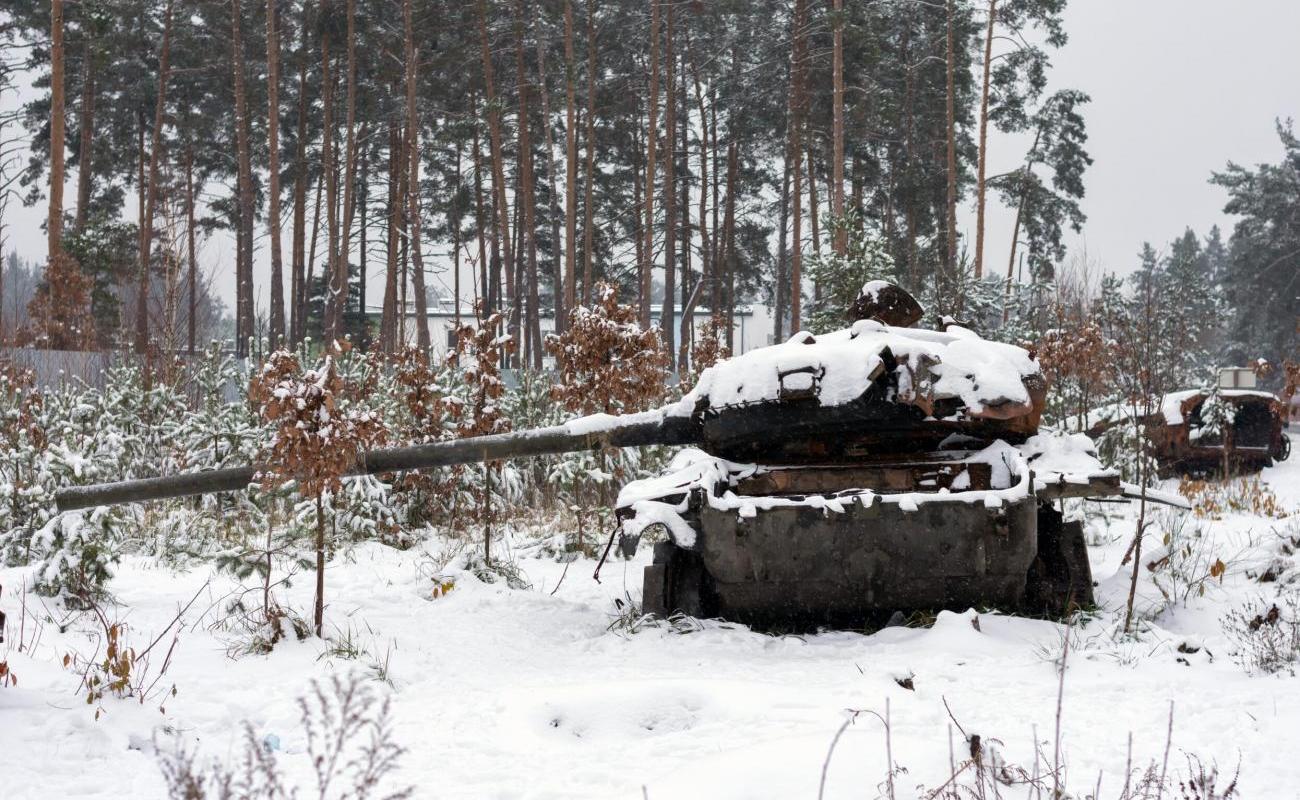
In our previous article, we examined the logic of decision-making in the Kremlin. To understand how the Russian leadership is likely to act in 2026, it is also necessary to consider the objective constraints that will shape its behaviour.
In addition to the subjective unwillingness to take the pot and lock in gains, there are objective conditions that limit Russia’s room for manoeuvre.
The first constraint is purely economic. Russia has shifted its economy onto a war footing. Whereas earlier this was a consequence of escalation decisions, the situation has now reversed: the war economy itself has become the driver of further escalation, as military procurement is virtually the only source sustaining economic activity. Entire sectors of the civilian economy have effectively collapsed due to shortages of capital and labour, compounded by gradual technological degradation. Returning the economy from a war footing to civilian needs would require massive investment — resources that no longer exist, as accumulated reserves have already been exhausted. Western investors will not rush back, having learned the lessons of large-scale nationalizations. China, meanwhile, will not assist but will instead obstruct such a transition: it is interested in the final degradation of Russia’s civilian economy, enabling Chinese goods to flood the Russian market in exchange for cheap resources.
The second constraint can be described as political. All senior Russian elites are beneficiaries of the war, and an end to hostilities would negatively affect their income and status. This applies not only to political positions, but also to big business. Following a traditional criminal logic, all hands are stained with blood, preventing defections. Putin’s inner circle therefore supports the war not only out of fear of saying “no”, but also because it derives direct benefits from it. Incidentally, this factor explains why expectations of a policy shift after Putin’s death are unfounded.
The third constraint is social. The Russian leadership needs something to present to the population as a victory. With state-controlled media and a repressive apparatus, Putin can “sell” almost anything as a success — but there must be at least something tangible. Having proclaimed as its ultimate goal nothing less than a revision of the 1989–1991 retreat from Central and Eastern Europe and the former Soviet republics, the Kremlin has failed to achieve a single strategic objective after four years of full-scale war. It is worth noting that the description of the goals of the “special military operation”, as the war is called in Russia’s political Newspeak, has changed dozens of times. A handful of completely destroyed small Ukrainian towns does not look like a goal worthy of the sacrifice of hundreds of thousands of Russian soldiers. This is why Russian propaganda is now attempting to elevate Pokrovsk or Kupiansk to the status of strategically decisive cities. In Russian political culture, the absence of victory is seen as a sign of a leader’s weakness or illegitimacy — a serious personal threat to Putin. Meanwhile, the roughly 20 per cent of the population that sociologists estimate to be active supporters of the war currently serve as a pillar of the regime but could also become a threat. These are active people, not passive escapists.
The fourth constraint is purely military, and it may prove the most decisive. A massive army — estimated at around 700,000 troops — is deployed on the Russian-Ukrainian front. This is not a compact professional force that can simply be returned to permanent bases. These are wartime soldiers who cannot simply be sent home. Mostly residents of economically depressed small towns in peripheral regions, many of them received significant income and social status for the first time in their lives. Upon returning home, they would immediately and permanently lose both. Trained primarily in violence, shaped by humiliation and resentment, they could tear the country apart — just as it happened in 1917.
Add to this the subjective factors discussed earlier, and one must conclude that Russia will continue the war for as long as it is able — and will stop only when it is no longer able to continue.
Putin is creating an imitation of negotiations, but he is not prepared for any concessions and continues to attack Ukrainian cities daily — an instrument of pressure, not a signal of readiness. He rejects the idea of a ceasefire, which is the starting point of any genuine negotiation. He systematically dismisses all peace proposals from the United States and Europe and puts forward maximalist demands. When he has nothing substantive to respond with, Putin invokes history from over a thousand years ago (the Moscow state is far younger) or fabricates incidents such as an alleged attack on his residence, intended to justify his intransigence. He believes that time is on his side, assuming that sooner or later strong democratic leaders in Europe will be replaced by weaker ones, or by leaders more inclined toward Euroscepticism and separate deals with the Kremlin.
From this perspective, war in Europe beyond Ukraine appears almost inevitable. Having burned through previously accumulated resources and entered the phase of inflationary war financing, the Kremlin has effectively purchased a one-way ticket. To avoid defeat, it must obtain trophies of a scale sufficient to cover the holes in its socio-economic system created by the war. No such trophies exist in Ukraine. That scale exists only in Europe.
The first phase of this broader multidomain war has, in effect, already begun in the form of sub-threshold operations — in the air, at sea, in cyberspace, in the information domain, as well as through acts of sabotage and intimidation. The success of these operations functions as an invitation to further escalation. Russian drones encountered little resistance, while threats against European politicians can significantly influence state decisions in Russia’s favour, as was recently the case in Belgium.
Escalation will proceed gradually, through a “salami-slicing” approach designed to deprive European societies and political leaders of the ability to mobilize. This “mafia–KGB” method lies at the core of Russia’s strategy. I am confident that readers from almost every European country remember recent examples of Russian interference — and in many places these examples are becoming increasingly frequent.
There is only one way to avoid war: to prevent it before it fully begins. Russia’s weak point is its economy. The weak point of the Russian economy is oil exports. Shut down oil exports through the Baltic Sea — carried out by outdated, unsafe tankers sailing under false flags and fake insurance, posing a threat to the ecology of Northern Europe — and Russia will be deprived of the capacity to create far larger problems for Europe. This is not the only pressure instrument available, but it is the most obvious and the most legally sound.
Valerii Pekar is a chairman of the board of the Decolonization NGO, the author of four books, an adjunct professor at the Kyiv-Mohyla Business School and Business School of the Ukrainian Catholic University, and a former member of the National Reform Council.