
Russia's Arctic gambit with North Korea and China
Sangsoo Lee is an associated fellow at the European Center for North Korea Studies at the University of Vienna and founder of Strategic Linkages (SL), based in Stockholm.
The Arctic, once defined by cautious cooperation through institutions like the Arctic Council, has shifted into a zone of intensifying strategic rivalry. Russia's invasion of Ukraine shattered this fragile framework, deepening mistrust and accelerating militarization in the High North.
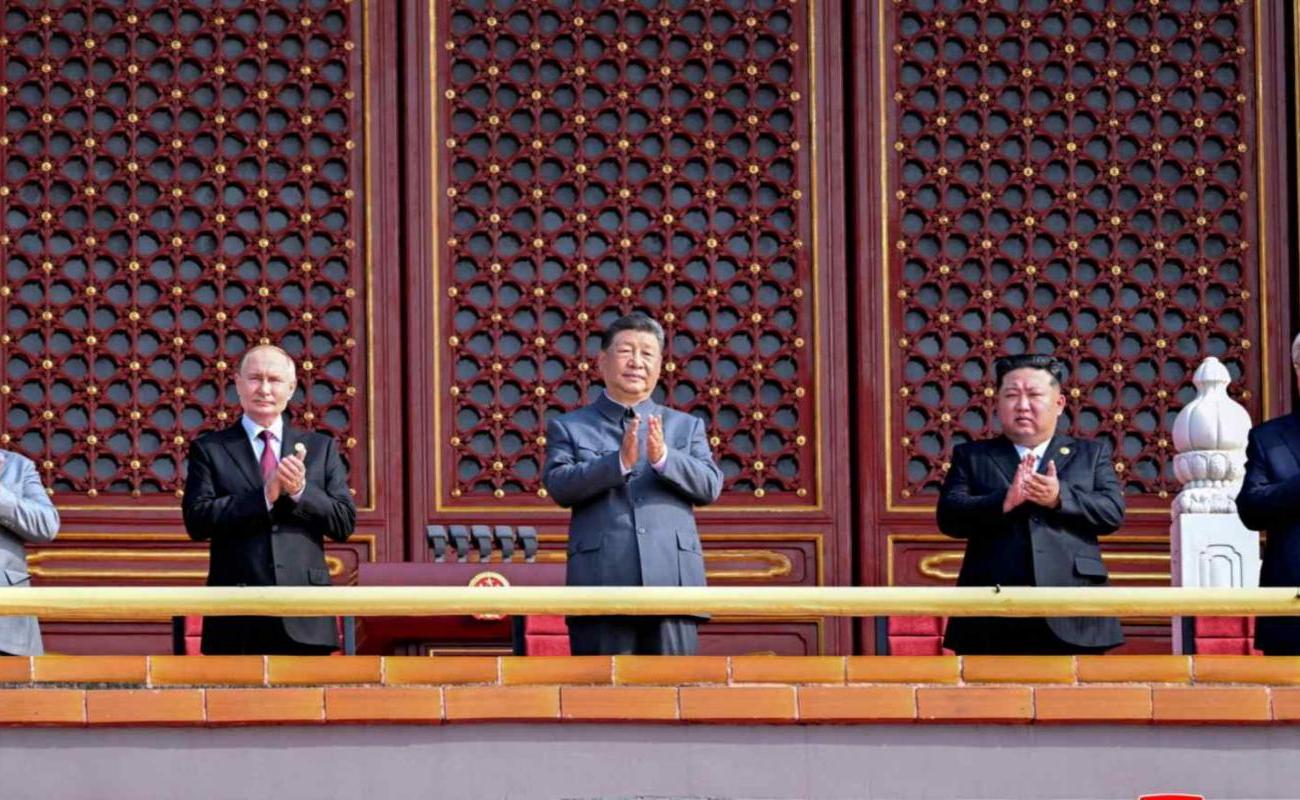
Isolated from Europe, Moscow is recasting the region as both a platform for power projection and a space for closer coordination with China and North Korea. By drawing its Asian partners into Arctic development, Russia is fostering a shared strategic agenda aimed at countering Western influence -- reshaping the geopolitical landscape of both the Arctic and Northeast Asia.
For decades, melting ice, the opening of the Northern Sea Route (NSR) -- the shortest passage between Europe and Asia -- growing interest in energy resources, and shared environmental concerns sustained a narrative of international cooperation under the Arctic Council. However, Russia's invasion of Ukraine has fundamentally altered this tendency and reshaped the geopolitics of the Arctic.
What was once a region managed through cautious cooperation and multilateral governance has become a space for strategic rivalries to sharpen and new alignments to emerge. At the center of this transformation is Moscow's effort to adapt its long-term northern policy -- outlined in the Arctic 2035 Strategy -- to a radically different international environment. Although the blueprint was more ambitious than its 2020 predecessor, the consequences of the war have magnified its strategic dimensions and pushed Russia toward deeper partnerships with non-Western states.
Recently, Moscow withheld its annual payments to the Arctic Council, while military activities in the High North have accelerated, from the expansion of air-defense systems to increased exercises along the northern coastline. Meanwhile, in the wake of the invasion, the seven other members of the Arctic Council suspended most forms of cooperation with Russia. This institutional freeze has removed the main forum that balanced competition with communication, deepening uncertainty about Arctic governance.
Cut off from Western capital and technology, Russia has intensified its pivot toward Asia. Moscow has emphasized energy and logistics partnerships that allow it to sustain economic flows despite sanctions. Central to this strategy is the NSR -- the shipping corridor running along Russia's Arctic coastline -- which the Kremlin aims to develop into a strategic artery connecting the Barents Sea to the Pacific.
For China, the NSR fits neatly into its broader vision for the Polar Silk Road, a northern extension of the Belt and Road Initiative designed to diversify maritime supply chains. Beijing has invested heavily in the Yamal and Arctic LNG-2 projects, providing capital and technical support that Russia can no longer easily obtain from Europe. These partnerships have also strengthened Sino-Russian energy interdependence, with liquefied natural gas flows increasing as Europe curtails imports. The Arctic, once marginal to Chinese strategic thinking, is becoming an important corridor that reduces reliance on southern choke points such as the Strait of Malacca.
North Korea is also expecting a role in Russia's eastern logistics ecosystem. Although Pyongyang is far from being a traditional Arctic stakeholder, it occupies a geographically valuable position as the closest Pacific outlet for Russia's Northeast. The port city of Rason serves as the main link between the two countries, and there are ongoing efforts to modernize the surrounding facilities to support larger volumes of trade and trans-shipment. Russia's labor shortages -- worsened by mobilization and demographic decline -- further increase the attractiveness of North Korean labor, a resource Moscow has long sought to access despite United Nations sanctions.
In recent years, analysts and local officials have suggested new logistical initiatives that could connect the Arctic more directly to the Asia-Pacific region. Among these is the development of the Rason-Sonbong Economic Zone, a project that has faced setbacks but continues to hold strategic value because of its location near the narrow junction where Russia, China and North Korea meet. If upgraded, the zone could facilitate the movement of goods between the NSR and East Asian markets, effectively linking the Arctic to the Pacific through North Korean ports.
Such cooperation remains constrained by sanctions and limited infrastructure, yet the underlying logic is compelling for all three governments: China brings capital and industrial capacity; Russia offers vast natural resources and control of the Arctic's primary shipping lane; North Korea provides coastal access and a workforce. This configuration does not amount to a formal alliance, but it creates a set of complementary incentives that deepen practical coordination. The gradual expansion of these networks is underscoring an emerging alignment that spans both the Arctic and Northeast Asia -- a geography that Russia increasingly views as a single strategic continuum.
For Western states, these developments present a complex challenge. The United States has increased its Arctic presence, investing in new icebreakers, infrastructure and military facilities in Alaska. Yet Washington's domestic priorities often shape its approach, leading to a push for allies to shoulder more responsibility in sustaining Arctic security and energy resilience. This shift has not always been smooth. Disputes over Greenland and lingering tensions over defense burden-sharing have strained relations between the United States and Denmark and Canada, and more broadly with its NATO allies. As a result, the Western response lacks a unified vision for managing competition in the region.
Beyond economics, the expanding Russia-China-North Korea coordination is now reshaping the region's security landscape. Recent Russian-Chinese joint naval patrols near Alaska underscore the strengthening operational coordination between the two militaries. Recent military cooperation with North Korea also gives Russia an opportunity to link its Far Eastern and Arctic strategies, potentially using North Korean ports such as Rason and Chongjin to expand its naval access to the Pacific. This emerging trilateral ecosystem blends economic alignment with military reach, posing a broader challenge to Western influence across the High North and Northeast Asia.
To respond effectively, Western governments will need more than deterrence and pressure. Restoring limited channels of communication within the Arctic Council -- even in a reduced format -- would help prevent misunderstandings and preserve a minimal governance framework. Deepening cooperation with non-Arctic but highly capable partners such as South Korea and Japan could also strengthen shipbuilding, icebreaking and maritime surveillance capacities that the West currently lacks. Above all, the U.S. and its allies must articulate a coherent long-term strategy that integrates security, energy and environmental considerations across the High North.