
Russian Propaganda on Wheels: How Russia Day is Marked from the Streets of Niš to the Halls of Banja Luka
While official Belgrade continues to try to convince Brussels that Serbia's European path is the only alternative, the reality on the ground often sends a completely different message.
This year's celebration of Russia Day once again showed how public space in the Balkans is used to demonstrate Russian "soft power."
From street performances in southern Serbia to solemn academies and political speeches in the region, pro-Russian structures sent synchronized messages of support for the Kremlin.
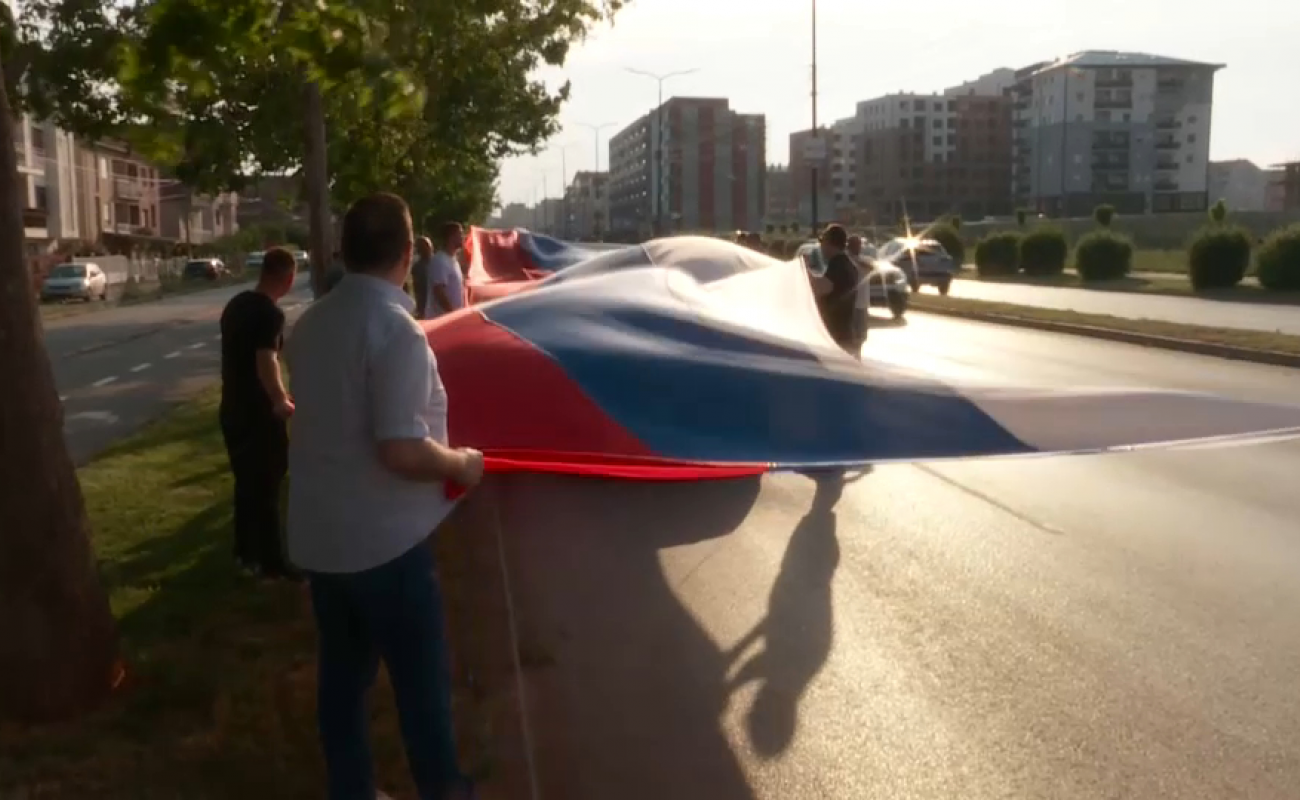
I set off under the giant Russian flag.
On the streets of Niš, on the eve of the holiday, a special street performance was organized.
Under the organization of the local Russian-Serbian Friendship Association "Bratstvo", and with the direct media and logistical support of the Russian House from Belgrade, a festive convoy of vehicles passed through the city.
However, what attracted the most attention was the choreography prepared for the pedestrian zones. As clearly seen in the videos and photos published on social networks and Telegram channels, a small group of activists unfurled a giant Russian tricolor flag on the streets of Niš.
At the same time, the celebration of this holiday also crossed the border, into Bosnia and Herzegovina. The Association of Russians in Republika Srpska “Romanovi” organized a solemn academy in Banja Luka dedicated to this Russian state holiday, showing the basis of the action of pro-Russian organizations in the region.
Political congratulations as institutional support
That these events are not just the result of isolated street activism is also evidenced by the open messages of support for Vladimir Putin's regime, which came from senior political figures in Belgrade and Banja Luka.
Aleksandar Vulin, chairman of the Movement of Socialists, sent official congratulations to the highest officials of the Russian Federation, emphasizing the importance of the traditional friendship and strategic relations between the Serbian and Russian people.
Vulin emphasized that Serbia and Russia are connected by "a common past, but also a common future," and that Russia has proven throughout history that patriotism and the preservation of sovereignty are the foundation of a strong state.
Milorad Dodik, leader of the SNSD, sent his warmest congratulations personally to the President of the Russian Federation, Vladimir Putin, and to all citizens of Russia, wishing them peace, stability and further progress of the country.
While citizens expect reforms and rapprochement with Western standards, such situations send the message of a country that continues to remain deeply caught up in the anti-Western narrative.