
Russian hawks urge Putin to end the war. The dictator isn't listening
Russia has reached a dead end in the war. Why Russia's so-called elites are speaking of the threat of defeat
In the fifth year of the war, even the Kremlin's staunchest supporters are beginning to speak openly about the possibility of a Russian defeat. They acknowledge that Moscow is unable to achieve its initial objectives in Ukraine and that the continuation of the war is only deepening the crisis.
At the same time, Ukrainian drones are dealing increasingly painful blows to the enemy's rear, disrupting logistics and sowing chaos in the occupied territories and within Russia. A struggle is intensifying among Russia's so-called elites between proponents of ending the war and those demanding further escalation, writes The Wall Street Journal. LIGA.net retells briefly.
Putin is being urged to end the war
Russia's inability to break the deadlock in Ukraine is becoming so obvious that voices within the so-called Russian elite are publicly calling for an end to the war. The question is whether Putin will acknowledge this reality and abandon his intentions to destroy Ukrainian statehood.
So far, there are no signs that, in the fifth year of the war, he is ready to abandon his initial goals. However, this could change if the course of the war shifts even further in Kyiv's favor.
Calls are coming not only from business elites and more liberal circles. Some of Russia’s most prominent hawks are also increasingly openly stating that Moscow cannot defeat Ukraine.
One of them is Oleg Tsaryov, a former Ukrainian MP who fled to Russia in 2014 and was one of Putin’s candidates to head the pro-Russian puppet regime the Kremlin planned to install in 2022. The following year, he was critically wounded in an assassination attempt attributed to Ukrainian intelligence.
In a post last month, Tsaryov warned that Russian propaganda had created a dangerous illusion of an inevitable victory over Ukraine: "Professionals at creating an alternative reality convinced not only the public but also themselves that the illusion they had concocted was real. Sooner or later, the worlds of illusion and reality would collide. Now, that is happening in the most painful way."
Another hardliner, historian and former Kremlin official Alexei Chadayev, says that continuing the current course of the war is "a path to full-scale defeat." He called for a pause so that Russia could regroup for the next round.
Vasily Kashin, Director of the Center for Comprehensive European and International Studies, published an article last month stating that Ukraine will inevitably remain anti-Russian and pro-Western, especially after hundreds of thousands of Ukrainians have been killed or maimed. He writes that the goal of installing a Moscow-friendly regime in Kyiv—one of Putin’s objectives – is no longer realistic.
Kashin writes that even an escalation, such as the assassination of the president Volodymyr Zelenskyy or other military-civilian leadership of Ukraine will bring to power only an "even more ambitious and radical" generation of Ukrainian leaders.
Kashin writes that it is not in Russia's interest to destroy its technological and human potential by "pursuing illusory goals" in Mala Tokmachka—a town in southern Ukraine that has become synonymous with Russia's inability to advance.
The FSB seeks escalation
Not everyone shares Kashin's views. The hawkish Russian figure Sergei Karaganov has repeatedly threatened the West with nuclear war if Ukraine does not surrender.
A more pragmatic approach, acknowledging the limits of Russian military power, is supported within certain parts of the Kremlin. In particular, it is backed by Sergei Kiriyenko, Putin’s deputy chief of staff, the Foreign Intelligence Service, and the economic bloc, which seeks a return to normalcy.
The push for escalation against the Baltic states and other regions is backed by the increasingly powerful Second Service of the FSB. It is also supported by a group of war propagandists and military figures who seek a historic break with the West—a move that would help transform Russia into an Orthodox hybrid of Iranian theocracy and North Korean totalitarianism.
"Five years into the conflict, some realize that another year or two of war will not significantly improve Russia's negotiating position. It is clear to them that it is time to bring it to an end. Discussion of this issue among the elites is beginning to normalize – albeit with all the necessary caveats regarding loyalty. But does Putin realize this? There is no indication that he has changed his mind," says Alexander Gabuev, Director of the Carnegie Russia Eurasia Center.
Ukraine is sowing chaos in the Russian rear
"The nature of the militarized Russian state makes it unlikely that Putin will heed voices of reason. War is the regime's *modus vivendi*. It is like riding a bicycle: if they stop, they fall," says the former Ukrainian Foreign Minister Pavlo Klimkin.
Russian officials state that they are ready to consider ending the war if the US compels Ukraine to adhere to the so-called "Anchorage agreements" – an accord allegedly reached by Putin and Donald Trump in Alaska in August 2025, which entailed Ukraine surrendering the remaining fortified parts of the Donbas. Kyiv refused, and Russian forces have since made little progress in the region.
To force Ukrainians to surrender the Donbas, Putin intensified missile strikes on Kyiv and other Ukrainian cities. On Monday evening, the shelling claimed 22 lives and wounded over 100 civilians, marking one of the deadliest attacks of the entire war. At a meeting with security officials a few hours later, Putin stated that Ukraine would have to experience a "new quality of war."
At the same time, Ukraine is striking back; in recent days, medium-range drones have paralyzed Russian logistics in occupied territories – a significant new development in the war. Often utilizing AI, these drones have attacked fuel tankers and military convoys on roads connecting Russia to Crimea and to bases along the front line. Fuel rationing has been introduced in the occupied Luhansk and Donetsk regions, while supplies have run out in Crimea.
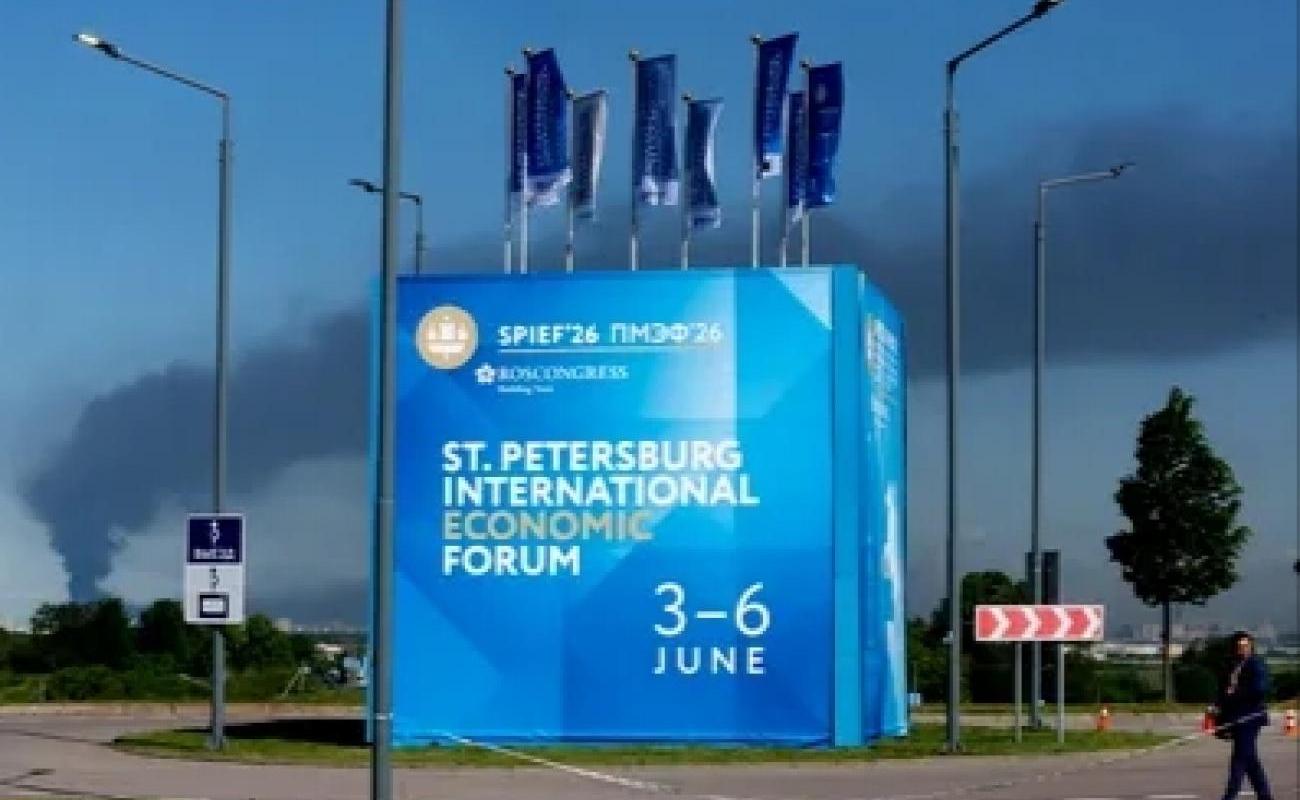
Russian military commentators are warning of an imminent Ukrainian offensive. In recent weeks, Kyiv has achieved increasing success with long-range strikes across European Russia, including an attack on an oil terminal in St. Petersburg on Wednesday – just as the annual economic forum was opening in Putin's hometown.
German Deputy Defense Minister Nils Schmid stated that Kyiv's drone campaign "demonstrates the potential for chaos that Ukrainians can bring to Russia, but it may take time for this to spread to society and the decision-making process in Moscow."
Meanwhile, Russian hawks and security forces are ensuring that calls for pragmatism do not spread too loudly. Last month, the Moskovsky Komsomolets newspaper removed an article that – without referencing Ukraine – discussed how defeats in past wars, such as the Crimean War (1853–1856) and the war against Japan (1904–1905), ultimately brought greater freedom and prosperity to Russians.
On Monday, the Telegram account of retired General Andrei Gurulyov, a member of the Russian parliament, published a scathing treatise on the war's stalemate and the baseless optimism of Russian commanders wearing "rose-colored glasses."
A few hours later, Gurulyov claimed that his Telegram account had been hacked. This met with skepticism from Russian commentators, who speculated that he had been forced to censor an inconvenient truth.