
Grain Awaits Transport to the Coast: Exporters Reroute Logistics Due to Shelling of Seaports
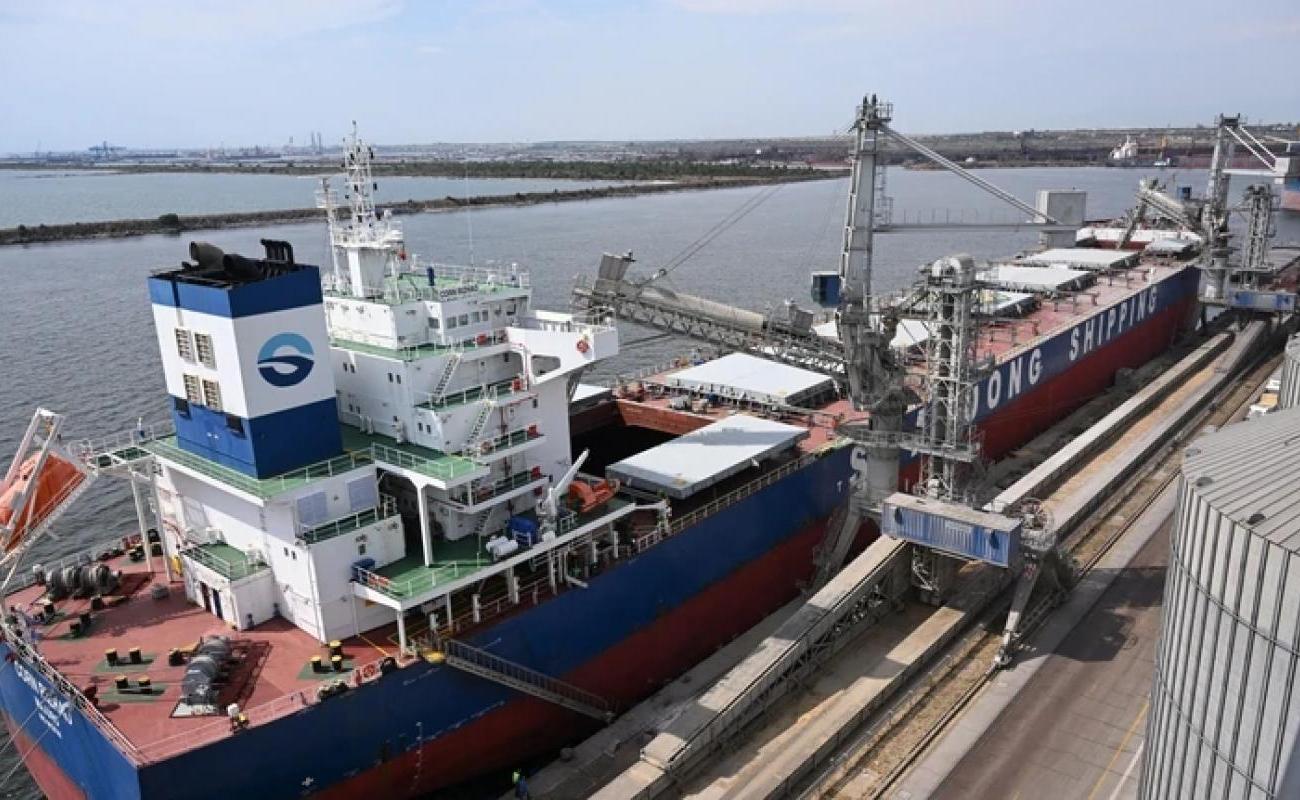
Russia is intensifying its attacks on Ukrainian ports and on vessels calling at those ports for loading and unloading operations. This has already led to lower grain purchase prices and forced traders to restructure the export logistics for this year's harvest. What alternatives are available?
In the first two weeks of July alone, Russian forces launched 23 attacks on port infrastructure and carried out 17 strikes on civilian vessels. Eleven people were killed and another seven were injured.
According to the Ukrainian Sea Ports Authority, since the beginning of Russia's full-scale invasion, more than 1,000 port infrastructure facilities have been damaged or partially destroyed, 221 civilian vessels have been damaged, and 283 civilians have been injured.
The number of deadly attacks continues to rise. Ten people, including four Indian nationals, were killed in a July 19 attack on a Guinea-Bissau-flagged grain carrier near Odesa. India has strongly condemned the Russian strike.
The attacks on commercial vessels have prompted some shipowners to refrain from calling at Ukrainian ports, while others have revised charter agreements or cancelled bookings.
"Shipowners are increasingly refusing to call at Ukrainian ports following the escalation of Russian attacks on vessels in the Black Sea and on port infrastructure in the Odesa region," the agricultural research company ASAP Agri said.
Insurance companies have temporarily suspended the issuance of new insurance policies for vessels and cargo bound for Ukrainian ports. They are currently reassessing insurance premiums to reflect the heightened level of risk.
All of this is expected to have significant consequences, given that up to 90% of Ukraine's grain exports are transported by sea. The market changes are primarily affecting grain exports.
According to Atria Brokers, most traders have suspended grain purchases while reassessing their exposure to risk. Some have already lowered purchase prices for grain from the new harvest.
"Following the latest attacks, shipowners have begun refusing en masse to call at the ports of Greater Odesa. The market is currently in a state of stagnation and cautious waiting. Participants are effectively treading carefully: everyone is calculating possible scenarios, but no one is rushing into long-term decisions," said Dmytro Kazanin, Director and Owner of the logistics company TEUS.
This is not the first time shipowners have suspended calls at Ukraine's deep-water ports amid the increasing frequency of attacks on port infrastructure and the growing number of commercial vessels being damaged. However, similar disruptions had little impact on the market at the beginning of 2026, when ports continued operating, vessels continued calling at Ukrainian ports, and there was no shortage of merchant shipping capacity.
The situation is now different due to the further intensification of attacks on vessels and the resulting casualties, according to industry experts.
Redirecting Cargo to the Danube
Kazanin notes that exporters and importers who have already chartered vessels with a draft exceeding seven metres now have significantly fewer options. They must seek shipowners willing to operate under the new conditions and offer additional risk premiums for access to Ukraine's deep-water ports.
"For vessels with a draft of up to seven metres, the Danube ports remain an alternative. However, this logistics route can be around USD 20–30 more expensive per tonne compared with transportation through the ports of Greater Odesa. That is why the market is actively calculating alternative routes, but is not yet rushing to use them," said the owner of TEUS.
"The response from shipowners is predictable. Some have already decided not to call at the ports of Odesa and are opting for the Danube instead. Others have refused to call at any Ukrainian port," said Kateryna Kononenko, Operations Manager at Avalon Shipping.
However, even the Danube cannot fully resolve the situation.
"One of the biggest problems is the Port State Control (PSC) inspection in Tulcea before a vessel departs. Another issue is the Bystre Canal. The permitted draft there is barely sufficient even for a vessel in ballast. The main bottleneck is the stretch between Izmail and Mile 44, where the maximum allowable draft is currently around 6.7 metres. As water levels continue to fall during the summer, loading a vessel to a seven-metre draft is currently impossible," Kononenko explained.
According to her, the ports of Reni and Orlivka remain alternative options for the time being, "but they come with their own logistical challenges."
"On the Danube, the permitted draft at Bystre is 5.5 metres, while near Izmail it is 6.7 metres. We are no longer loading vessels. This is a seasonal drop in water levels. As shipping agents, we are already receiving more inquiries, and imports that would normally be routed through Odesa are being redirected to the Danube. However, there are additional costs related to customs declarations, which the Romanian authorities have begun requiring. Even shipowners operating older fleets are cautious about undergoing inspections in Tulcea," Kononenko said.
Kazanin notes that the route through the Romanian port of Constanța, which became one of the key gateways for Ukrainian cargo in 2022–2023, also has its limitations. Romania is preparing to handle its own harvest this year, which is expected to exceed last year's production. This will increase pressure on port, rail, and storage infrastructure, as well as potentially drive up transshipment and domestic logistics costs.
"For the Danube or Romanian route to become economically viable for grain exports, the FOB price would need to rise to at least around USD 300 per tonne. The other option would be for farmers to reduce the farm-gate selling price by USD 30–40 per tonne to offset the additional logistics costs. It is clear that farmers are not prepared to accept such a reduction at this stage," Kazanin said.
Atria notes that offers for Romanian wheat for August delivery have risen to USD 247 per tonne within a week, up from USD 228–229 per tonne FOB Constanța (a price that includes the cost of the goods, delivery, and loading onto a vessel at the Port of Constanța). Some Romanian sellers are delaying sales in anticipation of further price increases.
According to brokers, if disruptions to grain exports from Ukraine and Russia continue, Romanian and Bulgarian grain could become an alternative source for buyers in the Black Sea region.
Ukraine has already lost around one-third of its grain export capacity through its key Black Sea ports as a result of intensified Russian attacks. Before the escalation, the ports of Odesa handled approximately six million tonnes of cargo per month; today, that figure has fallen to around four million tonnes.
Taking the Rail Route
Ukrainian farmers have another alternative. At the beginning of the full-scale war, there was an urgent need to increase grain shipments across Ukraine's western border to at least five million tonnes per month, while existing terminals were capable of handling only one million tonnes.
Since then, the situation has changed considerably. Private businesses have built around two dozen logistics hubs. These facilities are not limited to grain transshipment—they also include infrastructure for containerized cargo, petroleum products, and other commodities.
Among the major projects are the Mostyska Grain Terminal on the Polish border, the Vadul-Siret Terminal on the Romanian border, the Chernotysiv Multimodal Terminal on the borders with Hungary and Romania, as well as several other logistics developments.
Speaking at the Grain Ukraine 2026 international conference, held before Russia intensified its attacks on Ukraine's seaports, Bartosz Pechkowski, Founder and CEO of the Polish company Frontier Logistics, advised Ukrainian agricultural holdings to "prepare a Plan B."
"If Ukraine's ports are closed or the cost of shipping through the Black Sea becomes uncompetitive, Polish ports will be able to handle between four and six million tonnes of Ukrainian grain and other agricultural products," Pechkowski said.
Pechkowski noted that export logistics capacity across the Polish–Ukrainian border has expanded significantly since the beginning of 2022. At that time, nearly four million tonnes of Ukrainian grain were transported across the border. Today, the border's total physical capacity for all types of cargo has increased to 10–11 million tonnes.
Three new border crossing points for trucks have been opened. Rail border crossings have also been upgraded, and nearly 40 transshipment terminals have been built to transfer cargo from Ukraine's broad-gauge railway wagons to the European standard gauge. Bulk grain handling capacity at Polish ports, which stood at eight million tonnes in 2022, has now increased to 14 million tonnes.
In 2022, Ukrainian companies used Polish ports to ship cargo to overseas markets, while transit to other European Union countries was carried out through Polish territory.
According to the Elevatorist website, part of Ukraine's grain export flows is already being redirected to the country's western border. In particular, the Chornotysiv Terminal has already secured bookings for the 2026/27 marketing year harvest. However, shipments are being affected by a decline in grain prices of €15–20 per tonne.
"The key question for the market now is whether shipowners will be willing to continue calling at the ports of Greater Odesa, taking into account the new risks, insurance conditions, and security premiums. The answer to this question will determine not only the geography of exports—whether through Black Sea ports, Danube ports, or western border crossings—but also the purchase prices that Ukrainian farmers will receive in the coming weeks," said Dmytro Kazanin.
Market participants do not expect a complete halt to exports. Instead, they anticipate further logistical complications. While cargo owners are prepared to use more expensive alternative routes, they will continue to closely monitor developments at Ukraine's seaports and the willingness of shipowners to resume operations there.