
Russia Recruits Central Asian Prisoners for War in Ukraine - Human Rights Activists
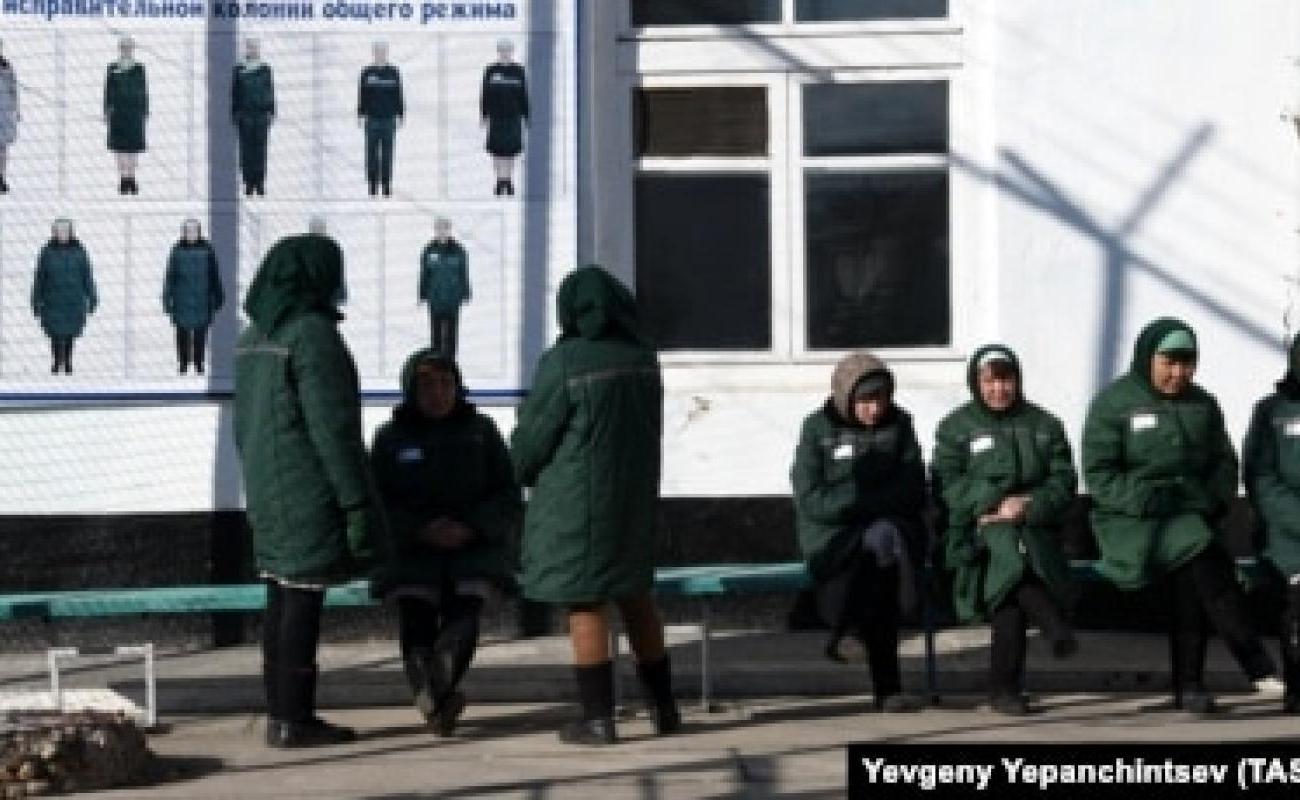
Migrants from Central Asian countries who sought work in Russia and are being held in Russian prisons are being offered to go to war in Ukraine in exchange for their release, human rights activists report. The Ezgulik Society published an appeal from the relatives of dozens of Uzbek women serving sentences in Russia.
Radio Free Europe/Radio Liberty's regional service, Azattyk Asia, which follows events in Central Asia, provides details.
"Many of our girls are being pressured to be sent to war in Ukraine. They are told: 'You will go there as nurses,'" says Uzbek citizen Umida (name changed at her request) of her compatriots in Russian prisons.
Her son is serving a sentence in Russia as a convicted drug dealer. Over the years of fighting for her rights, Umida has met many Uzbeks whose relatives are also in Russian prisons. Among them are the parents of girls who are in prison. They claim that the pressure on their daughters has increased recently: if after the start of the full-scale invasion of Ukraine they were indirectly involved in the war – they were forced to sew sweatshirts and mattresses for soldiers – now they are persistently offered to go to the war zone as auxiliary personnel. As nurses, laundresses, cooks.
“They were not given food for 10 days so that they ‘break down’”
“The prisoners were not given food for 10 days so that they ‘break down’ and agreed to go. The parents said that some girls, fearing being sent to war, tried to commit suicide,” says Umida.
The families of the prisoners are afraid to talk to journalists because they faced pressure in Uzbekistan after trying to draw the attention of the authorities to the problem, Umida explains.
"They are under strong pressure from local authorities and law enforcement agencies. They turned to various authorities for help – first to the khokims (leaders – ed.) of their regions, then they went to Tashkent, tried to reach the Prosecutor General's Office, the Ombudsman, the Senate [parliament]. But many were then detained for several days and were given notices that they would not give interviews or talk about their situation. That is why they are so intimidated," the interlocutor notes.
Russia is involving not only male prisoners in the war against Ukraine – there has been enough information about this in the media – but also women from among migrants who came to Russia in search of work and ended up in prisons, says Abdurakhmon Tashanov, head of the Tashkent-based human rights association “Ezgulik”. His organization has received more than a dozen complaints from relatives of women of Uzbek origin who have been sentenced in Russia.
“Previously, our society received reports only about the recruitment of men from Uzbekistan. Now we are receiving complaints that Uzbek women in Russian prisons are increasingly being recruited to participate in the war against Ukraine. These are mainly women who worked as couriers or did other menial jobs. According to the information we have received, most of them are serving sentences for no reason. They were given drugs,” says the human rights activist.
According to Tashanov, since the beginning of the war in Ukraine, he has been receiving an increasing number of calls from people talking about drugs being given to their relatives who have gone to work in Russia. Those detained with prohibited substances are criminally liable under Article 228-4 (“Illegal acquisition, storage, transportation, production, processing of narcotic drugs, psychotropic substances or their analogues…”). After being convicted, the migrants are forced – through persuasion and threats – to sign contracts with the Ministry of Defense and go to war, Tashanov notes.
Tashanov criticizes the Uzbek government for its response to reports of conscription and believes that Tashkent is not taking adequate measures. He notes that the Ministry of Foreign Affairs has a special working group on the issue of conscription of Uzbek citizens for the war in Ukraine, but the results of its work are not publicly available.
“We raised this issue with the authorities. I was told by the Ministry of Foreign Affairs that they travel to prisons twice a month. The press secretary of the Ministry told me: ‘In many cases, people are guilty. They are chasing easy money. But we help those who are under pressure in the colonies.’ The Uzbek authorities see this problem, but they probably lack the political will to solve it. Because we don’t see any practical measures from our authorities,” says Abdurakhmon Tashanov. Human rights activist Tashanov doesn’t know how successful the attempts to send Central Asian women who are behind bars to the front lines have been. So far, Tashanov has only received appeals from relatives of prisoners raising the alarm.
“Throwing women into the meat grinder.” What is known about the recruitment of prisoners?
Human rights activists emphasize that migrant women, especially those behind bars, are a socially and legally vulnerable group, at risk of recruitment through deception and pressure.
Reports that Russia is sending women from prison to war have been coming in since late 2022. Despite the fact that Moscow carried out a “partial mobilization” and launched a recruitment campaign, promising high payments to contract soldiers, the Russian army faced a shortage of human resources due to heavy losses during the “meat wave attack”. Human rights groups reported that about a thousand women were transferred from colonies to the front, and directly to the front. Some of them died, some returned home after being pardoned.
Telegram channels wrote about 37-year-old Elena Pimonenko, who signed a contract with the Russian Ministry of Defense while in prison. The woman was repeatedly convicted - for theft, robbery and threats to kill. During the war, Pimonenko was a "shooter-medic" in a Russian assault platoon. Her death became known in August 2024: the circumstances of her death are unclear, according to reports, she died in the location of her unit, and not on the front line. In the same 2024, Olga Romanova, executive director of the "Rus Sidyashaya" Foundation for assistance to convicts and their families, stated that the transfer of women from prison to the front had stopped. She suggested that the experiment with sending women to the combat zone, the purpose of which was declared to be "increasing the stability of morale and discipline" among the participants in the invasion, was apparently considered unsuccessful.
However, the Armed Forces of Ukraine noted that the Russian military and its affiliated private military units continue to recruit female prisoners. In August 2025, the Ukrainian state project "I want to live" released a drone video showing armed women in camouflage uniforms in a combat zone. The publication was accompanied by a photocopy of a letter sent to the Russian Deputy Minister of Defense by the Moscow government, which stated that officials had received appeals from military commanders "with a proposal to recruit female citizens from among those under investigation, accused and those serving sentences in the prison system of the Federal Service for the Prevention of Torture and Other Cruel, Inhuman or Degrading Treatment or Punishment of the Russian Federation". In the document, the authenticity of which the editors cannot confirm, it is also claimed that representatives of military units selected female candidates and "trained 23 female specialists".
"Due to critical losses, the Russian command is even throwing women into the meat grinder, probably recruited from the colonies," Ukrainian military Telegram channels wrote.
However, there were no earlier reports of Central Asian women being sent to war from Russian colonies. Valentina Čupik, head of the non-profit organization Tong Zakoni ("Morning of the World"), which helps migrants, says that the recruitment of imprisoned migrant women from Central Asia to fight in the war against Ukraine is a new phenomenon.
"There were cases of recruitment of male migrants in Russian prisons in 2022-2023. There were simply many of them. But I have no cases of recruitment of female migrants. There was one case in 2023 of the voluntary recruitment of a woman, a citizen of Kazakhstan, an ethnic Russian woman. She decided to do it absolutely voluntarily. She was serving a sentence for drugs, and it was a courier delivery using the "tag" method.
And she realized that he was delivering drugs. When she arrived at the prison, of course she didn’t really like it, and she herself said that she was voluntarily recruited as a cook. I told her: “You understand that you are not being recruited as a cook, but as a ‘regiment prostitute.’” They cook food there, but that doesn’t exclude the status of a “regiment prostitute.” It’s simply a combination of professions.” She says: “No, that can’t be. But even if I want to, then I will, and if I don’t want to, then it won’t happen.” I tell her: “No one will ask you there. They are recruiting you for a brigade of 500 people. They will simply let you go around all the time. And you won’t have any protection there.” But she insisted. Then I said: “That is your conscious desire” – and gave her the phone number of the Kazakh embassy to prevent it. I don't know her further fate", says the human rights activist.
There were cases when women from Central Asia went to war against Ukraine not from the prison itself. In November 2024, Russian media reported on 43-year-old Hulkar Ojdinova, resident of Samarkand, mother of six children, who originally came to Russia with her family to work, and in 2022 went to the war zone with her husband. The couple served in the same unit as chefs on the front line. There is no information on the couple's current whereabouts or whether she is still cooking food for the soldiers.
The authorities of Central Asian countries periodically remind their citizens that participation in armed conflicts abroad is a criminal offense. In Kazakhstan, Kyrgyzstan and Uzbekistan, hundreds of cases have been launched against those who fought in Ukraine; some of the mercenaries who returned to their homeland were tried and sentenced to prison terms, mostly up to five years. Thousands of others from Central Asian countries continue to are fighting on the side of Russia.