
Putin is threatened with a new "Prigozhin March": what is really happening
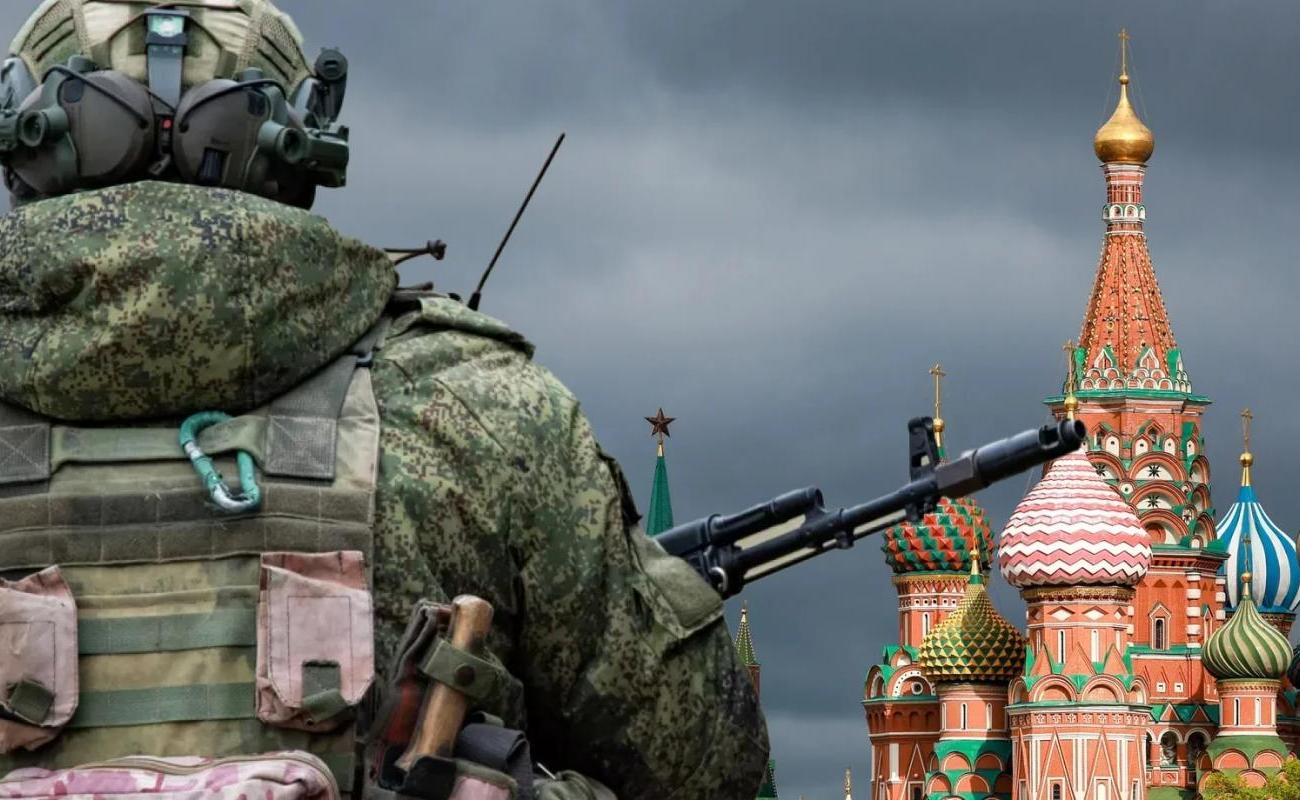
After a series of video messages in which a Russian soldier demands a personal meeting with Putin in person, calls for an end to the war and warns of possible internal turmoil, the "Prigozhin March" is being mentioned again in the Russian Federation. Could this story really be the beginning of a new military rebellion against the Kremlin?
A series of video messages from a man who calls himself a soldier of the Russian Armed Forces and publicly calls on Putin to stop the war in Ukraine is gaining popularity in the Russian segment of social networks. In one of the videos, he stated that he was ready to meet personally with the head of the Kremlin, and also threatened internal turmoil if his demands were ignored.
The videos were posted on Instagram. The author introduces himself as Alexander Lunin, appears in full military uniform with decorations and claims that he wants to convey to Putin the "real state of affairs" in the Russian army. According to him, only after a personal conversation will the Russian president agree to peace talks.
In one of the latest appeals, which received about 200,000 likes, the man said that if he does not get a chance to speak live next to Putin in the near future, the country could face serious internal turmoil. He also claims that Russian soldiers are allegedly dying en masse due to "suicide orders", that they are abused and that they are in critical condition at the front.
In previous videos, the author warned of possible "chaos" in Russia and called on the Kremlin to start a dialogue with him. Hundreds of comments with words of support have been collected under the posts, but it is impossible to determine their authenticity with certainty.
At the same time, there is currently no independent confirmation that the author of the video is really an active soldier of the Armed Forces of Russia. OSINT researchers also did not confirm the authenticity of the footage or the identity of the man. It is only known that the account was created in March 2026, and it also contains a link to the Telegram channel managed by Aleksandar Lunin with the call sign "Rikar".
By the time of publication, there had been no official comments from the Kremlin or the Russian Ministry of Defense regarding these appeals.
However, the appearance of these video appeals inevitably evoked associations with the events of the summer of 2023, when the founder of the private military company Wagner, Yevgeny Prigozhin, organized an armed uprising and effectively challenged the Kremlin's monopoly on force.
Could the current story be the beginning of a new internal conflict in Russia or is it just an isolated news episode without real support among the military?
The "Prigozhin March" was not a rebellion, but a special operation
According to military-political expert Dmitry Snegirev, the events of June 2023 should not be understood as a real coup attempt against Putin. In his opinion, the so-called "March of Justice" was a special operation by the Russian special services, the purpose of which was to carry out a large-scale purge among Russian generals.
"This was not an initiative of Prigozhin himself. This was a special operation by the Russian special services aimed at eliminating Shoigu's headquarters and representatives of possible military opposition to the Putin regime. The march was used as a pretext for political repression," the expert explains to Focus.
Snegirev emphasizes that Prigozhin was not an independent political figure. According to him, the founder of Wagner PMC had long been under the control of the Russian special services and was fulfilling the role assigned to him.
The expert draws attention to the fact that even before the "March of Justice", Prigozhin was actively used as an information tool to discredit the then Minister of Defense Sergei Shoigu and the Chief of the General Staff Valery Gerasimov. It was through his public statements that Russian society was gradually prepared for personnel changes in the military leadership.
According to Snegirev, after the failure of the initial stage of the large-scale war, the Kremlin needed to find those responsible for the failures at the front and at the same time prevent the emergence of real military opposition.
"In order to prevent the emergence of military opposition, the so-called "March of Justice" was staged. If Prigozhin had been a real revolutionary, he could have been detained much earlier - the activities of private military companies in Russia are generally prohibited by law. There were more than enough grounds for arrest," Snegirov notes.
According to experts, after the operation was completed, Prigozhin fulfilled his mission. Shoigu was removed from his post, criminal cases were opened against his closest entourage, and some of the Russian generals were either arrested or died mysteriously.
"Prigoghin was used as an information torpedo. The march itself became a pretext for a major purge among the Russian generals," says Snegirev.
He also does not rule out that even the death of the founder of Wagner could have been staged.
"I do not rule out that Prigozhin's death was staged. This could have been an element of a cover-up operation. The special services do not throw people away just like that," the expert adds.
Is a new march against the Kremlin possible
Commenting on the story of a Russian soldier who recorded a video appeal to Putin calling for an end to the war, Dmitry Snegirev does not see signs of a real rebellion in this.
In his opinion, the appearance of such videos could also be part of an information operation by the Russian special services.
“This is a classic distraction from real events. While everyone is discussing this man, they stop talking about Russian military failures in Crimea, near Konstantinovka or Pokrovskoye,” the expert explains.
At the same time, according to him, another task may be to create the illusion of the existence of an influential military opposition within Russia.
“The thesis about the existence of various centers of influence or opposition is constantly being inserted. This is done so that Western special services start looking for contacts with these people. Then all these processes are easily monitored by Russian special services,” Snegirev notes.
The expert also draws attention to the lack of reaction from Russian law enforcement agencies.
“For a simple post discrediting the SVO in Russia, people get from five to twelve years in prison. And here a person publicly issues an ultimatum to Putin, the video gets millions of views - and there is no reaction from the FSB. This is a very striking moment,” Snegirev emphasizes.
According to Snegirev, if such a video is distributed without obstacles, it means that its appearance was useful to someone.
"If the stars are lit, someone needs it. If there is no reaction from the special services, then it is useful, first of all, to the special services themselves. Their task is to simulate the existence of a military opposition, see who will support it, identify the dissatisfied, and also to distract attention from the problems of the Russian army at the front," says Snegirev.
At the same time, the expert admits that the Russian army does have a problem with the so-called "five hundreders" - soldiers who refuse to carry out orders. According to him, there are already several thousand such cases, but this does not indicate a readiness for a large-scale rebellion.
"The phenomenon exists, but it is not worth talking about its mass nature. People are being punished, thrown into illegal places of detention, there are numerous cases of beatings and torture. But this does not mean that the army is ready for an uprising," Snegirev explains.
Summing up, Snegirev is convinced that a repetition of the "Prigogino March" is unlikely in the near future.
"It is not worth expecting a military mutiny. In Russia, all potential leaders who had authority in the troops have long been eliminated or isolated. Spontaneous public protests are possible, but a repetition of the march on Moscow is not," the expert concluded.
Meanwhile, on the morning of June 25, drones attacked the occupied Crimean peninsula and an oil depot in the Krasnodar Territory.
And while the Russian military is filming an appeal to dictator Putin, Ukrainian drones have hit two of the three oil refineries in Ufa.