
Putin is in a hurry to reach the cold. Why the Kremlin is trying to push Ukraine into winter
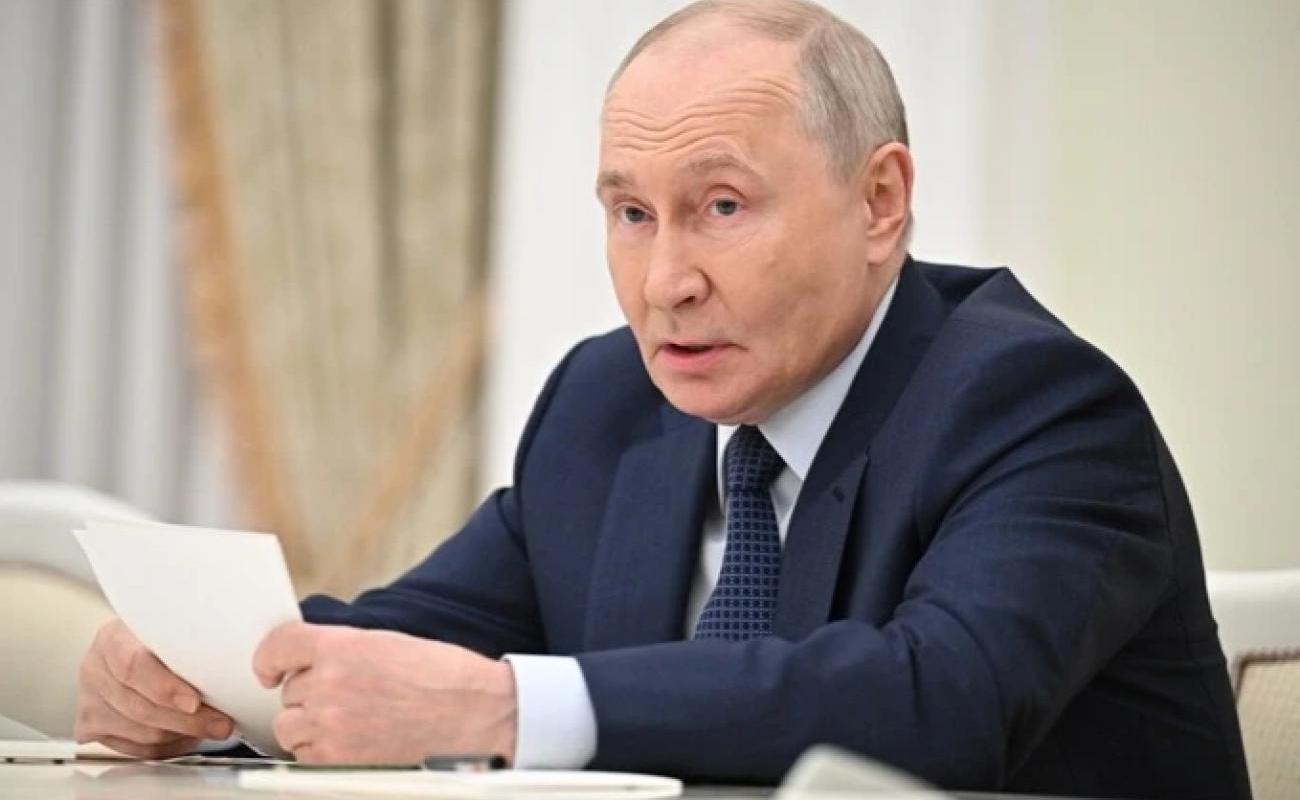
The golden autumn is coming to an end, the leaves are falling, the Russian troops do not have time to solve the main task
November. Winter is approaching. Santa Claus has been on sale in "Roshen" for several days now. Let's note what conspiracy studies lead us to at the end of October.
The General Staff of the Armed Forces of Ukraine estimated the losses of the Russian Federation at the end of the month - 54,400 killed and wounded. This is an absolute record since the start of a full-scale invasion. A record number of losses of the Russian army in one day was recorded - 2,250 people (October 21). A scary figure for a normal country, if you think about it.
The DGS also reported record losses in Russian manpower - 16,796 Russian soldiers were demilitarized, of which 7,926 - forever. The most active direction is Dobropilja, although many other parts of the front can hardly be called peaceful.
The golden autumn is coming to an end, the leaves are falling, the Russian troops do not have time to solve the main task - to enter the fierce city battles for the Slavyansk-Kramatorsk agglomeration before winter.
The Russian command is making desperate (read - suicidal) attempts to break through, but, at least for now, to no avail.
Putin "took" Dobropilje in advance, Russian troops are bombarding with fake videos about the alleged control over the city. But the facts are inexorable: on the ground, October took quite a bit out of Russia.
This does not mean that the situation is without problems for the Ukrainian army. The front is held at the border and beyond the limits of human capabilities. But they do. Positions are improving in places. Therefore, the Kremlin is forced to go through a season of negotiations under unfavorable conditions with a bad situation.
In this context, one more touch should be added to the "mutual trust building measures" in the Oleški area. Ukraine saved its citizens. This is a satisfying goal that requires no justification. But why did Moscow agree to this? Not because Putin is a "humanist".
The fact is that the active influence of the Ukrainian army on the enemy's logistics in the Sea of Azov and at the exit from Crimea, as well as the control of the area by "small sky" drones, de facto condemned the Russian group in this sector to a slow but inevitable death. Russian defense has degraded. A short break would give the Russians a chance to lighten up a bit.
This is a setback. But two things must be understood. First, it is temporary. Second, Russia has lost the most important thing. Now, anyone following the situation on the ground can see that the Ukrainian military executes command orders flawlessly, and that organizing a ceasefire is technically feasible.
Ukrainian Foreign Minister Andrii Sybiha pointed this out: if a ceasefire can be organized here, it can be organized anywhere—provided there is a will to do so.
But Russia lacks that will. This leads to a clear realization: Russia will only engage in genuine negotiations or agree to freeze the conflict if subjected to the pressure of force.
The Kremlin views the current "pressure" as something that can be overcome—especially by observing developments in Europe, such as anti-war sentiments in Germany.
In other words, Moscow is operating on a fundamental calculation: by spring, Ukraine will be severely exhausted, and Europeans will be facing pressure from various directions—ultimately leading to the desired outcome: the cessation of organized resistance.
In fact, everything suggests that Putin is categorically opposed to letting the war drag on into the winter. He is highly motivated to squeeze us hard before the cold weather sets in. Why?
For one, sanctions are hitting Russia hard. High oil prices are not saving them; even official data from Rosstat screams this fact. By spring, the situation could deteriorate to the point where it becomes difficult to control. Secondly, no one hands out favors among hegemons and those aspiring to hegemony. Yes, the U.S. remains the most significant factor, just as it has always been. On one hand, this means that while tactical concessions might be made where the interests of American business conflict with those of Russia, strategically, no one is going to stop grinding the Russians into mincemeat and emptying their pockets.
This explains the deafening silence from the U.S. following three consecutive explosions at Russian refineries—in Novokuybyshevsk, Ufa, and Nizhny Novgorod. The first and third facilities were severely damaged, suggesting that the Russian oil industry could face a total collapse this winter.
As previously noted in the piece regarding diesel fuel shipments to Brazil, undermining Russian refineries aligns perfectly with the strategic interests of American oil companies—much as mocking Qatar serves the interests of American gas companies. It is all equally transparent.
Trump made a "quick move" with the "diesel deal," hoping for an electoral boost. In reality, it likely worked against him in the election, and consequently, the explosions in the Russian Federation ceased to be such a prominent topic.
It was not possible to immediately execute the plan to undermine the entire system of anti-Russian sanctions, although that system had been seriously shaken. Currently, the Trump administration faces other challenges—they are preparing for Election Day, which is expected to be a fierce contest.
And this comes on the heels of setbacks in Brazil, as well as the situation in Israel, which is nearing a stalemate (Netanyahu has managed to hold on so far, but he will have to fight to retain power). In other words, the prevailing sentiment in Washington toward Moscow could shift. Consequently, the winter period is likely to be particularly painful and difficult.
Meanwhile, in recent days, Ukrainian forces have reached several chemical plants, tracked the locations of Russian aircraft, and struck an Iskander missile launcher. They also hit facilities at a military complex in Kamensk-Shakhtinsky (Rostov Oblast). It is not just the oil sector—the purely military sector of the Russian Federation is under constant pressure.
Before the year ends, through two major events—APEC in November and the G20 in December—Putin will have one final opportunity to play a "high-stakes game." What happens thereafter remains unknown. That is why he is in such a rush—which explains the atrocities against civilians, as well as attacks on energy infrastructure, bridges, and so forth.
Lately, there has been a palpable sense of nervousness within the economic sphere. Some are bracing for the repercussions of potential responses by Trump and Netanyahu in the Persian Gulf. Others are concerned by the intriguing signals emerging from the "monster" that is artificial intelligence. Still others are worried about China, as well as North Korean incursions into the cryptocurrency exchange market. All of this is unfolding against a backdrop of numerous regional and local upheavals—events we rarely hear about, yet which are firmly within the sights of the hegemons and the "reptiles."
Take, for instance, the conflict between Ethiopia and Eritrea, which Egypt might well join. Should that happen, the current situation in Europe will seem like a mere trifle; a Moroccan incursion into Ceuta would look like nothing more than a brief, polite courtesy call.
Meanwhile, the Poles, suddenly feeling left out of this pan-European festival of defiance—this carnival of chaos—have decided to join in. The touching alliance between Nigel Farage and Marine Le Pen in support of Karol Nawrocki is simply the perfect image of this.
Consequently, from all sides and various quarters, urgent voices are being raised: is it possible to collectively calm things down? To de-escalate the situation on a global scale? And, finally, to begin shaping the contours of a new world order—before the old one comes crashing down on our heads?
Perhaps, this time around, we could try to avoid global cataclysms and the transformation of Europe into a graveyard of ruins?
Stubb and Støre likely posed a question to Putin: how does he envision a scenario for mutual de-escalation? After all, the New Year is approaching. Putin will probably respond that, for now, everything is going according to plan and that he still has a few weeks to demonstrate some activity. We shall see what happens then.
In fact, this was the first such contact between influential Europeans (primarily Norway) and Moscow in a long time—one that took place independently of the United States. Not everyone in Europe was equally pleased with this conversation. However, the Norwegians possess sufficient room for maneuver and ample financial resources. Consequently, the call was likely taken seriously in Moscow.
Summary
In November, events will unfold literally every single day. At the moment, votes are being counted for the new president of Bulgaria—who, according to exit polls, is likely to be a woman with a hostile stance. Given the pressure exerted by the Russian Federation on shipping off the Bulgarian coast, there will undoubtedly be increased noise regarding the cessation of aid to Ukraine.
By November 5th, the situation regarding the U.S. will become clearer. Depending on the scale of his defeat, Trump may be inclined to take extravagant, "decisive" actions.
For us, the key is to maintain the pace at which we inflict losses on the Russian military, so that by winter, the front line effectively freezes. This could open up possibilities that do not exist today—for instance, suddenly bringing the concepts of "demilitarized zones" and "ceasefires" to the table in the most unexpected places.
The objective for the rear remains unchanged: a gradual withdrawal, executed without any abrupt movements. Support your own people in the military as much as possible. But the main thing is to withdraw.
For several years, the general opinion has been: in the event of a disaster, the state, if it does help, will not immediately. You will still have to endure the first blows, counting only on yourself and your loved ones. This line of defense should be nurtured and carefully protected.
By the way, what about vaccinations this year? Some sense of incompleteness. Well, education is also a traditional issue. Somehow they got tired of the semester. But students have a semester in a month. Against the background of very weak hope that the situation will improve. Therefore, a decision on the possibility of taking the exam remotely is needed immediately. Especially for the humanities (not all universities are ready for this, they insist on taking everything offline).
It is more difficult with technical specialties, they have their own atmosphere. But at least those who don't need to rummage through devices can be spared. Let them settle in a well-equipped hole somewhere. Stubbornness is unacceptable here.