
Putin and Xi are united by a love of corruption
Countries in Eastern Europe and Central Asia are among the most corrupt in the world, with widespread impunity fueled by narrow interests that dominate many of their governments.
Western European countries occupy nine spots in the top 10 countries globally in Transparency International's Corruption Perceptions Index (CPI), but the continent's anti-corruption efforts have largely stalled in recent years, with the region's average CPI score falling faster than any other region.
Of the 182 countries ranked in the latest CPI, published in February, the highest rankings included Denmark in first place, with Finland and Singapore in second and third place, while those perceived as the most corrupt included Venezuela in 180th place and South Sudan and Somalia in 181st place.
The world’s major powers each have their own problems. Falling three places, Vladimir Putin’s Russia ranks 157th on the index. China fared better, coming in at 76th on the CPI, tied with Kosovo, Ghana and Ivory Coast. Although struggling to survive, Ukraine has improved from 142nd in 2014 to 104th now, though that has remained unchanged since the second year of total war in 2023. Once a world leader in the fight against corruption, the US fell to 29th, just behind Lithuania.
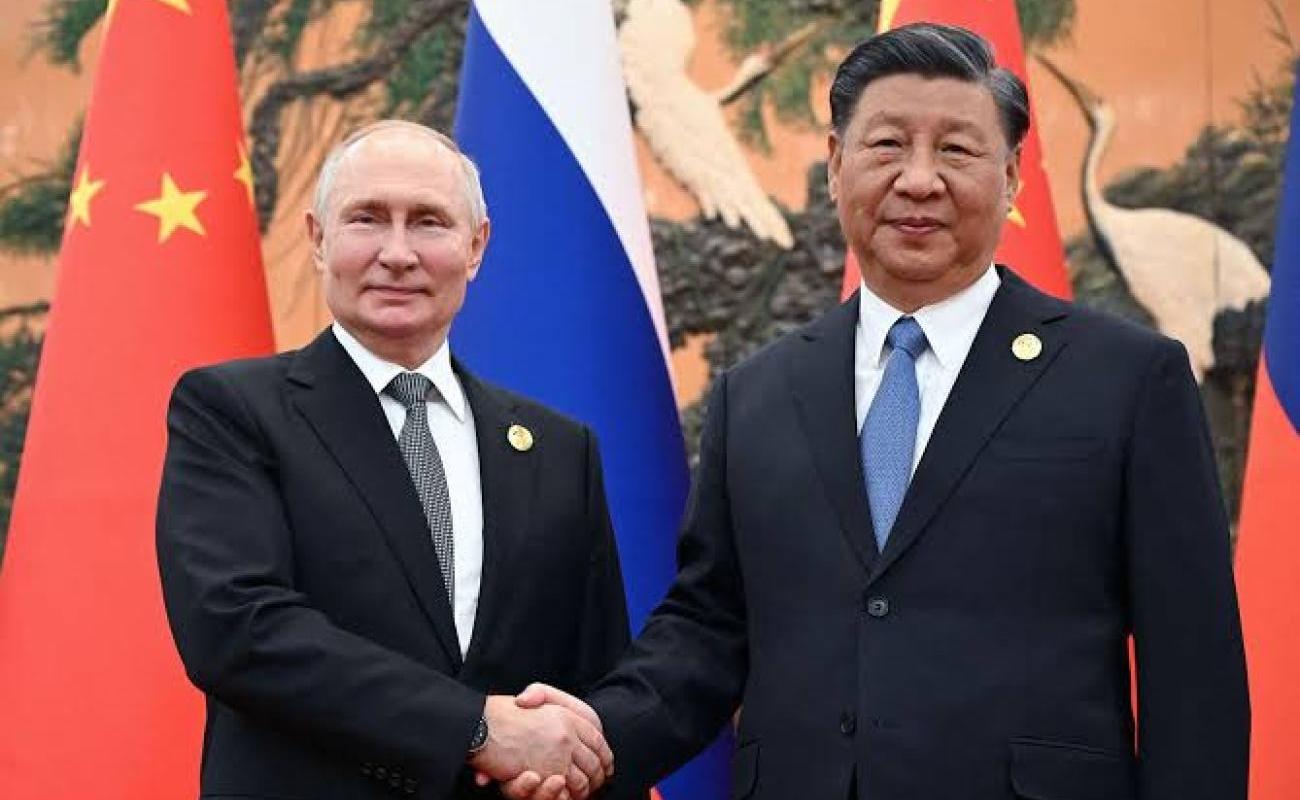
Two distinct logics apply to how Putin and China's Xi Jinping are perceived in relation to corruption.
Russia's long-ruling autocrat has been the subject of extensive investigative work, further reinforced by the revelations in the Panama Papers and Pandora Papers . Putin's wealth is well-disguised and difficult to verify, but it probably runs into the billions of dollars. A more important framework is perhaps structural rather than personal.
Thus, Putin’s Kleptocracy : Who Owns Russia? by Karen Dawisha (New York: Simon & Schuster, 2014) describes Putin’s rise to power in St. Petersburg in the 1990s. The book describes a system in which licensed rent-seeking was the elite’s compensation scheme, and is still a source of wealth and influence for today’s oligarchs, who are rewarded for their obedience.
In China, Xi has made many demonstrations of strengthening state capacity and waging an anti-corruption campaign in the military, party and among business elites. The wealth of Xi and his extended family is large, but perhaps small compared to Putin or US President Donald Trump.
In 2012, Bloomberg reported $376 million in assets held by Xi’s siblings and in-laws (for which Bloomberg was and still is blocked from reporting). Beyond that, the data gets murky, not clean.
There is a methodological pitfall: What we know about each leader is a function of how much independent investigation is possible. A higher score on honesty may simply indicate more effective censorship protection.
In short, we have an autocrat with documented data and a less studied one, because the conditions for such an analysis do not exist in China.
But both countries have one thing in common – bribery is understood as part of elite life and is often encouraged. The beneficiaries are able to exploit their position, but they are also placing an invisible noose around their necks, which can be pulled at a moment the regime chooses. This creates powerful incentives for compliance and conformity.
For Xi, anti-corruption is publicly portrayed as a contribution to state building, yet the Communist Party investigates itself without any external scrutiny. Since 2012, several million party members have been investigated, both “tigers and flies,” as high- and low-ranking civil servants are described respectively.
Two former defense ministers, Li Shangfu and Wei Fenghe, have been sentenced to death, albeit with a two-year reprieve, while generals Zhang Youxia and Liu Zhenli have been expelled from the Communist Party and the army.
For Putin, anti-corruption is a weapon directed against monitors, such as Transparency International, officially declared "undesirable," and critical media outlets like Novaya Gazeta, forced to relocate abroad.
Meanwhile, law enforcement is highly selective. Law enforcement remains an elite discipline, while independent intelligence is criminalized. Many governors have been prosecuted. Alexey Ulyukaev, then Russia’s Minister of Economic Development, was convicted in 2017 of taking a large bribe and sentenced to eight years in prison. Deputy Defense Minister Timur Ivanov was arrested in 2024 amid a wide-ranging procurement purge.
In neither Russia nor China did institutions prevent the supreme autocrat from preventing, punishing, or promoting corruption for his own ends. Structural weaknesses existed before Putin and Xi, but, after the deaths of Stalin and Mao Zedong, previous leaders did not exploit them so aggressively.
Corruption weakens most political systems, but for now the leaders of Russia and China seem to continue to use it to exert control with few visible consequences.
Walter Clemens is a fellow at the Davis Center for Russian and Eurasian Studies, Harvard University, and Professor Emeritus of Political Science, Boston University.