
Prosecuting Russia’s crimes must not endanger child victims
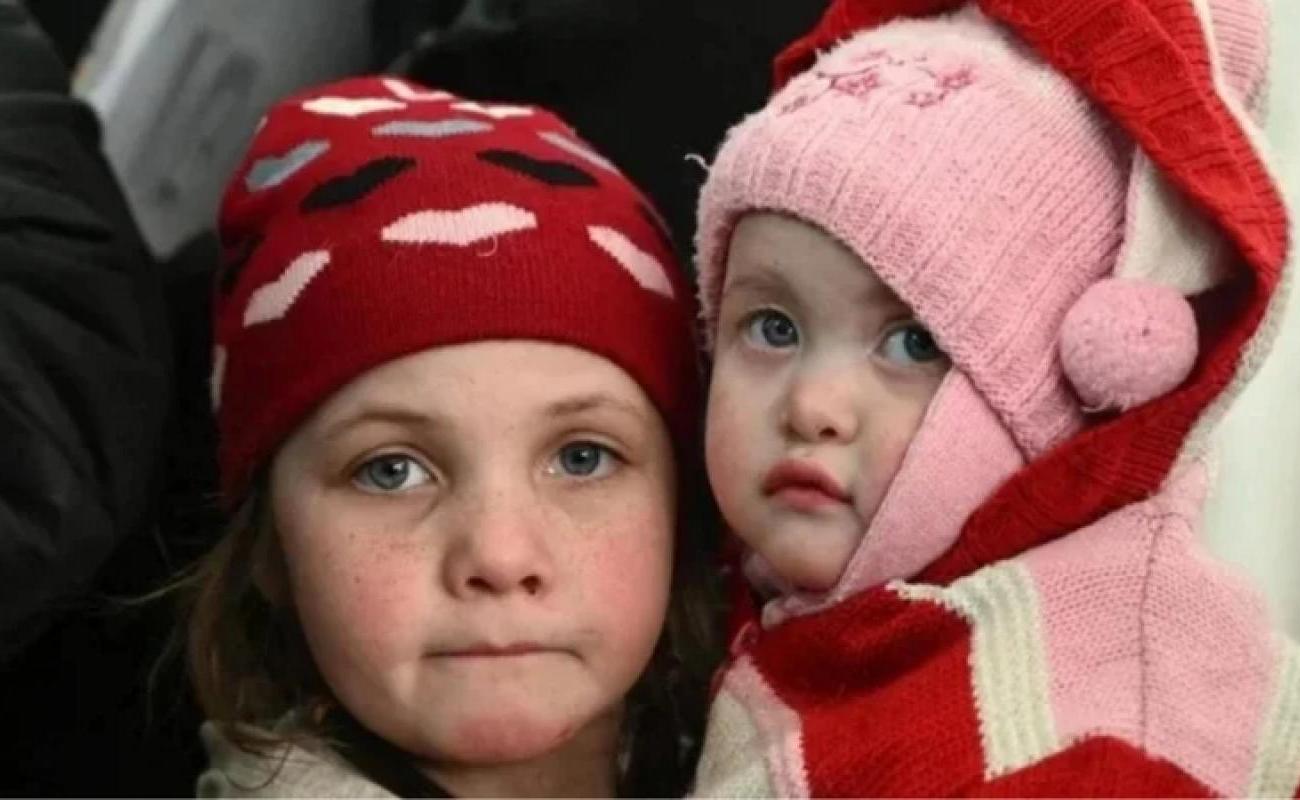
Air raid sirens have become the background sound of childhood in Ukraine. War has never been about headlines or statistics: for Ukrainian children it is the memories of missile attacks on their houses, schools and hospitals; weeks spent in basements without basic necessities; sudden unexplained destruction of their routine and education; urgent need to leave their homes; and for some interrogations at checkpoints, family separation, abduction, deportation and forcible transfer and the transformation of identity under Russian occupation.
This op-ed was co-authored with Ruby Mae Axelson, Gender, Child and Inclusive Justice Lead at Global Rights Compliance
Since the beginning of Russia’s war against Ukraine, there has been a consistent pattern of crimes against and affecting children (‘CAAC’) forming part of a systematic Russian policy targeting Ukrainian children and depriving them of their inalienable rights to peace and childhood.
In Ukraine, the Office of the Prosecutor General is tasked with holding perpetrators to account and is currently investigating and prosecuting hundreds of CAAC incidents. During the course of these processes, children are brought into contact with the criminal justice system as victims and witness of international crimes and, in some cases, as children involved in commission of conflict-related crimes. They are asked to remember, recall and testify, and to trust institutions and authorities at a time when their trust in authority has been significantly compromised by the actions of the Russian occupation authorities.
Yet, justice for war-affected children cannot be achieved through procedural efficiency alone; holistic justice that contributes to a child’s healing must be based on the child’s best interests. Every decision that directly or indirectly affects the child must be assessed through the prism of the child's rights, dignity, safety concerns, developmental level and potential impact on the child.
The Best Interests of the Child as a Legal Obligation
In all actions concerning children, whether undertaken by public or private social welfare institutions, courts of law, administrative authorities or legislative bodies, the best interests of the child shall be a primary consideration.
Convention on the Rights of the Child, Article 3(1)
The implementation of the best interests of the child principle is not just recommended best practice promoted by human rights, but a legally binding requirement The best interest of the child is anchored in the United Nations (‘UN’) Convention on the Rights of the Child (‘CRC’) and General Comments of the Committee on the Rights of the Child, which state that a child’s best interests shall be the primary consideration in all actions concerning them, including when designing and implementing justice-related processes and throughout investigative and prosecutorial procedures. The concept of the child's best interests needs to be simultaneously considered as a substantive right of the child, a principle guiding legal interpretation, and a procedural rule.
The centrality of the best interests of the child was reaffirmed in the UN Human Rights Council’s recent Resolution on realising the rights of the child affected by armed conflict. The Resolution underscores the best interests of the child as a “general principle” of the CRC, and urges States to take effective and timely measures to prevent and stop violations of children’s rights ‘ensuring, in all actions, the best interest of the child as a primary consideration, including through gender-, age-, and disability-responsive, survivor-centred support services, including mental health and psychosocial support, access to health services, including sexual and reproductive healthcare services, education, social protection and reintegration programs.’
In addition, international guidelines – including the UN Guidelines on Justice in Matters Involving Child Victims and Witnesses of Crime (‘UN Guidelines’) and the Guidelines of the Council of Europe on child-friendly justice (‘CoE Guidelines’) - stipulate that the best interests of the child must be a primary consideration in all matters involving or affecting them.
At the domestic level, Ukraine has also taken significant steps towards establishing a child-friendly justice system and implementation of international standards. The National Strategy on the Protection of Children’s Rights in the Justice Sector for the period up to 2028 highlights challenges including “inadequate consideration of the best interests and views of the child in accordance with his or her age and level of development when making decisions concerning the child” and commits to strategic goals for ensuring the rights and best interests of the child are upheld.
Internal policies of the Office of the Prosecutor General also reflect this trend. The ‘Strategy for the Development of the Prosecutor’s Office for 2025-2028’ commits to “implementing the principles of child-friendly justice in the criminal justice system in order to uphold the best interests of the child”. Similarly, the ‘Strategy for 2026–2028 on the Exercise of the Prosecutor's Office Powers in Criminal Prosecution for International Crimes’ expressly identifies the development and implementation of methodologies on child-friendly justice - including the assessment of the best interests of the child in criminal proceedings. Such provisions strengthen a well-established fundamental principle of the Prosecutor’s Office’s work: ensuring the best interests of the child in the performance of its duties.
The Gap Between Legal Recognition and Practical Implementation
The existence of legal norms does not, however, automatically translate into consistent practice. Indeed, both globally and in Ukraine, gaps have persisted between the formal recognition of the principle of the best interests of the child and its implementation in accountability mechanisms. In the urgent and complex context of conflict-related crimes investigations, with limited resources available, decisions are often taken with greater emphasis placed on efficiency than on comprehensive, impartial consideration and clear accountability in decision-making.
In situations where investigative urgency is high and public expectations of accountability are elevated; there is a risk that children’s individual circumstances become secondary to evidentiary needs. This often means that the perspectives of children are sidelined and their best interests do not receive adequate consideration. A child may risk being interviewed without sufficient preparation, or without consistent protective and support measures in place suitable for their individual needs.
Without appropriate safeguards, a child who is asked to recall traumatic events may suffer re-traumatisation causing psychological harm. At the same time, children who feel unheard may disengage from the process refusing to provide information needed for the purposes of criminal proceedings. In such cases, pressure can lead to fragmented or unreliable testimony: harm to the child and harm to the investigation become intertwined.
While the conflict between protecting child’s rights and acting in their best interests and fulfilling the mandate of investigative and prosecutorial authorities is often present as inevitable – this is a misconception. When properly implemented, a child-centred approach helps both to strengthen protection and minimise harm, increase child participation and improve investigation and prosecution outcomes that bring those responsible to justice.
From Principle to Consistent Practice: Operationalising Bests Interests Assessments
In Ukraine, as the number of CAAC needing to be investigated has risen dramatically, so too has the need for clear, operational procedures for conducting best interests assessments and determinations in criminal proceedings that reflect established best practices, safeguard the rights, needs and voices of children, and are both practical and adapted to the Ukrainian context and legal framework. The absence of a formalised assessment and determination procedure may lead to significant risks for the protection of the rights, interests and wellbeing of the child and negatively affect investigative outcomes.
To respond to this need, Global Rights Compliance, in partnership with Office of the Prosecutor General’s Department for the Protection of Children’s Interests and Combating Domestic Violence, has developed a Best Interests Assessment and Determination Procedure (‘BIA Procedure’) to support the comprehensive implementation of the best interests of the child principle in investigations and prosecutions of conflict-related CAAC within the Ukrainian domestic legal and regulatory framework.
The purpose of the BIA Procedure is not to create administrative burden, but to ensure that before any investigative or prosecutorial action affecting a child is undertaken, the child's best interests are carefully assessed, balanced, and the decision-making processes are justified and documented. The BIA Procedure is designed to be conducted regardless of the procedural status of the child: the best interests of all child victims, witnesses, or children involved in the commission of conflict-related crimes is a primary consideration in all situations in which the prosecutorial and investigative entities engage with children.
The development of the BIA Procedure highlighted key considerations, principles, and methodologies that may serve as valuable guidance both within Ukrainian prosecution efforts to implement the procedure and for the design and implementation of BIA procedures by practitioners supporting global accountability initiatives related to children and armed conflict (CAAC).
First, the assessment and determination of a child’s best interests must acknowledge that every child is unique and possesses a variety of intersecting factors that must be considered to holistically assess their best interests. At the heart of the BIA Procedure lies the recognition that each child is an individual being with unique lived experience: it can’t be assumed that two children experience war or victimisation in the same way or that the impact is similar. Age, gender, disability, displacement status, family environment, cultural background, developmental stage, cognitive and emotional capacity, and prior trauma all shape vulnerability and resilience. An adolescent who witnessed shelling may require a different approach than a younger child separated from their family and forcibly transferred to another territory. At the same time, a child with a disability may face additional barriers to communication and participation in justice processes and require additional assistance to ensure the process is accessible.
Second, the procedure should aim at strengthening the child's active role in the justice process in a safe, child rights-based, and victim-centred manner with informed and ongoing consent/assent. Although child-centred safeguards are critical to ensuring protection and safe engagement, undue emphasis on protection should not undermine the child’s right to be heard or the recognition of their views as valid, particularly where this diminishes their agency and autonomy. Acting in the child’s best interests necessitates acknowledging that children have valid insights, solutions and roles as agents in their own right.
Article 12 of the Convention on the Rights of the Child guarantees that children have the right to be heard in any judicial and administrative proceedings affecting the child and express their views freely in all matters affecting them, and that those views must be given due weight according to age and maturity.
In the context of international crimes investigations, this right carries profound importance. War strips children of agency: they do not choose displacement, occupation, or the violence inflicted upon their communities. The justice process must not replicate this powerlessness. Through age-appropriate language, safe interview settings, avoidance of repetitive questioning, and protection against undue pressure, the BIA procedure seeks to restore a measure of agency to children. Participation is not about transferring responsibility for justice onto children - it is about recognising them as rights-holders and subjects of justice processes.
Third, a multidisciplinary team should be responsible for undertaking the assessment and determination procedure. To ensure that the assessment is comprehensive, the multidisciplinary team should be composed of representatives of the prosecution and investigative authorities with relevant expertise, as well as victim and witness support services, child protection experts and/or psychologists. This ensures that a range of views from different perspectives are gathered, that the appropriate expertise to assess the child’s needs are available, and that the determination considers the full range of relevant factors impacting on the child’s best interests.
Fourth, it is important that the multi-disciplinary team formulate a reasoned, motivated, and justified decision which is recorded in a Best Interests Assessment report, to demonstrate that the right of the child to have their best interests taken as the primary consideration has been respected and ensuring actionable outcomes and accountability. This requires balancing and weighing relevant considerations rather than mechanically completing a checklist or focusing on one dominant factor. Making a justified decision that considers all relevant factors requires a comprehensive understanding of the child's context, evaluation of risks and protective measures available. The weight of each factor will inevitably vary according to the individual child and should be determined on a case-by-case basis.
Respecting the child’s views does not require that every decision align exactly with the expressed child’s wishes. Rather, it requires that those views are heard, documented, carefully considered alongside all other relevant factors, and that the child be given an explanation where the final decision differs from what they wanted or proposed.
Finally, to ensure that the assessment results reflect the current situation and remain relevant, it is recommended to revise the assessment results as circumstances evolve. War alters children's situations rapidly: displacement, changes in guardianship, medical developments, and shifting security conditions can transform what is in a child's best interests over time. Therefore, the assessment is not static - it is dynamic.
Delivering Justice without Harm: System-Wide Impact of the Child’s Best Interests
The impact of a structured approach based on the best interests of the child extends beyond individual cases. It will help strengthen child-friendly justice frameworks that will resonate long after the cessation of hostilities. A comprehensive BIA Procedure will support prosecutors and investigators in resolving complex ethical dilemmas and conflicts of interests and will not only improve the criminal justice experience for individual children but also enhance the quality of evidence by strengthening trust and cooperation. This approach brings domestic practice in line with international standards on children’s rights and reinforces Ukraine’s overall commitment to the rule of law.
Most importantly, a BIA Procedure recognises that accountability for conflict-related crimes cannot be achieved at the expense of children’s well-being or healing. In a situation where children have been targeted, traumatised, forced to leave their homes and childhood behind, justice must not become yet another source of harm.
The development of the BIA Procedure marks a transition from declared intention to implementation, transforming the principles of the best interests of the child into specific operational requirements and recommendations. The BIA is designed to help professionals pause, reflect, weigh conflicting considerations and justify their decisions without significantly increasing their workload. On the contrary, the systematic and consistent application of the BIA Procedure is intended to optimise and enhance the efficiency of processes in which children’s participation is an integral element, starting from the earliest stages of planning such participation.
As one of the key elements of ongoing justice system reform processes, the best interests of the child serve as the foundation of a child-sensitive justice ecosystem capable of responding to the realities of war. As Ukraine continues to seek accountability for grave international crimes, the measure of its justice system will not only be the convictions it secures, but the dignity it preserves. In times of armed conflict, safeguarding the best interests of the child is not an auxiliary concern but a test of whether justice remains humane.