
Peace on a referendum: what is behind Zelensky's initiative and why experts have conflicting opinions
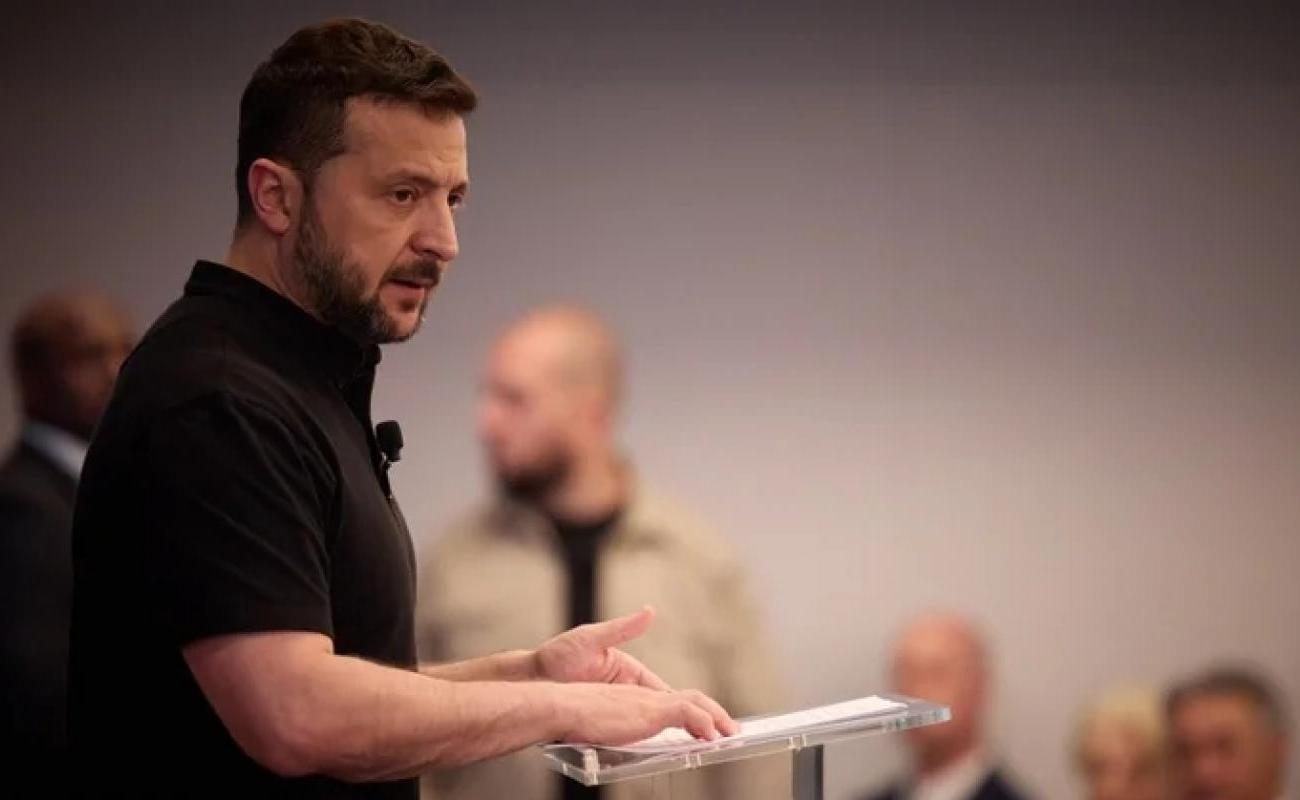
The idea of putting the peace agreement to a national referendum has returned to the public sphere. Ukrainian President Volodymyr Zelensky allows such a possibility provided that there is a ceasefire and security guarantees, and at the same time presents a 20-point peace plan. However, experts interviewed by Focus have different assessments of both the political motives of this initiative and its compliance with the Constitution of Ukraine.
President Volodymyr Zelensky did not rule out the possibility that the issue of the peace agreement, which is currently being negotiated with the mediation of the United States of America, could be put to a national referendum. He said this during a conversation with journalists on December 23.
According to the head of state, the final decision on the peaceful end of the war - including which territories can be subject to the agreement - should be determined by the people of Ukraine through a direct expression of their will. But this requires real security conditions.
"We can put the peace agreement to a referendum that will ensure the end of the war. People should be able to choose whether such an end suits us or not," Zelensky said.
He stressed that holding a referendum is not possible under shelling and requires a long period of cessation of hostilities. According to his assessment, at least a 60-day ceasefire is needed to prepare for such a vote - otherwise the referendum simply cannot be held.
President Zelensky did not rule out the possibility of holding a vote on the peace agreement simultaneously with the upcoming elections.
After that, Volodymyr Zelensky presented a complete list of 20 points of the basic peace plan, which is designed to become the basis for ending the war with Russia and ensuring the long-term security of Ukraine. The document was developed in close coordination with the United States and its partners, but some provisions still require final approval.
According to the Ukrainian head of state, this basic document will play a key role in international peace negotiations. It establishes political agreements between Ukraine, the United States, Europe and Russia, although individual points may change during consultations.
The President stressed that the two most complex issues - the status of certain territories and the procedure for operating the Zaporizhia nuclear power plant - have not yet been agreed with
the partners and Russia. Moscow's reaction is expected in the near future after consultations with the United States.
Peace agreement via referendum: Will Ukrainians vote
Political scientist Oleg Posternak believes that the idea of a possible referendum on the peace agreement is not new to Bankova and has been discussed for at least a year. According to him, the authorities have previously considered a referendum as a tool for managing public emotions in the event of the adoption of a compromise peace framework.
"Such plans have been thought up on Bankova before. For me, this is absolutely nothing new. A year ago, I said that the referendum tool would be used to "dampen" the emotional currents that will inevitably arise around the adoption of a compromise peace, which will definitely not suit the entire Ukrainian society," the expert tells Focus.
At the same time, Posternak emphasizes that this is not just about shifting responsibility from the authorities to society, although that element is present.
"This is not so much a story about abdication of responsibility as an attempt to show that the Ukrainian people are subjective - that the peace framework is not created only by the elite, but also has an impact on the position of society," explains Posternak.
The political scientist suggests that, given the current formulation of the 20-point peace plan, society is likely to support the plan in a referendum.
“If you look at these 20 points that the president mentioned, the framework looks very acceptable. Even the issues of language and education are written in a way that is as compromise as possible from the point of view of European legislation. Therefore, society is likely to say “yes,” predicts Posternak.
He emphasizes: in this case, the referendum will be perceived not only as a democratic tool, but also as a political technology.
The political scientist draws a parallel with Moldova, where the current president Maia Sandu managed to strengthen her position by combining the presidential campaign with a referendum on European integration.
“This allowed the formation of a certain perception of Sandu as a leader. It is assumed that a similar methodology is planned to be used in Bankova. And this means that Zelensky most likely decided to run for office,” the expert says.
According to Posternak, a referendum in such a configuration has several functions at once:
- strengthening the image of the president as a leader who led the country out of war;
- mobilizing voters and increasing turnout;
- forming a positive informational background for the re-election campaign.
"The referendum forms a niche from which Zelensky wants to get a guarantee of re-election. This is not yet a fact, but from a technological point of view, the intention is absolutely clear. And, in principle, it seems logical," adds political scientist Posternak.
Consideration of the peace agreement by the Verkhovna Rada: what's the point
In addition, Posternak draws attention to the idea of considering the peace plan in the Verkhovna Rada, calling it "a very powerful political move."
"Opposition factions would like to use the peace plan to attack the president — to present it as a plan of capitulation, to focus on points such as limiting the size of the army. And the president wants society to see how certain deputies vote," explains Posternak.
Thus, according to experts, Bankova not only minimizes criticism, but also forces the opposition to publicly decide on the peace framework, removing the document from political manipulation.
“This is a way to force opposition deputies to publicly approve it or clearly reject it — and thereby remove the status of a “secret agreement” from the peace plan,” says Posternak.
At the same time, he emphasizes: the president will formally sign the peace agreement. But the involvement of parliament has another important goal.
“The Russians claim that Zelensky allegedly has no authority. If the parliament approves the peace plan, this further strengthens the subjectivity of the document, since the Russian Federation recognizes the Ukrainian parliament as a party,” the political scientist concludes.
Why the idea of a peace referendum contradicts the Constitution
Political scientist Ihor Reiterovich critically assesses the president’s statements about the possibility of a referendum or parliamentary ratification of the peace agreement, considering them a form of shifting responsibility and a political maneuver that has no legal perspective.
According to experts, such an initiative directly contradicts the Constitution of Ukraine.
“This is a classic shifting of responsibility, an attempt to remove part of it from oneself. This whole story cannot be implemented in practice, because it contradicts the Constitution,” - emphasizes Focus Reiterovich.
He explains: The Basic Law contains a clear list of issues that can be submitted to an all-Ukrainian referendum, and peace treaties or special economic regimes are not included in it.
“The Constitution does not contain any provisions on submitting issues related to peace treaties to a referendum. It can, for example, concern the acceptance of new territories into Ukraine or a change in the administrative-territorial structure - and only within the current constitutional territory,” - notes the political scientist.
Reiterovich draws attention to the fact that the current Constitution already gives the president sufficient authority to sign international agreements - without a referendum and without additional approval by parliament.
“The second article of the Constitution gives the president absolutely sufficient authority to sign such documents and bear political responsibility for them before the citizens of Ukraine. When he speaks of both a referendum and ratification by the Verkhovna Rada, this is a violation of the norms of the Constitution regarding presidential powers,” the expert explains.
However, Reuterovich also sees in this a pragmatic political calculation. According to him, the president can deliberately propose formats that Russia will not accept a priori in order to publicly record it as a party with which it cannot negotiate - especially for Western partners, including the United States.
“Russia must publicly present itself as a party incapable of negotiations - especially for Donald Trump. This is a key point, no matter how cynical it may sound, but we find ourselves in such conditions,” the political scientist notes.
Another motive, according to experts, is insurance against liability in the event that Ukraine still has to sign certain compromise documents.
“Zelensky understands that sooner or later documents may appear that will have to be signed. And he wants at least parliamentarians to share this responsibility,” Reuterovich says.
What’s wrong with the draft peace agreement
In addition, commenting on the 20 points of the peace plan itself, he admits that in the current conditions they look relatively acceptable - but at the same time they contain serious contradictions.ds
“Yes, these points have been criticized, but in the situation we are in, they look more or less acceptable. This does not mean that they are beneficial for Ukraine. There are many questions regarding sovereignty,” the expert emphasizes.
He considers the combination of declarations of sovereignty with clauses that actually limit it to be particularly problematic.
“When the first clause speaks of confirming sovereignty, and then prescribes a limit on the number of the Armed Forces to 800,000, the question arises: what kind of sovereignty is this? Limiting the army is an automatic limitation of sovereignty,” Reiterovich notes.
Answering the question of whether a referendum on the peace agreement can be held, at least theoretically, the political scientist gives an unequivocal answer - no
"These issues in this formulation are not the subject of a referendum. For them to become so, the Constitution must be amended," he explains.
According to experts, this would mean:
- no state of war;
- two votes in parliament;
- at least 300 votes;
- an appeal to the Constitutional Court.
“This is an absolutely unrealistic story. The peace agreement, the peace treaty, the special economic zone are not subject to a referendum,” Reuterovich emphasizes.
He also compares the possible initiative with the “five questions of the president” during the 2020 local elections, noting that such a format does not have the appropriate legal force.
“This is an illegal story that cannot be implemented in any way,” the political scientist concludes.
Recall that on December 23, Ukrainian negotiators Rustem Umerov and Andriy Khnatov returned to Kiev and reported to President Volodymyr Zelensky on the results of consultations with the United States. According to them, drafts of several key documents have now been prepared.
Focus also wrote that, according to the head of the Ukrainian intelligence service, Kirill Budanov, further negotiations on a peaceful solution in Ukraine are optimistic. However, he emphasized that the process is multiple and complex.