
OPINION: Ukraine After the War: Scenarios, Risks, and Europe
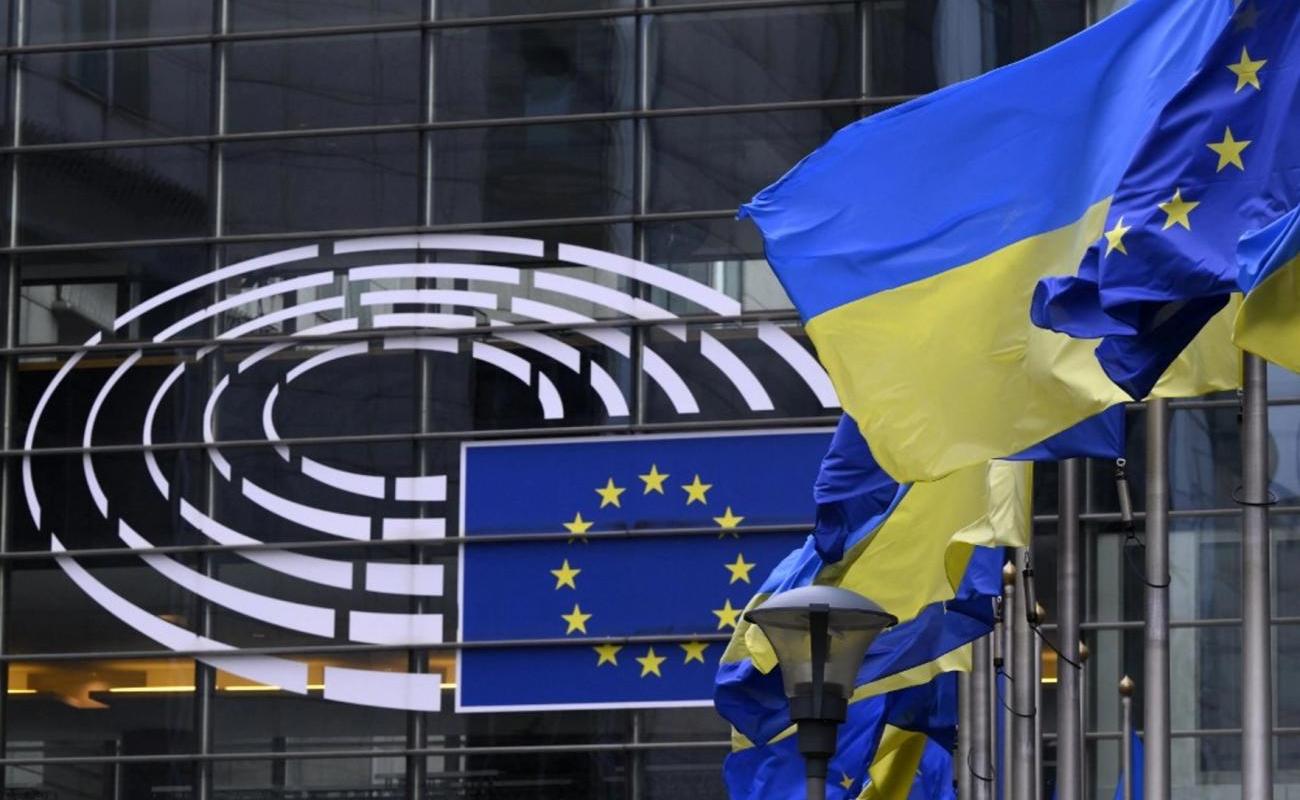
The recently intensified peace talks and various media leaks suggest that one of the key negotiation points is Ukraine’s future within international alliances.
Most of the attention of late has been devoted to the European Union. Ukraine’s integration with the bloc accelerated after 2022. Despite this rapprochement and the reforms underway, skeptical voices across Europe question Ukraine’s accession to the Union. The issue also appears in the context of peace plans circulating in the media. But the situation is complex – becoming a full EU member requires not only meeting a long list of difficult economic, legislative, environmental, and other criteria, but also a political will.
Based on the latest statements from European politicians, Ukraine’s accession may seem unrealistic in the short term. It is difficult for all member states – each with its own interests – to speak with one voice. Belgium’s resistance to using immobilized Russian assets for Ukraine is one example. It is easy to imagine countries like Hungary saying a firm “no” at present, while others could condition their approval on satisfying their own interests.
Politicians in Kyiv often assume that EU decisions are made mainly in Berlin and Paris – a misguided starting point that alienates other partners. This was evident during the grain crisis with Poland, when Ukrainian officials attempted to negotiate the export and transit of Ukrainian grain to the EU by bypassing Polish officials. Ukraine must seek support and maintain good relations literally with every EU member state. Political arguments and the narrative will matter greatly – and they should not rely solely on being right or telling the truth, but on framing arguments that resonate with partners. Politics is not always about facts, it often involves simplifications, competing interests, narratives and asymmetries of power. Moral victories only sweeten defeat.
Is Ukraine’s accession to the EU possible?
Even if membership appears out of reach today, political circumstances can change quickly. A window of opportunity may open – and Ukraine should be prepared by meeting standards and requirements. Public and political will won’t be the obstacle here. Ukrainians have repeatedly demonstrated their aspiration to join Western structures, most notably during the Euromaidan. The entire Ukrainian political class currently shares that aspiration. The key word, however, is “currently.”
One cannot dismiss a scenario in which Ukraine emerges from the war intact but remains outside Western structures. Such a situation could fuel a sense that the allies have betrayed Ukraine. Politicians might exploit this resentment and, following the logic of “it somehow worked before, so it will work again,” promote an isolationist Ukraine – anti-Russian, tied to the West, but politically inward-looking.
Similar emotions could arise if EU membership appeared too onerous, requiring sacrifices at the national, economic, or private-interest level. This could leave Ukraine suspended between East and West – internally conflicted and politically unstable. Such a scenario would be extremely unfavorable, and unfortunately more likely than the “Georgian scenario,” in which a nominally pro-Western political force takes power while making effectively anti-Western decisions.
Fortunately, three actors play a stabilizing role:
1) The European Union, which, as recent events have shown, can effectively influence Kyiv – for instance during the attempt to weaken the anti-corruption bodies NABU and SAPO’s independence in August 2025.
2) Ukrainian society, strongly oriented toward the West.
3) The Ukrainian deep state.
The latter is often underestimated or criticized as corrupt or oligarch-dependent, but that is not entirely accurate. The deep state has kept the country functioning since 2014 and prevented collapse.
Paradoxically, the oligarchic system contributed as well: oligarchs largely sided with Ukraine and provided substantial resources to support state survival – despite knowing they would lose influence and assets. And paradoxically, once again, all this strengthened Ukraine’s pro-Western course.
Another example of constructive deep-state behavior is the effective work of institutions like NABU and SAPO, which enjoy public support.
The Polish example: from “forget it” to full membership
Poland’s path to NATO illustrates how political declarations and circumstances can shift. Poland joined the Alliance in 1999, 10 years after the democratic transition. While Poland was not at war and Russia was weakened after the USSR’s collapse, accession was still a relatively rapid and far from obvious process in the mid-1990s. Just five to six years before joining, Polish diplomats in Washington were told “forget it.”
In the early 1990s, Poland also underwent painful economic reforms supervised in part by the International Monetary Fund. The Polish example shows that, in the long term, many things are possible- provided there is consistent effort, grounded in broad political and societal consensus.
It is also important to remember that European treaties, or the need to amend them, may stand in the way of Ukrainian membership. Numerous unpredictable events may also create new windows of opportunity. Accession itself may unfold in unexpected ways: it might be partial, hybrid, or without participation in certain structures such as the Schengen Area.
Some states, like Bulgaria, joined Schengen only in 2025. Bulgaria is also a member state struggling with political instability and corruption, yet EU membership has had a stabilizing effect. Again, political will is crucial, and it’s opening space for Ukrainian diplomacy.
A long road already behind – and a difficult but real goal ahead
Ukraine has already come a long way, and its goal – however challenging – is not impossible. What seems unrealistic today may look very different in two years, as reality becomes increasingly unpredictable. What remains essential is continuing reforms, maintaining strategic direction, and waiting for the window of opportunity to open. It is also worth remembering that, in the interest of both the EU and its member states, it is far better for Ukraine to be integrated into the EU – subject to Brussels’ mechanisms of oversight – than to remain an unstable entity on its own.