
Negotiations in Abu Dhabi: There is contact, there is no agreement
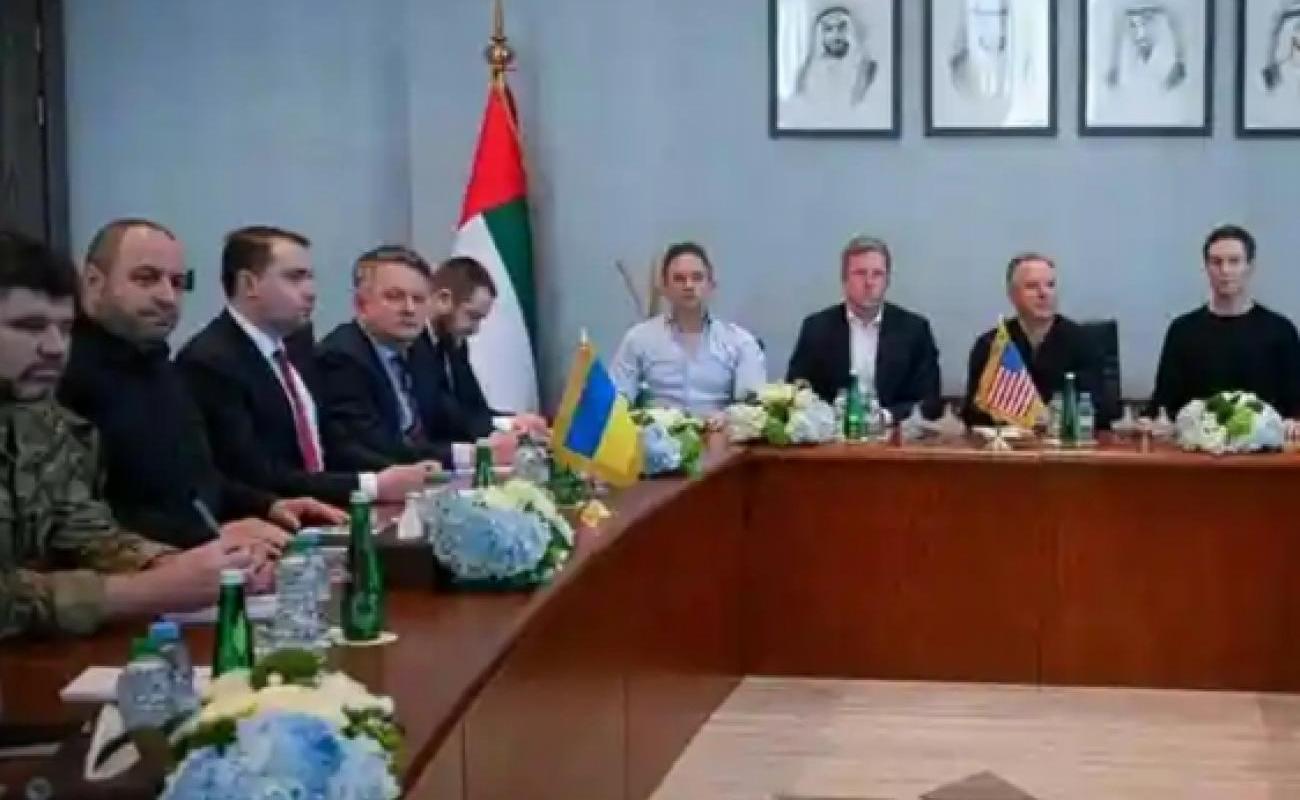
Ukraine reacted with restraint and irritation to the conclusion of the trilateral meeting in the UAE. The main result of the negotiations is direct contact between the parties. Will it be successful?
The trilateral negotiations between Ukraine and Russia, mediated by the United Arab Emirates (UAE), have concluded in the United Arab Emirates (UAE). The delegations left to agree on the positions developed in Abu Dhabi and potentially return to the negotiating table next week. This was announced by Ukrainian President Volodymyr Zelensky after the results of the trilateral meeting, which was held on January 23-24.
"This is the first such format in quite a long time - two-day trilateral meetings. We managed to talk a lot and it is important that the talks were constructive," he wrote on social networks. According to him, the main thing the talks focused on were "possible parameters for ending the war".
“I really appreciate that there is awareness of the need for American monitoring and control over the process of ending the war and maintaining real security. The American side has raised the issue of possible formats for approving the parameters of ending the war and the security conditions necessary for it,” Zelensky noted.
Ukraine’s reaction to the talks under Russian missiles and drones
The talks took place in the context of another massive Russian missile and drone attack on Ukraine on the night of January 24. The Russian Federation hit the energy infrastructure in Kyiv, Kharkiv and Chernihiv, after which the latter city was completely left without electricity.
“(Russian President Vladimir) Putin cynically ordered a brutal, massive missile attack on Ukraine at the very moment when delegations were gathering in Abu Dhabi to advance the US-led peace process. His missiles hit not only our people, but also the negotiating table,” Ukrainian Foreign Minister Andriy Sibiha said on the X social network after the night attack.
Ukrainian politicians also reacted to the massive Russian shelling during talks in Abu Dhabi. Irina Gerashchenko, co-chair of the opposition parliamentary faction "European Solidarity", said that Russia is committing genocide against the civilian population of Ukraine and must be punished.
"Today, the whole world once again witnessed Putin's "peace plan". Moscow is not ready for peace. We call for strengthening sanctions against the aggressor state and are discussing this with our international partners," she wrote on Telegram.
Military analyst, former adviser to the Ukrainian Defense Minister Oleksiy Kopytko believes that Russia is openly "negotiating" about terrorizing the civilian population in the context of an important meeting in Abu Dhabi, and only Putin personally could have approved it.
"This is his way of reinforcing the argument that without resolving the "territorial issue" according to the "Anchorage formula" there will be no ceasefire. In fact, Putin is consciously shifting responsibility onto (US President Donald) Trump and making him a direct co-organizer of the humanitarian catastrophe in Ukraine," Kopytko wrote on Facebook.
Has Russia moved from the diplomatic to the constructive field of action?
Anna Shelest, director of security programs at the Ukrainian think tank Prism, believes that the Ukraine-US-Russia meeting in Abu Dhabi did not bring concrete decisions, but it showed a change in the dynamics of the negotiations. According to her, the key feature was the rapid organization of the meeting and the trilateral format itself.
"An agreement was reached in Davos and the meeting in Abu Dhabi was held almost immediately. This is the first time that negotiations have taken place in a trilateral format. Previously, it was strange to hear discussions about ending the war without Russia's direct participation, and it is good that at least the first contact has taken place," she noted in a comment to DW.
Shelest emphasized that the direct presence of the American and Russian delegations in one negotiation process allows the United States to directly assess the position of the Russian Federation, as well as its readiness or unwillingness to compromise.
The expert drew attention to the change in the behavior of the Russian delegation. According to her, this time Moscow refrained from openly demonstrative or provocative actions, typical of previous negotiating platforms.
"This does not mean that Russia is ready for negotiations, but this is not the open diplomatic theater that we have seen before," Shelest emphasized.
Shelest called the parties' intention to continue contacts in the near future an important signal. In her opinion, this is important primarily for Ukraine, as it allows the US to maintain an active role in the negotiation process.
Negotiations for Donald Trump
The executive director of the Institute for the Transformation of Northern Eurasia, Volodymyr Gorbach, emphasizes that this contact between the parties is important in the negotiation process, but now it is more important in military terms.
According to him, the predominant presence of the military in the delegations allows for discussions exclusively on technical aspects, such as verification mechanisms, the withdrawal of forces or monitoring compliance with the ceasefire. However, as he noted, these issues relate to a period that has not yet come.
"These are talks about what to do after the end of the war and how to technically ensure compliance with the ceasefire. But there is no actual cessation of the war at the moment. What we are now observing is an imitation of negotiations with the sole aim of not irritating Trump and not accusing him of disturbing the peace," Gorbach told DW.
He called the so-called "Trump plan", which is currently being discussed with the participation of the US and Russia, unsuitable for implementation.
“This proposal not only does not suit either side, but it is inadequate and cannot be implemented in practice and adhered to for a long time,” Gorbach noted.
In his opinion, the most that the parties could count on in the framework of such negotiations are purely technical solutions, in particular, partial agreements on an energy truce, an exchange of prisoners or a temporary demarcation. However, even such results have not been achieved.