
“Imposing a love of war” Russia is turning Crimea into a military bridgehead: problems with mobilization, propaganda and fuel
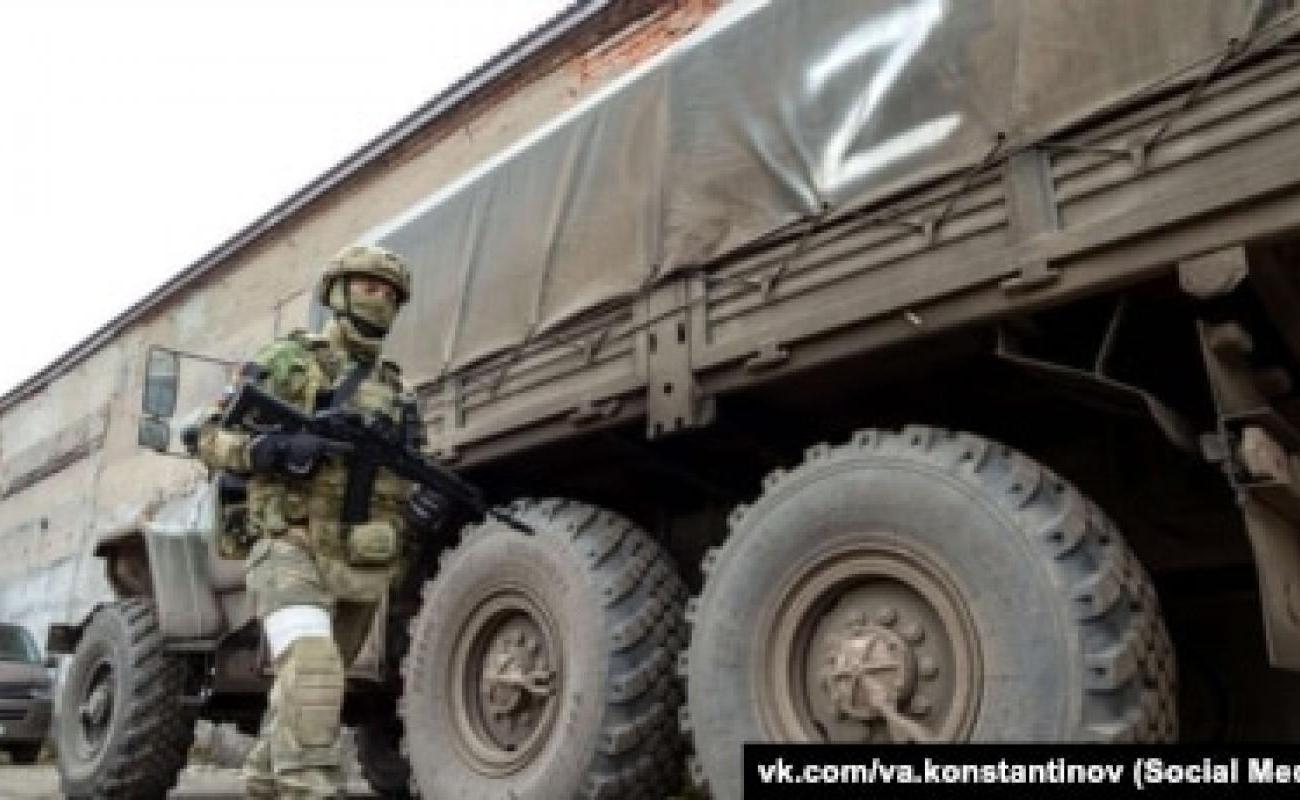
In the annexed Crimea, the Russian Federation is preparing to intensify recruitment into the Russian army and train local schoolchildren as drone operators. In the conditions of the fuel crisis, the Russian army has begun to take gasoline from civilians, local activists say. What is happening in Crimea while Russia is at war with Ukraine, we tell in the material Krim.Realii.
The Russian Federation is strengthening by the sea
This winter, the Russian army continues to strengthen on the Crimean peninsula. They are equipping new firing positions on the coast. In Yevpatoriya, they were spotted on the Tereshkova embankment, which was recently built with federal funds.
Similar military facilities on the Crimean coast have been repeatedly set up in previous years to deter Ukrainian landings and respond to military operations by the Ministry of Defense of Ukraine. Many of these facilities were eventually destroyed by the action of nature. In particular, Russian firing points and trenches on the beaches were washed away by a strong storm in 2023.
Now, a storm warning has been issued again in Crimea. In the coming days, a storm is expected on the peninsula, which, according to Russian media, may surpass the events of 2023.
“Do they really believe in the Ukrainian landing? Is the occupation administration just another way to spend money?” ask the ATES agents, looking at the Russian firing points.
The Russian side has not reported anything about this.
War from the School Desk
The Russian authorities continue to recruit new people into their army. In the occupied territories of Ukraine, high school graduates and students are being recruited under the guise of “patriotic education,” according to the Ukrainian Center for National Resistance.
“Students are being urged to take academic leave ‘for service’, and universities are handing over lists to military commands. In Crimea, recruitment has been switched to a ‘manual regime’ – postmen and clerks deliver mobilization brochures to home addresses,” the organization claims.
Schools and universities in Crimea do not publicly announce the recruitment of students, but do not deny that they regularly hold meetings with participants of the ‘SVO’ (as Russia calls its full-scale invasion of Ukraine - KR).
Former participants of the Russian war against Ukraine are being employed en masse in schools, despite the lack of pedagogical education, which is why education is increasingly turning into an ‘instrument of militaristic propaganda,’ activists of the ‘Yellow Ribbon’ movement note.
“Activists of the movement from Simferopol report that one of these ‘teachers’ tells children about his own combat experience during classes and imposes the idea of ‘love for war,’” the movement’s representatives say.
The Russian authorities in Crimea do not hide that the participants in the war against Ukraine are cooperating with local educational institutions. The Crimean Institute of Postgraduate Pedagogical Education claims that they are training Russian military personnel to teach “life skills” and “military training” in schools.
The First Deputy Head of the Presidential Administration of the Russian Federation Sergei Kiriyenko previously thanked the “SVO” veterans who “go to work in schools and are engaged in the education of the younger generation.”
Starting in 2026, Crimean schools intend to organize specialized sections for teaching students drone control skills, the Minister of Sports of the Russian government in Crimea, Olga Torubarova, told Crimean media. Currently, schools are conducting workshops with training on drone simulators and training in FPV drone control.
From recruitment to war
Crimea leads the way in terms of recruitment into the Russian military in the occupied territories, according to the Main Intelligence Directorate of the Ukrainian Ministry of Defense. In the region, after Russia's annexation in 2014, local Russian authorities conducted at least 22 recruitment campaigns, recruiting "conditionally 2,500" recruits in each of them, claims Yevgeny Yerin, a representative of the Main Intelligence Directorate of the Ukrainian Ministry of Defense.
According to him, Crimeans have become leaders among residents of the occupied territories of Ukraine in terms of the number of recruits into the Russian army.
"The number of conscripted residents of Crimea is significantly higher compared to other temporarily occupied territories. First of all, due to the fact that the Russian authorities recognized Crimea as Russian in 2015 and, contrary to all norms of international law, began to carry out mobilization there. They created a network of so-called military commissariats, creating a base among young people of draft age. And since 2014, this process of conscription into the army has already been underway there," explained Yevgeny Yerin.
Last year, the Russian authorities announced that they would call for military service not only in the spring and autumn, as before, but throughout the calendar year – from January 1 to December 31.
Although conscription does not imply direct participation in hostilities against Ukraine, Russia has a widespread practice of forcing conscripts to sign a contract on participation in the war against Ukraine, says Onisiya Sinyuk, a legal analyst at the ZMINA Human Rights Center. According to her, it is much easier to do this when a person is “already in the system of the armed forces and under the control of the military command.”
Forced conscription into the Russian army and the mobilization of the local population in the occupied territories violate Article 51 of the Geneva Convention, Ukrainian human rights activists emphasize.
Is the Russian army fighting with civilian fuel?
In Dzhankoy, Russian military personnel are pumping gasoline from civilian cars parked near apartment buildings, activists of the Yellow Ribbon movement report.
“Fuel is taken from the local population, who leave their cars near their homes. There have been several cases when the occupiers have been caught red-handed, but they argue that this is “needs of the SVO”. The local occupation police do not react in any way to such crimes of the occupiers,” the report states.
Signs of urgent fuel accumulation in December 2025 were noticed by activists of the “ATESH” movement in the 8th separate artillery regiment of the Russian Federation, headquartered in Simferopol.
“An unusually large concentration of fuel trucks was noted on the territory of the military unit, which may indicate measures to accumulate fuel on the eve of an acute shortage. The activity of military “Ural” trucks was also observed near the military unit, “ATESH” reported.
The editorial office cannot verify this information from other independent sources in the conditions of hostilities between Ukraine and the Russian Federation.
Russian public forums have previously reported on such a practice in the Russian Federation, when representatives of the Russian Guard took gasoline from civilian cars in the middle of the day.
Crimea has been experiencing a fuel crisis for several months. This was preceded by systematic strikes by the Ukrainian defense forces on Russian oil refineries.
The fuel supply disruptions lasted for several months in 2025. To restore them, Russia is buying fuel from partner countries. But the situation is unstable. In the last days of December 2025,
popular gasoline brands A92, A95, and even A95 ULTRA, as well as diesel fuel, disappeared again at Crimean gas stations.
The reason for this situation is connected with the unstable operation of the Kerch ferry due to winter storms, a Crimean activist explained to Krym.Realiya on condition of anonymity.
“We have already seen for ourselves that Crimea does not have significant fuel reserves, so as soon as the logistics of fuel supply through the Kerch Strait were disrupted, gasoline disappeared again in Crimea, and now diesel fuel at gas stations. Currently, diesel fuel available in Crimea is sent to meet the needs of the Russian army on the Ukrainian front, so the situation with the shortage of this type of fuel at gas stations may drag on, especially since in January and February the sea is often rough and the ferry operates unstable,” he says.
The supply of Russian fuel to Crimea via the “land corridor” is also now problematic, as the Armed Forces of Ukraine have stepped up attacks on the fuel logistics of the Russian Federation through the occupied territories of southern Ukraine, our interlocutor notes.
The Russian authorities in Crimea have not reported any problems with fuel.