
How Russia Is Pushing Kyiv into Darkness and How All of Ukraine Will Survive the Winter Battle
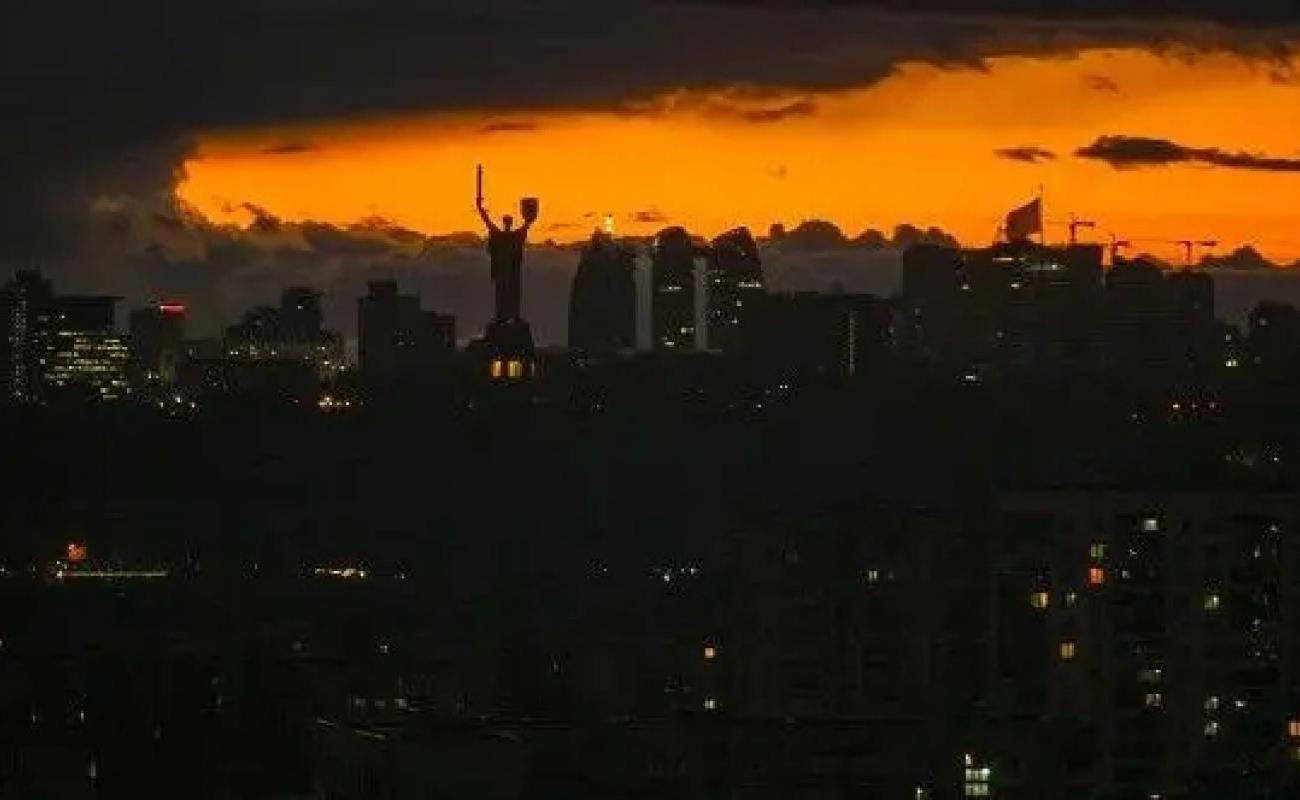
The upcoming "military winter" appears set to differ from previous ones. For starters, it effectively began as early as October, judging by the emergency power outages that occurred while the weather was still mild.
Attacks on the power grid have entered a new phase—one with even more painful consequences.
It is increasingly military experts, rather than energy specialists, who are discussing whether the lights will stay on. And they are not just talking about electricity; they are also addressing water supplies, transport, and bridges.
Russian strikes on infrastructure have expanded in terms of both the weaponry used and the targets selected.
As a result, life in Kyiv has come to resemble survival in a frontline city—not necessarily in terms of physical distance from the front, but in terms of the frequency and nature of the attacks.
The UN is preparing to provide emergency aid to Ukraine throughout the winter, including heating, shelter, food, medical care, and cash assistance for approximately two million vulnerable Ukrainians.
Repeated attacks on civilians and critical infrastructure are deepening the humanitarian crisis in Ukraine as winter approaches, stated Gemma Connell, head of the Crisis Response Section at the UN Office for the Coordination of Humanitarian Affairs (OCHA).
"The enemy is launching daily attacks on energy infrastructure and facilities that supply electricity to Kyiv and the central regions," says Prime Minister Serhiy Koretsky—appointed by the President this summer—who has made winter preparations his top priority. Striking Facilities – "Like at a Shooting Range"
When discussing preparations for winter, Energy Minister Denys Shmyhal speaks more about intelligence data than about energy reserves or meteorological forecasts.
According to him, the Russians have specified which facilities they intend to attack, in what quantities, and with which types of weaponry.
The government official stated that Russia is preparing complex strikes against various facilities—ranging from heating supply systems to water and sewage infrastructure—aimed at destroying generation capacity and the power grid, as well as the interconnectors that link grid elements, both at the points where the network enters Ukraine from Europe and across the Dnipro River.
"It is laid out in cold, clear terms. There are tables detailing the number of weapons required to destroy each specific facility," the Energy Minister said on television. "The types of weaponry range from ballistic missiles to jet-powered and conventional drones."
According to Shmyhal, the Russians have devised separate plans for major cities—such as Kyiv, Kharkiv, and Odesa—as well as for cities with populations of around half a million.
According to the minister, in order to counter this threat, more than 200 major concrete structures—so-called "shelters"—have already been built over facilities identified by the Russians as high-priority targets.
Furthermore, in collaboration with international partners, the government is sourcing, purchasing, and stockpiling the equipment necessary for rapid repairs following attacks.
However, a government official acknowledged that it is impossible to shield the entire energy sector under a "concrete dome":
"Naturally, air defense currently provides 90 percent protection. But when faced with thousands of missiles and drones, even that remaining 10 percent is painful."
Military experts warn that this "pain" will almost certainly persist throughout the winter.
"The complexity of the situation will be determined less by energy-related factors—such as training and reserves—and more by the military dimension," says Volodymyr Omelchenko, Director of Energy Programs at the Razumkov Centre.
Russia has geared its budget toward weapons production—with the emergence of jet-powered drones—and the intensity of attacks on energy infrastructure during this full-scale war has increased fivefold, explains Olena Pavlenko, president of the think tank DiXi Group.
"This level of intensity will continue as long as Russia retains the capacity, the funds, and the production capabilities to sustain it," says Pavlenko. "Russia has upgraded existing weapons, and new means of destruction have emerged. And our air defense system—while delivering quite significant results—is not sufficient to destroy everything that comes our way," explains Mykhailo Honchar, President of the Centre for Global Studies "Strategy XXI."
Simply put, if you strike incessantly, regardless of the defenses, something is bound to hit the target.
At the same time, the expert notes, damage to a specific facility—for instance, an electrical substation—often does not lead to critical consequences for the system as a whole. However, as the number of such incidents grows, the impact becomes severe—as seen in Kyiv, where the metro system has ceased to function and water supplies have been cut off.
An additional complicating factor is that, given the virtually continuous nature of the attacks, repair crews often cannot carry out their work due to the constant threat of a follow-up strike.
Consequently, they are unable to complete repairs as quickly as they once could.
Nevertheless, Pavlenko points out, it cannot be said that Ukraine was poorly prepared. Yet, against this level of bombardment, the only solution is to strengthen air defense—after all, "you cannot simply hide a heating plant under a concrete sarcophagus."
"You can prepare for the autumn-winter period from an energy perspective, but if the military component isn't taken into account, such calculations might prove worthless—especially if the enemy holds air superiority. As we can see, energy infrastructure is currently being targeted as if it were a practice range," says Volodymyr Omelchenko.
According to him, it is currently impossible to focus solely on metrics like "how many power generation facilities have been restored, how many new distribution units have been built, what protective measures have been installed, or how much gas is in underground storage"—these factors become irrelevant given the current intensity of the attacks. Omelchenko explains that the Russians are deliberately seeking to shatter the resilience of the Ukrainian people.
Why?
"Because they absolutely must demonstrate to Trump that they can fulfill the commitments of the so-called 'spirit of Anchorage'—allowing Trump to present this 'peace' (which is, in reality, Ukraine's capitulation) to the electorate," Omelchenko argues.
Attack on the Power Grid: Version 2.0
The first truly massive strike on Ukraine's energy sector during the full-scale invasion was launched by the Russians on October 10, 2022. At the time, they framed it as "retaliation" for the damage to the Crimean Bridge, though it later emerged that the order to strike the energy sector had been issued well before that event.
Consequently, the energy sector was forced to implement the first large-scale supply interruptions.
"Russia is targeting energy equipment and high-voltage power grids." "As a result, the transmission of electricity between regions is currently significantly hindered. Electricity is available, but it is technically impossible to transmit it. Therefore, Ukrenergo is forced to implement scheduled outages, and in the event of further attacks—emergency restrictions," said Energy Minister Denys Shmyhal in October 2026—exactly four years after the first massive Russian attack.
What has changed?
The minister himself provided a partial answer. According to him, the priority now is not merely restoring the electricity supply, but also securing backup power for other critical infrastructure—specifically communications and water supply. The head of the Ministry of Energy has also ordered an acceleration of work on installing and connecting distributed generation facilities—a concept that was not even discussed back in 2022.
However, both then and now, energy experts point out that generating electricity is one thing, while delivering it to consumers is quite another.
It is precisely the Russian strikes on the infrastructure that transports electricity from producers to consumers—such as high-voltage lines, substations, and distribution equipment—carried out once again, but this time with more effective weaponry, that have become the primary cause of the power outages that occurred in early October, despite the mild weather.
Protecting the system is important, but it is not always feasible or decisive, explains Omelchenko:
"No energy system in the world can survive if it isn't protected or if its infrastructure isn't distributed—especially if the enemy possesses sufficient force to destroy it, while your own air defense capabilities are inadequate."
According to him, in the ongoing debates over why emergency power cuts have resumed, many Ukrainians fail to fully grasp a simple reality: "You can have as much generation capacity as you like, but if you cannot transmit that power, you will end up without electricity."
The expert notes that it is incorrect to say nothing has been prepared or protected. According to him, a second layer of protection—specifically, concrete shelters—has been constructed at most major grid facilities.
"However, these only protect the transformers. These substations cover vast areas—tens of hectares—and contain other equipment scattered throughout the site. Protecting all of it is practically impossible."
Mykhailo Honchar confirms that protective measures are in place at key facilities and have even been "tested under real-world conditions."
"Engineering-based protection works, but it cannot cover everything," the expert states.
He adds that the risk of repeated, rapid strikes by jet-powered drones makes it increasingly difficult for repair crews to quickly address the damage—a task that was more manageable in earlier years of the war.
Furthermore, Olena Pavlenko notes that sourcing replacement equipment for what the Russians have destroyed has become more difficult; even international stockpiles are dwindling. Consequently, resolving the situation as quickly as in previous years is becoming ever harder:
"This is 'Version 2.0,' but at a different, more complex, and more challenging level—because Russia now has a wider array of attack options."
Pavlenko points out that in September, due to budgetary constraints, the government halted funding for "resilience plans." This has created additional hurdles for winter preparations at the local level—not to mention the ongoing shortage of personnel available for repair work. The most striking example of this entire complex of troubles was Kyiv, where, in addition to issues with lighting and power, a political conflict between the president and the mayor also came to the fore.
Kyiv – the capital of Ukraine
Following Russian attacks last winter, Kyiv was left practically without a thermal power plant—meaning it was deprived not only of heating but also of local energy generation—and energy shortages in the capital and the surrounding region intensified.
On October 8, 2026, as a result of a Russian attack on energy infrastructure in Kyiv, emergency power outages were implemented for the first time. Due to energy supply issues in the capital, the metro system and escalators were completely halted for a period, and water pressure in the municipal supply network dropped. Later, these emergency outages were replaced by scheduled ones.
DTEK subsequently explained that, during an air strike, Russian forces had damaged energy equipment and high-voltage networks responsible for transmitting electricity between regions. Consequently, the power system temporarily lost some of its capacity to deliver electricity to consumers.
"To avoid overloading the grid and major accidents, emergency power outages have been implemented in Kyiv and parts of the Kyiv region, as ordered by Ukrenergo," explained the company that supplies electricity to the capital.
Serhiy Nahorniak, head of the parliamentary committee on energy, later provided further details to Radio NV regarding the situation in Kyiv. According to the MP, five electrical substations in Kyiv and its surrounding areas—which facilitate the reception and transmission of electricity—were targeted by Russian attacks. This disrupted the transmission of electricity generated at the Rivne and Khmelnytskyi nuclear power plants to end consumers.
"It is a paradoxical situation: we have a surplus in generation—we are capable of producing more electricity—but following several well-aimed enemy strikes, we are forced to limit consumption in Kyiv, the Kyiv metropolitan area, and across the central and eastern parts of Ukraine," said the MP from the 'Servant of the People' party.
Meanwhile, Volodymyr Zelenskyy rebuked the city authorities of the Ukrainian capital for an "almost complete" failure to implement resilience plans.
"The slowdown in work is absolutely unacceptable, and the responsibility lies personally with the Ministry of Infrastructure and the regional administrations. We have set specific tasks for Kyiv—precisely because of the city authorities' near-total failure to take the necessary steps," the President stated following a meeting with government officials and military leadership. Mayor Vitali Klitschko responded to criticism from the podium of the Verkhovna Rada, where he had been summoned to provide explanations. He stated that the capital's authorities are doing everything in their power, but that they cannot address the shortage of air defense assets—a matter for which the central government bears responsibility.
"The city authorities are doing their utmost to keep the capital functioning amidst massive shelling. While there were 19 strikes on the capital's heat-generation facilities last year, this year there have already been nearly 50! Throughout this time, specialists have been working—repairing equipment and preparing facilities for winter. And Kyiv has held on—even with a shortage of workers in municipal utility companies and a suspension of payments," the mayor said.
Following large-scale attacks and supply disruptions on October 8, Vitali Klitschko stated in an interview with AFP that, due to the intensification of Russian strikes on bridges and energy infrastructure, Kyiv is shifting into "survival mode" ahead of winter. He advised Kyiv residents who have relatives or friends outside the capital to consider leaving temporarily—while emphasizing that he is not calling for a full-scale evacuation of the city, as Russian leader Vladimir Putin might desire.
There is nothing new in this. "The enemy is attempting to employ a strategy that was in place as far back as 2022—cutting off the energy supply to Kyiv—given that it is well known that Kyiv itself has always faced an energy deficit. Consequently, the enemy is (now) trying to sever the main power lines that connect Kyiv to our nuclear power plants," explains Mykhailo Honchar.
According to experts, Kyiv requires approximately 2.2 GW—an amount equivalent to the capacity of two nuclear power units. Under these circumstances, relying solely on cogeneration plants will not solve the problem—even if such plants were readily available and there were sufficient time to implement them.
"You cannot accomplish this in just a few summer months; it requires funding, and protective measures must be put in place. The cost of 'second-level' protection is practically equal to the cost of the cogeneration plant itself—not to mention the need for drone defense and additional security measures," explains Honchar.
"Projects like these are being developed in Kyiv, but in reality, they account for less than 10 percent of what is actually needed—do you see?"
According to experts, when it comes to the situation in Kyiv, there are no "saints or sinners."
"It is as if the central government has forgotten that Kyiv is not just a city, but the nation's capital." At the same time, "pointing fingers at Bankova" [the seat of the presidential administration] to justify a lack of progress is also misguided.
"The only advice they offer is to leave Kyiv. Well, thanks for that advice! What use are they to us, then?" remarks Volodymyr Omelchenko, reacting with visible emotion to the political disputes surrounding the capital's energy situation.
He adds that witnessing this—and, even more so, experiencing the consequences—is particularly difficult, given that it has long been entirely obvious that Kyiv would be a primary target for Russian attacks. As well as the fact that special attention should have been paid to the capital - at all levels:
"I said about this strategy six months ago that the enemy will primarily concentrate attention on Kiev, will not disperse too much throughout Ukraine, because previous years have shown that this does not give the desired effect".
According to Omelchenko, the first phase of this plan – the destruction of production in and around Kyiv – TE 4, TE 5, TE 6, Tripilja TE – took place last winter.
Currently, the Russians are destroying high-voltage transmission lines around the Ukrenergo substation in order to "cut off Kiev and the Kyiv region from the energy supply, in order to push this region into a complete blackout."
If the strategy of cutting off Kiev and turning it into an energy island with a subsequent plunge into darkness succeeds, says Omelchenko, "it will no longer matter how much gas is in the warehouses, whether some production has been restored or not, whether the nuclear block has been repaired on time or not."
But still,
What about production and reserves?
If we return to the factors that have traditionally determined how Ukraine manages the heating season—production capacity, as well as gas and coal reserves—the situation appears rather paradoxical.
One piece of good news is that meteorologists currently forecast a generally mild winter ahead, with cold spells and snowfall expected to be short-lived.
Despite the return of scheduled—and occasionally unscheduled—power outages in major cities, primarily Kyiv, Ukraine is not facing a general shortage of electricity. In fact, the country is not only able to export its surplus but also uses these exports to manage excess nuclear power generation. This has become necessary because thermal power plants—which previously served to balance the system by allowing for rapid adjustments in output based on demand—have been 80 to 90 percent destroyed.
A similar situation applies to gas. This year, Ukraine has managed to accumulate sufficient gas reserves—nearly 16 billion cubic meters—reaching this target ahead of schedule.
"That is over a billion cubic meters more than planned," says Volodymyr Omelchenko. However, he notes that it is impossible to provide a definitive answer as to whether this gas can always be extracted from storage without consulting the military; ultimately, "it depends on the enemy's capabilities, their plans to attack compressor stations, and Ukraine's ability to defend them." Moreover, the primary reason for the healthy gas reserves is rather grim: Russian attacks on metallurgical enterprises have effectively brought production to a halt—and these facilities were the largest industrial consumers.
At the same time, according to Mykhailo Honchar, the Russians continue to target Ukrainian gas production facilities—particularly in the Poltava and Kharkiv regions—while also striking the western part of the country, specifically surface infrastructure and underground gas storage sites.
"Yet, as you can see, the gas keeps flowing. So, this is not as straightforward a task as it might appear at first glance," the expert observes carefully.
On October 7, the government even lifted the ban on natural gas exports, which had been in place since the start of the full-scale invasion. Private gas producers will now be permitted to export up to 15 percent of their output from the preceding month.
Evidently, Honchar notes, "the Prime Minister is still effectively running Naftogaz—out of sheer inertia—but now, in his capacity as Prime Minister, he must address budgetary concerns." Furthermore, gas prices in Europe—where reserves are currently lower than usual—are significantly higher than the cost of gas produced within Ukraine.
However, in the expert's view, it would be more efficient and safer to take such steps later in the winter—"once it becomes clear that we have passed the midpoint of the winter season, and we can, as the saying goes, afford a little leeway."
Ultimately, Honchar adds, this winter will be "very different"—even within the same city—as conditions will depend, in part, on how well-prepared a specific apartment building, or even an individual apartment, happens to be. "But again, if there is no heat supply, then no amount of insulation will help much," the expert immediately admits.
And he advises that in such a case you have your own back-up option: uninterrupted power supply, water supply and warm clothes.
And remember that the battle is fought not only with military means and not only for electricity and heat, but also for the brain - "when the structure of thinking changes and a person thinks that he came up with the idea himself, yes, after all, it is necessary to negotiate somehow".