
Geothermal Energy at Nelt Group: Less Pollution and Energy Savings
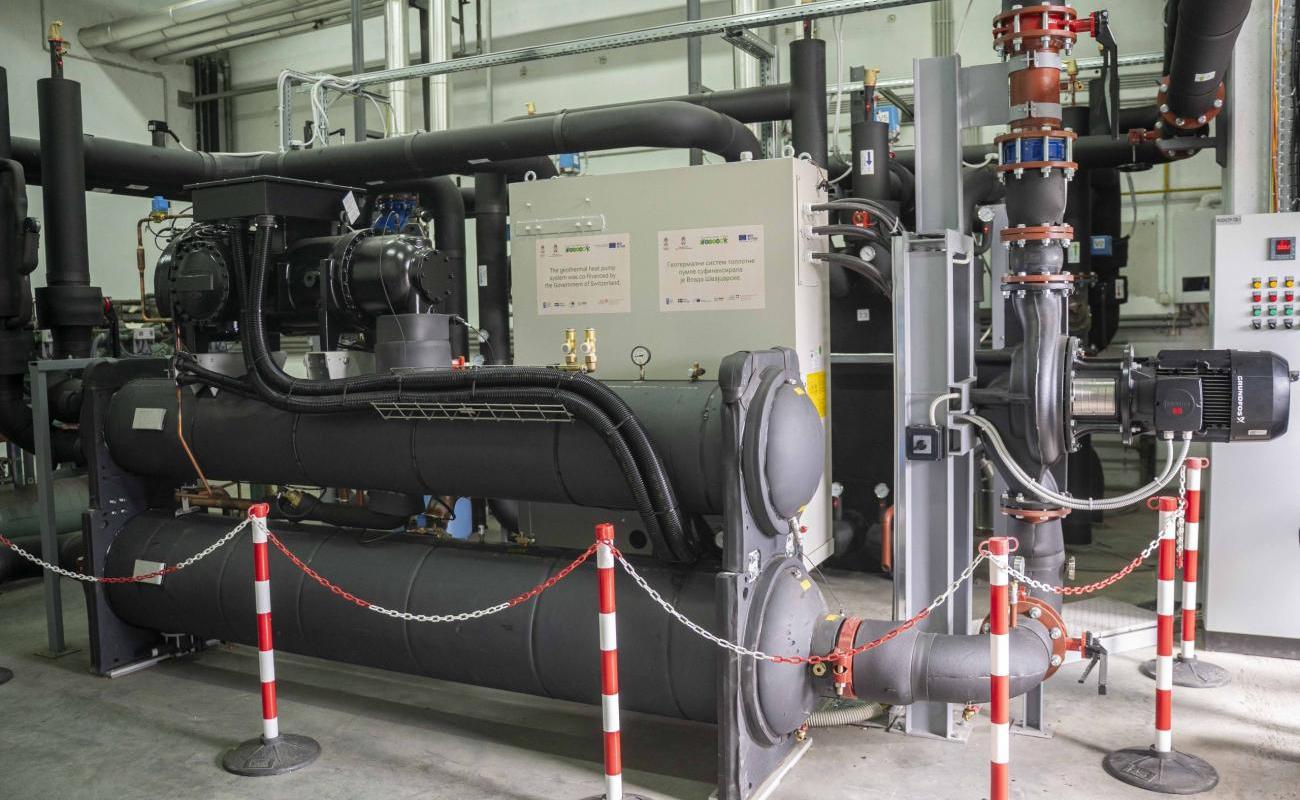
Serbia’s leading logistics company, with the support of the European Union and the Swiss Government, has taken a significant step toward business operations that have a lower impact on the environment. The new geothermal system at the Dobanovci distribution center will reduce greenhouse gas emissions by 40% by 2030 and save 7 million kWh of energy annually.
The project demonstrates that successful and efficient business operations can go hand in hand with the introduction of energy-efficient solutions based on renewable energy sources.
“The European Union stands with Serbia on the path of green transition. We support the adoption of cleaner technologies, better environmental management, and progress toward a greener, more sustainable, and competitive economy. Nelt’s example shows that renewable energy can replace fossil fuels in complex logistics operations while simultaneously contributing to both environmental and economic goals,” said Andreas von Beckerath, Ambassador of the European Union to Serbia.
The procurement of the geothermal heat pump system was co-financed by the Swiss Government with a $200,000 donation, as part of the “EU for Green Agenda in Serbia” project.
“Switzerland supports Serbia’s green transition by encouraging innovation, strengthening the role of the private sector, and developing a sustainable green financing system. The project with Nelt clearly shows how innovative solutions can contribute to reducing harmful emissions and improving energy efficiency, and demonstrates that companies can be both competitive and environmentally responsible,” said Anne Lugon-Moulin, Ambassador of Switzerland to Serbia.
The hybrid water-to-water system replaces a gas boiler and provides heating and cooling for over 22,000 m⊃2; – two halls with warehouse and office spaces, and a technical block for vehicle servicing. The system provides about 40% of the total energy required for these facilities and operates in combination with the existing solar power plant.
“Our long-term commitment is to develop the company responsibly and sustainably through initiatives that deliver measurable and concrete results. The geothermal system in Dobanovci has been designed with a clear development perspective and will be an integral part of future logistics capacities, connected to the new warehouse within the center,” emphasized Marko Cilić, Chairman of the Executive Board and Acting CEO of Nelt Group.
In addition to reducing CO₂ emissions by more than 50,000 tons over the next 20 years, the project also contributes to reducing sulfur dioxide, nitrogen oxides, and suspended particles, directly affecting air quality in the surrounding area.
“Thanks to the successful cooperation of all partners, we have supported more than 90 innovative green projects. Serbian innovators received technical assistance, access to favorable financing, and mentorship. This shows that a team approach truly works,” said Damien Sorell, Head of the EIB Regional Center for the Western Balkans.
“UNDP supports the use of geothermal energy as a reliable and accessible renewable source with great potential for wider application in industry and local governments. Nelt Group’s innovation is an excellent example that other companies in Serbia can follow,” stated Jakup Berish, UNDP Resident Representative in Serbia.
Nelt Group’s innovation is one of numerous green investments implemented under the “EU for Green Agenda in Serbia” project, which, with EU support and in partnership with the Ministry of Environmental Protection, is implemented by UNDP, with additional funding from the governments of Switzerland, Sweden, and Serbia, and in cooperation with the European Investment Bank.
The European Union is a global leader in environmental protection. The EU supports Serbia on its path toward a healthier environment. With over €582 million in grants invested in environmental protection and climate action in Serbia, the EU is the country’s largest donor in this field. With EU financial support, Serbia is working on the development and implementation of strategic environmental protection plans – a sustainable system that contributes to a healthier environment and improves quality of life.