
Sweden warns that Putin's robot army is targeting German and French elections
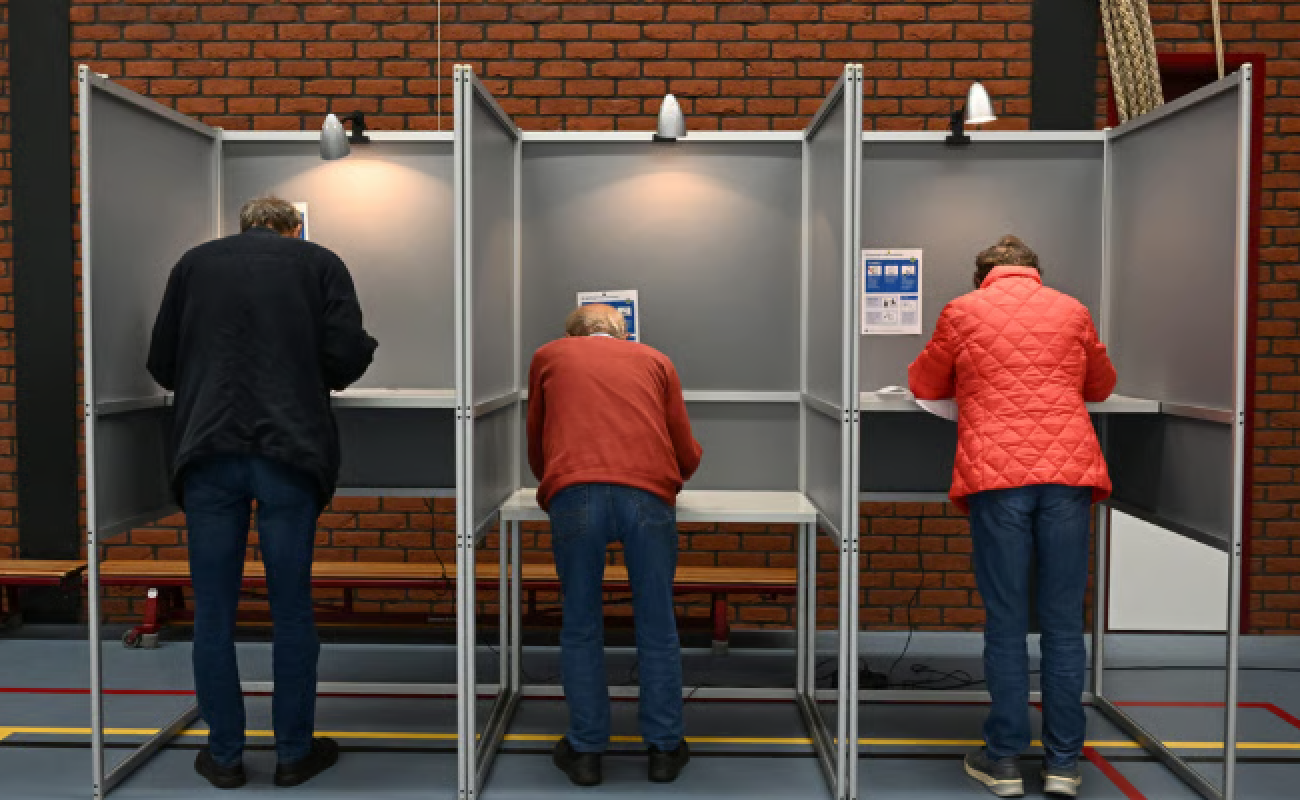
Russia poses a threat to upcoming elections in Europe's largest democracies and social media platforms must "escalate" the fight against Moscow's botnets, Sweden's disinformation defense chief has warned.
In an interview with POLITICO , Magnus Hjort, director general of the Swedish Psychological Safety Agency, said the election was an “opportunity” for Vladimir Putin’s information warfare machine to polarize and divide European societies.
The Kremlin's main objective is to make voters doubt whether their politicians should continue to send money and weapons to Kiev by spreading false stories about Ukrainian corruption and other abuses, he added.
Hjort and his team do not believe Moscow is targeting Sunday's general election in Sweden — partly because the country is largely united behind the policy of supporting Ukraine.
Instead, he said, Russia is targeting more powerful countries with elections on the horizon – including German state votes and the French presidential campaign – where far-right parties seen as more sympathetic to Moscow are poised to gain ground.
"Our assessment is that Russia is prioritizing other elections, other countries, larger countries in Europe. We have elections in Germany coming up at the regional and local levels," he added. "We have presidential elections in France next year," Hjort said.
Hjort's intervention comes after warnings about Russian efforts to influence voters this month in Germany, as well as an outcry ahead of Sunday's Swedish election over a far-right official's ties to Moscow.
In Germany, there have been growing fears of the Kremlin's hybrid warfare, including a drone attack on Leipzig airport, as well as fake posts and videos on social media falsely accusing election candidates of corruption and sex crimes. Further elections are due in Berlin and Mecklenburg-Western Pomerania on September 20, with the far-right Alternative for Germany (AfD) expected to do well.
In France, Marine Le Pen, whose party, the National Rally, has been criticized in the past for its sympathy for Russia, is leading opinion polls in the race ahead of next year's presidential election.
Russian-backed actors have targeted Sweden with disinformation and influence campaigns in recent years, including in the run-up to the country's NATO accession. Hjort said he wanted social media platforms to do more to dismantle networks of automated accounts that spread foreign disinformation and conduct influence campaigns.
Asked if he was satisfied with the efforts that companies like Meta, TikTok, and X are making to tackle the problem, Hjort said: "With the platforms? No, I think the platforms need to do more to keep their platforms clean of these botnets. So there's room for improvement."
Social media giants have their own “agenda,” which is “to make money,” he said. “We have a different agenda. We want to get rid of the networks of the world that target our democracies. Of course, they don’t want them on their platforms. That’s not the problem, but it’s an inconvenience to remove them.”
Hjort added: "We need to up our game. We need to find better ways to protect our democracies. We need to work together with counterparts in European countries and we need to find a way to develop a good dialogue with the platforms much more effectively."
Fighting Putin's lying machine
Hjort said his agency noticed a "continuous stream" of foreign information manipulation and interference, from countries such as Russia, China and Iran.
In recent days, his team found evidence of a Russian-linked disinformation campaign using the so-called Matryoshka, or Russian doll, method. This is intended to distract fact-checkers, journalists and others by sending them emails saying “look what the Russians are doing,” he said. “The idea is that they take this, go to the actual video clip or whatever it is and then publish it with a debunker saying, ‘This is fake,’ and, you know, waste their time looking at this.”
Hjort believes that the best way to deal with these campaigns is to simply deny them the oxygen of engagement.
“A lot of this stuff you should ignore,” rather than fall into the Russian “trap,” he said. “They want to engage you, they want to get you angry, they want to provoke you. They want you to react, they want you to share information that polarizes… So it’s better to leave it unnoticed.”
Holiday network
Hjort said a state actor — whom authorities have not publicly named — was responsible for a global network of 1,200 accounts on X, formerly Twitter, targeting Sweden and other countries in an attempt to divide societies.
It was called the "holiday network" because the accounts started out discussing seemingly innocuous topics like vacations and sports.
In total, the network published 50,000 posts and comments in 2025 and 2026, deliberately expressing divisive views — strongly in favor of or against major political issues, the agency noted. “This is how you can work if you want to polarize a society,” Hjort said.
The agency's chief said his team is ready to handle anything that arises in the final days of Sweden's elections and is working closely with security services, election authorities and the civil protection agency in a structure designed to protect democracy.
For now, he is not concerned about Russian influence in the campaign. "Our assessment is that right now we don't see any coordinated campaign targeting Sweden," he said.
The biggest risk to Sunday's election may simply be people's over-concern about Russian influence.
"Perhaps the fear of foreign interference could be one of the biggest problems," Hjort said. "There could be an exaggeration of the threat and that could lead to someone saying that the elections were not fair, that the elections were rigged. That could undermine the formation of a stable government after the elections."
The GeoPost