
Franco-German non-paper: A new approach to reduce obstacles to EU accession
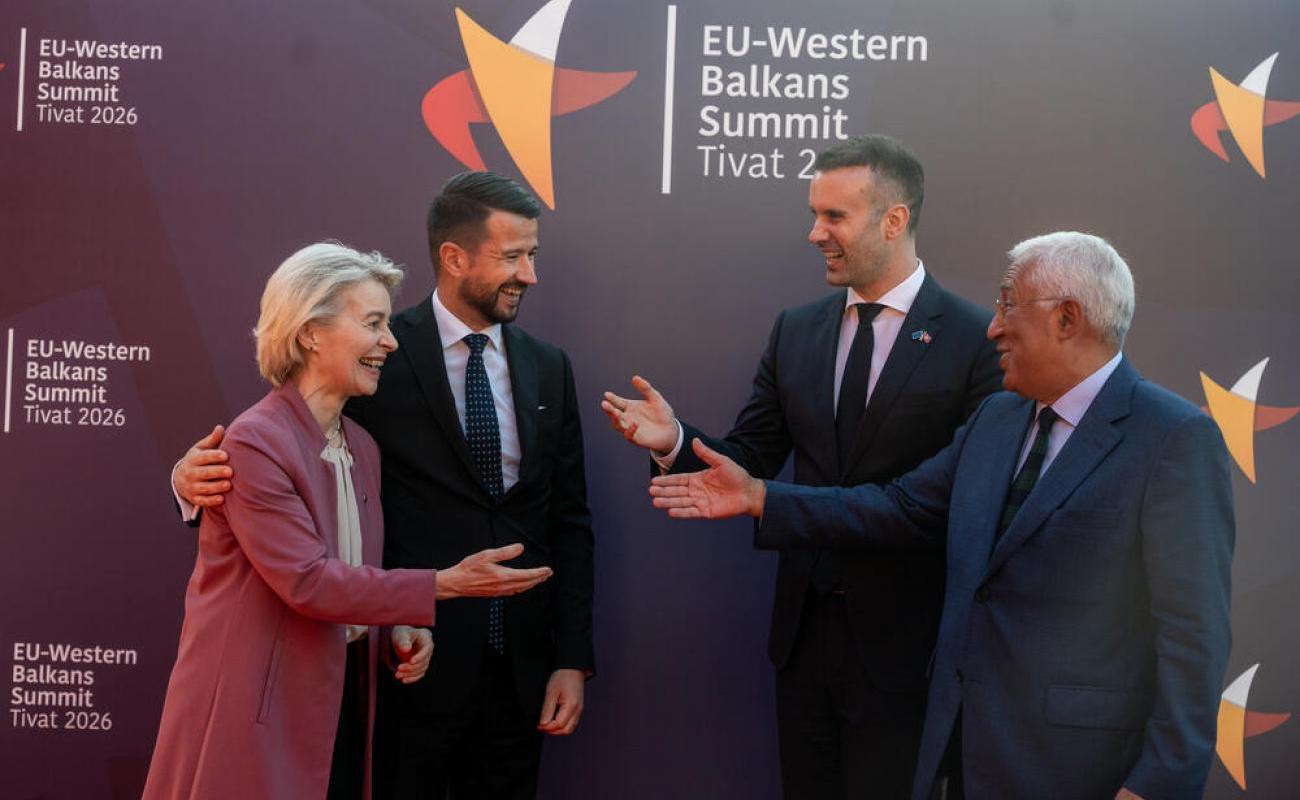
The European Commission is invited to present proposals to facilitate the gradual integration of EU candidate countries, including, among other things, privileged access to the internal market based on their significant progress in negotiations and closer ties with European institutions in the daily decision-making process, according to a Franco-German non-paper presented at the EU-Western Balkans Summit in Tivat, Nova.rs reports.
As stated in the document titled "A new impetus to contribute to enlargement ahead of the upcoming EU-Western Balkans summit (5 June 2026) and the EU-Moldova summit (22 June 2026)", "enlargement remains one of the most attractive offers and most influential political instruments that the Union has".
"But enlargement policy needs new momentum – the upcoming summits that the EU will hold with the Western Balkans (June 5) and with Moldova (June 22) represent an opportunity that we must not miss. Our common goal is to complete the Union as a truly European Union," the document states.
We are reprinting the rest of the non-paper in its entirety.
"To turn this aspiration into reality and inject new momentum, we need to provide additional incentives as part of a merit-based integration process and gradually simplify the current process to make it more efficient and enable faster and deeper integration into the EU on the basis of the Copenhagen criteria. To this end, we aim for a new, process-oriented approach that reduces overly formalised barriers to intermediate steps and simplifies the current methodology (by merging some procedural steps). Moreover, with the full agreement of the Member States, we should advance the opening of all relevant negotiation clusters where the Commission proposes it.
The work of the countries wishing to join the EU, the Commission and the Council should focus on the substance of reforms, rather than on procedural steps. Regular Intergovernmental Conferences (IGCs) could be better mobilised to provide such political guidance. In addition, we propose a pre-accession strategy containing a toolbox with a set of building blocks that effectively bring candidate countries closer to the EU through more structured gradual integration, thus providing additional incentives for reforms.
These building blocks should build on the progress made in the accession process and be reversible in the event of a backsliding of the relevant candidate country in its reform process and with regard to the fundamental values and principles of the EU.
While each candidate country should benefit from a tailored approach, the new approach would offer immediate and tangible progress to all candidate countries. The goal of full EU membership remains unchanged, our intention is neither to replace full EU membership nor to extend the path towards it, but on the contrary: we want to create incentives that encourage faster progress on that path.
In this way, we ensure that gradual integration contributes to a successful EU enlargement – strengthening the EU as a whole. We call on the Commission to present proposals to facilitate the gradual integration of candidate countries on their path to EU accession. This should include, inter alia, privileged access to the internal market based on their significant progress in the negotiations and closer links with the European institutions in the day-to-day decision-making process, e.g. by granting progressive observer status to candidate countries at meetings of the EU institutions under conditions that respect the autonomy of the EU decision-making process.
Basic elements for achieving enlargement Joint meetings of the European Commission/Members of the European Parliament with representatives of the Western Balkan countries and Moldova (each twice a year).
Requirement: Membership application.
More frequent joint parliamentary committees composed of MEPs and national parliamentarians from the Western Balkan countries and Moldova.
Request: Approval of the Interim Benchmark Assessment Report (IBAR) + invitation from the European Parliament.
Participation in certain items on the agenda of informal meetings of the European Council and the Council. Participation in certain items on the agenda of the Council as an observer without the right to vote.
Request: Closing of relevant chapters in the accession process.
Participation in certain agenda items of the Foreign Affairs Council meetings as observers without the right to vote.
Request: Temporary closure of Chapter 31 (FSDP).
Enhanced cooperation in the field of security and defence, including security and defence partnerships, PESCO projects, enhanced cooperation with Frontex, integration into the EU Agency for Cybersecurity and the EU Cyber Attack Early Warning System.
Requirement: fulfillment of relevant criteria, i.e. +temporary closure of Chapter 31 (FSDP).
Participation in EU programmes and initiatives, including: Creative Europe/Digital Europe, official accession to Erasmus+, further integration into Horizon Europe, Youth Experience Programme, participation in EU pooling mechanisms for joint procurement, full access to the Technical Support Instrument, strengthening of Twinning and TAIEX instruments in relevant areas.
Requirements: Meeting the relevant standards and requirements.
Sectoral integration into the single market in the following areas: SEPA, Roam Like At Home, Transport Community, Agreements on Conformity Assessment and Acceptance of Industrial Products, Energy Market, Emissions Trading System, Green Lanes, Integration into EU Policies on 4 June 2026, Competitiveness/Industrial Strategies/Critical Raw Materials, Authorised Economic Operator (AEO) Status, Digital Single Market, More Far-reaching Agreements on Sanitary and Phytosanitary Measures, Further Reduction of Non-Tariff Trade Barriers, Exemption from Certain Safeguard Measures (similar to EEA States).
Requirement: Fulfillment of relevant standards and requirements and/or provisional closure of relevant negotiation chapters.
Full participation in the single market based on the European Economic Area+ model.
Requirement: adoption and implementation of the EU acquis relating to clusters 1 to 5 and provisional closure of the relevant negotiation chapters, regardless of transitional periods and safeguard measures.