
First EU4ALL Grants Awarded to 13 Montenegrin Municipalities: EU Support Brings Tangible Change for Citizens
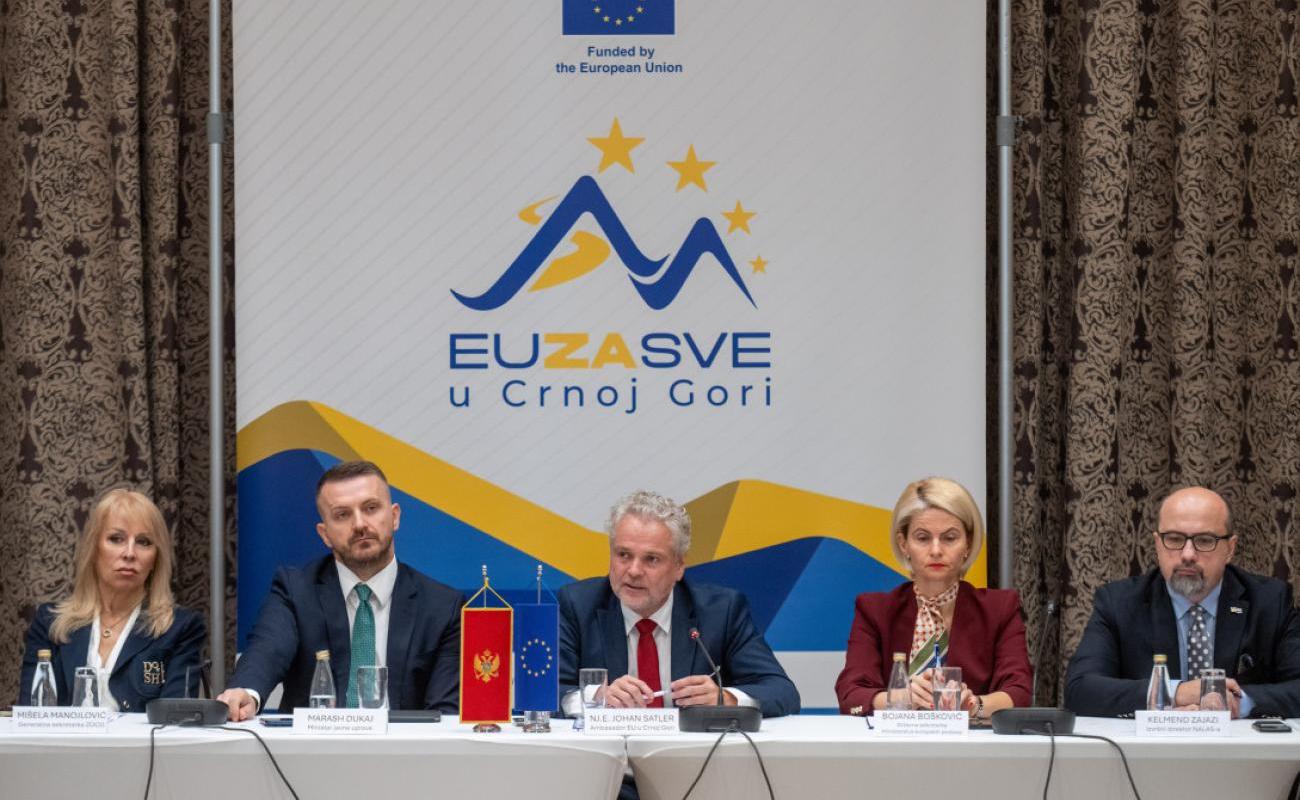
From addressing the housing needs of the most vulnerable pensioners in Bijelo Polje, to improving public spaces in Gusinje and enhancing Plav’s tourism offer, 13 Montenegrin municipalities have received the first grants under the EU4ALL project. These grants will enable the implementation of concrete projects and improve citizens’ quality of life.
The Ambassador of the EU to Montenegro, Johann Sattler, said Montenegro’s European path is becoming a reality through concrete projects in local communities, adding that awarding the first grants to 13 municipalities marked an important step in preparing local governments to use significantly larger EU funding in the future.
“This is about making Europe visible in the everyday lives of citizens. That is exactly what we are doing today by supporting 13 projects proposed by municipalities across Montenegro. These are very different projects, but they all have one thing in common: they bring tangible improvements to people’s lives. In Bijelo Polje, for example, we are supporting a social project that will help vulnerable families access housing. In Berane, a former landfill has been transformed into a playground. In Plav, we are supporting a tourism project that is creating new opportunities for the local community,” Sattler said.
He emphasised that, despite the different locations and projects, they all conveyed the same message.
“Europe is not just about laws, negotiations and negotiating chapters. Europe is about improving citizens’ quality of life. This is also a way of preparing for much bigger things that lie ahead,” Sattler said.
Under the first call for project proposals, launched in May 2026, a total of €900,000 in grant funding was made available to municipalities. ndividual grants range from €30,000 to €60,000, with municipalities providing the remaining funding.
Kelmend Zajazi, Executive Director of NALAS, highlighted the importance of regional cooperation in the EU integration process, particularly through the exchange of experience between local governments that already have experience in accessing European funds.
“Regional cooperation is a two-way street. Montenegrin local governments are now among the frontrunners in the EU integration process. Through regional cooperation, they also have a responsibility to inspire and support other candidate countries in the region as they move forward, because we share a common vision. Our vision is for the entire region to become part of the European Union one day,” Zajazi stressed.
Maraš Dukaj, Minister of Public Administration, said that improving local self-government was a long-term process requiring far-reaching reforms and alignment with European standards.
“We are continuously raising the quality of local self-government to a level that guarantees lasting progress. Through EU4ALL, we are introducing the highest European standards into the work of our municipalities. Local government reform is a far-reaching process that brings fundamental change. We are aware that this is not a task for a single term in office, but a long-term mission that lays the foundations for a stable future. Further progress depends on all of us: the Government, municipalities and our European partners. Together, we are building a modern, efficient and people-centred administration that genuinely serves every citizen of Montenegro,” Dukaj said.
Bojana Bošković, State Secretary at the Ministry of European Affairs, described EU4ALL as an important platform for strengthening municipal capacities and acquiring the knowledge needed to access cohesion funds in the future.
“When we become an EU Member State, having a project idea alone will not be enough. Projects will need to be mature and co-financing secured. Cooperation between local and national authorities is extremely important. This is the right time for municipalities to start preparing seriously for the obligations that EU membership will bring, particularly in terms of strengthening human resource capacities and applying European standards in the fields of water supply, wastewater management, public procurement and the provision of local services,” Bošković pointed out.
Vanja Starovlah, EU4ALL Project Manager, emphasised that the first call had attracted considerable interest from local governments, adding that it was particularly important that the selected projects addressed citizens’ concrete needs.
“We received 16 applications and today awarded grants to 13 municipalities. We are particularly pleased that these are very practical projects that respond to genuine local needs. We believe that their implementation will demonstrate how relatively modest amounts of funding can generate a greater impact and bring greater benefits to citizens,” Starovlah said.
She added that municipalities would receive practical support throughout the entire process, from preparing public procurement procedures and financial management to reporting and monitoring the implementation of investments.
Mišela Manojlović, Secretary General of the Union of Municipalities of Montenegro, highlighted the importance of strengthening the human resource capacities of local governments, stressing that successful reform requires creating conditions to attract and retain qualified staff.
“The existing salary system often prevents municipalities from competing with the private sector. It is therefore necessary to improve employees’ financial conditions, invest in their professional development and create opportunities for young and educated people to work in smaller communities as well. This process is important not only for accessing European funds, but also for ensuring that all responsibilities falling within the remit of local governments are carried out effectively,” Manojlović said.
The municipalities awarded grants are already looking forward to the tangible results of EU support.
Sanel Balić, President of the Municipality of Gusinje, said that the municipality had been awarded €60,000, while the local administration would contribute a further €35,000 to €40,000 towards the continued renovation of Alipaša Square.
“As a small municipality, we need to secure funding from EU grants in order to improve everything for our citizens. We will provide around 600 square metres of new public space for our citizens, and everything will be completed in accordance with the relevant standards and regulations,” Balić stressed.
Petar Smolović, President of the Municipality of Bijelo Polje, said that joint investment by the European Union and the local government would provide a total of €100,000 to support the construction of a residential building with 12 flats for the most vulnerable pensioners.
“We received a grant of €60,000 and added €40,000 of our own funding, bringing the total to €100,000 to help with the construction of a building for the most vulnerable pensioners. A 12-flat building has been under construction for some time, and we are close to completing the project. What matters is that the most vulnerable pensioners get these flats,” Smolović said.
Nihad Canović, President of the Municipality of Plav, said that the selected project involved the restoration of the floating platforms on Lake Plav, one of the most visited tourist attractions in northern Montenegro.
“We want to share with our citizens all the benefits that the EU integration process brings to our community, which is why we chose to restore the floating platforms on Lake Plav. We want to demonstrate, by renovating certain sections, how cooperation and the EU integration process bring tangible benefits to our town by enhancing the tourism offer and improving everyday conditions for our citizens,” Canović emphasised.
The EU4ALL – EU for All in Montenegro project is funded by the European Union and implemented by NALAS in partnership with the Union of Municipalities of Montenegro. It will run from 2026 to 2029, with the aim of strengthening local governments’ capacities to access EU funds, improving public infrastructure and local services, and promoting sustainable development.
The first grant award marks the beginning of support for concrete investments in local communities, as well as an important step in preparing municipalities to access significantly larger amounts of European funding in the future. Through the implementation of these projects, the benefits of EU support are becoming visible in citizens’ everyday lives, while local governments are simultaneously building the capacity to address challenges and seize the opportunities that Montenegro’s EU membership will bring.