
Émigrés in Putin’s Crosshairs
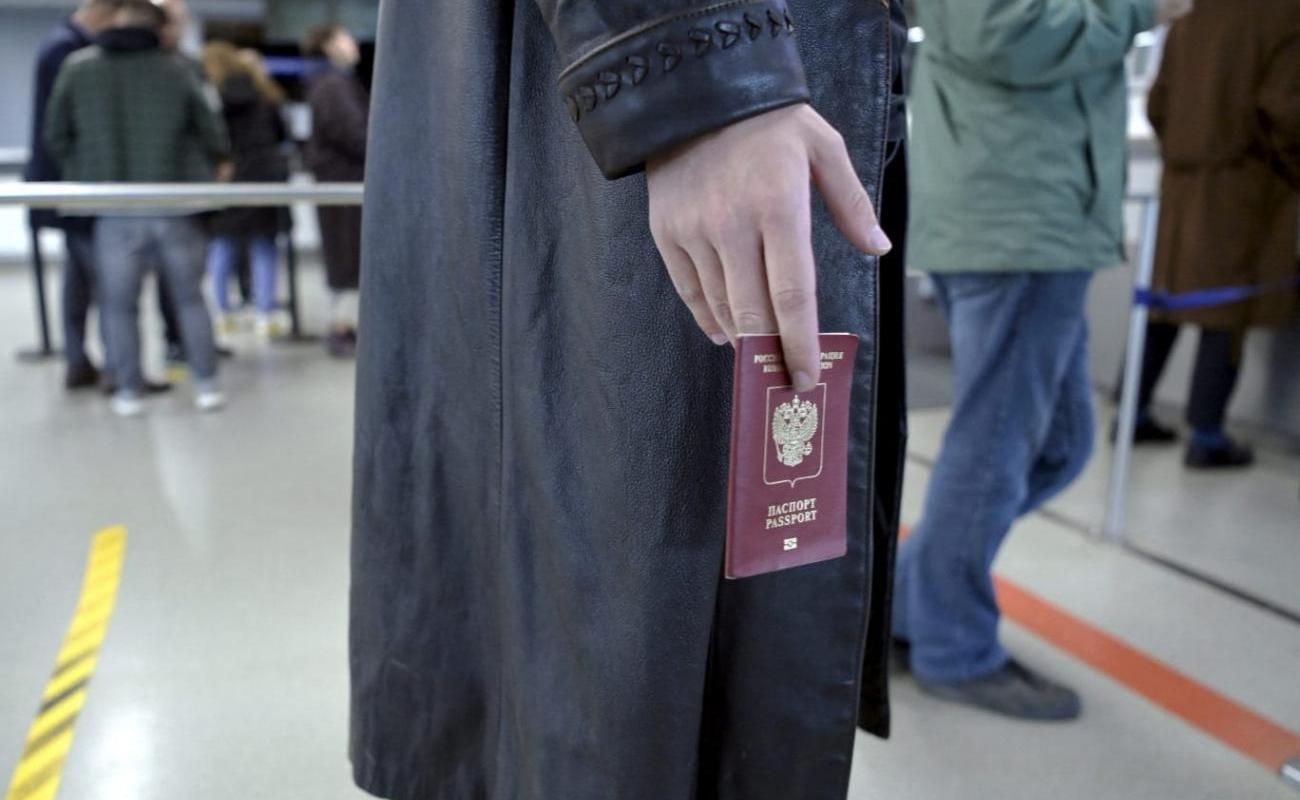
As 2026 nears, Russian authorities are preparing a new, large-scale attack on political emigrants.
Vasily Piskarev, head of the State Duma Commission for Foreign Interference, announced a list of new restrictions on Russians living abroad that are likely to be approved and signed into law in January.
The Piskarev commission was formed in March 2022, immediately after the launch of the full-scale invasion of Ukraine, and has since served as a key instrument in helping the Kremlin legalize its crackdown on the Russian anti-war movement, both within the country and beyond.
Piskarev himself is one of Putin’s top attack dogs: he began his career in the prosecutor’s office in the St. Petersburg region — Putin’s power base — before moving to Moscow in the mid-2000s to work under Alexander Bastrykin, Putin’s close ally and the founder of the Investigative Committee — an ever-expanding repressive body tasked with enforcing legal persecution of the Kremlin’s opponents and critics. Two years after the annexation of Crimea, Piskarev was elected to the Duma as a member of the Supreme Council of Putin’s United Russia party.
The measures he has proposed amount to a sweeping suspension of basic civil rights and are explicitly aimed at the large numbers of political émigrés who have fled to escape the regime’s grasp.
It is a comprehensive strategy designed to destroy the lives of opponents. Piskarev’s list includes measures designed to destroy an émigré’s economic base. These include a ban of the sale of apartments or cars left behind in Russia; bans on access to state and municipal services online, and to Russian banking services.
The draft also targets émigrés at a more fundamental level. It strips them of access to basic state functions, banning them from all kinds of registration services, including marriage (and apparently even death) and the issuance of any documents. Applications to renounce Russian citizenship would no longer be accepted, while expired Russian passports would not be renewed.
Émigrés would also be deprived of powers of attorney, which would cut them off from any legal or practical control over their affairs inside Russia.
The Kremlin also appears determined to use every tool at its disposal to make life harder for its opponents abroad — even resorting to measures as petty as the cancellation of driver’s licenses.
The group of potential victims of the new legislation includes more than 1,100 people officially designated as “foreign agents” (among them the authors of this article), as well as the many thousands who have been detained or arrested for “spreading fake news about the Russian army,” who protested against the war since February 2022 and then found a way to leave, plus thousands more Russians who continue to attend anti-war protest rallies abroad, but who have until now been spared the Kremlin’s spite.
The measures are clearly designed to intimidate and harass, and their targets will be made deliberately visible. One provision calls for the creation of a blacklist of individuals subjected to the new restrictions. The list would be maintained on a government website and made openly accessible.
Russia has a long history of blacklisting entire categories of its own citizens. In this sense, the proposed measures echo the fate of the so-called “former people,” or lishentsy (“the deprived”), in the 1920s and 1930s. Officially, members of the former ruling classes were merely stripped of their voting rights. In reality, they — along with their families — were shut out of employment, education, and public life altogether.
The difference is that Soviet legislation targeted those who remained inside the country, while Piskarev’s draft is aimed explicitly at those who left.
The language used leaves little room for compromise: there is no invitation to return, under any circumstances, only the promise of relentless, merciless pressure.
Since the start of the full-scale invasion, the Kremlin has been deliberately framing political émigrés as enemy agents — and this enemy is the “collective West” or NATO, rather than Ukraine.
Piskarev justified the proposed measures by claiming that “over the past five years, there has been a clear increase in politically motivated denials of extradition, particularly by NATO countries,” adding that the West “actively uses those fugitives who depend on it [Western support], in its anti-Russian activities.”
And with such enemies, there can be only complete destruction — this appears to be the Kremlin’s message.