
"Don't wait for mobilization – go serve for money" – Crimea awaits a new wave of mobilization into the Russian army
Unease prevails in Crimea—annexed by the Russian Federation—due to rumors of an impending new wave of mobilization for the war against Ukraine. Ukrainian authorities confirm the high likelihood of this, while Russian authorities categorically deny it. Read more in the *Crimea.Realities* report about how acutely this topic is felt in Crimean society and whether there are actual signs of an imminent mobilization of Crimeans.
In August of this year, Ukrainian President Volodymyr Zelenskyy stated that Russian authorities were preparing to mobilize reservists into the Russian army in the autumn, citing data from the Main Intelligence Directorate of the Ministry of Defence of Ukraine. According to Ukrainian intelligence, Russia is working on plans for an additional wave of mobilization in 2026 and 2027, expecting to recruit 300,000 people this year and another 300,000 next year.
On the other hand, Russian President Vladimir Putin publicly denied the possibility of an imminent mobilization in Russia in September.
Former Ukrainian politician Oleg Tsarev, who moved to Yalta following the Russian annexation of Crimea, reminded his followers that September 21st marked four years since the Russian government announced the first wave of mobilization. "The first mobilization in the history of the Russian Federation—and it is still ongoing; no one has revoked the decree. 300,000 people received draft notices and went to the front. In the autumn of 2022, they were the ones who shored up the front line, which was buckling at the time. Those who are alive and unwounded remain in the ranks, continuing to fight. Four years without a break. There has never been a rotation for them: a mobilized person has no fixed term of service—there is only the end of mobilization itself," Tsarev wrote on his social media page.
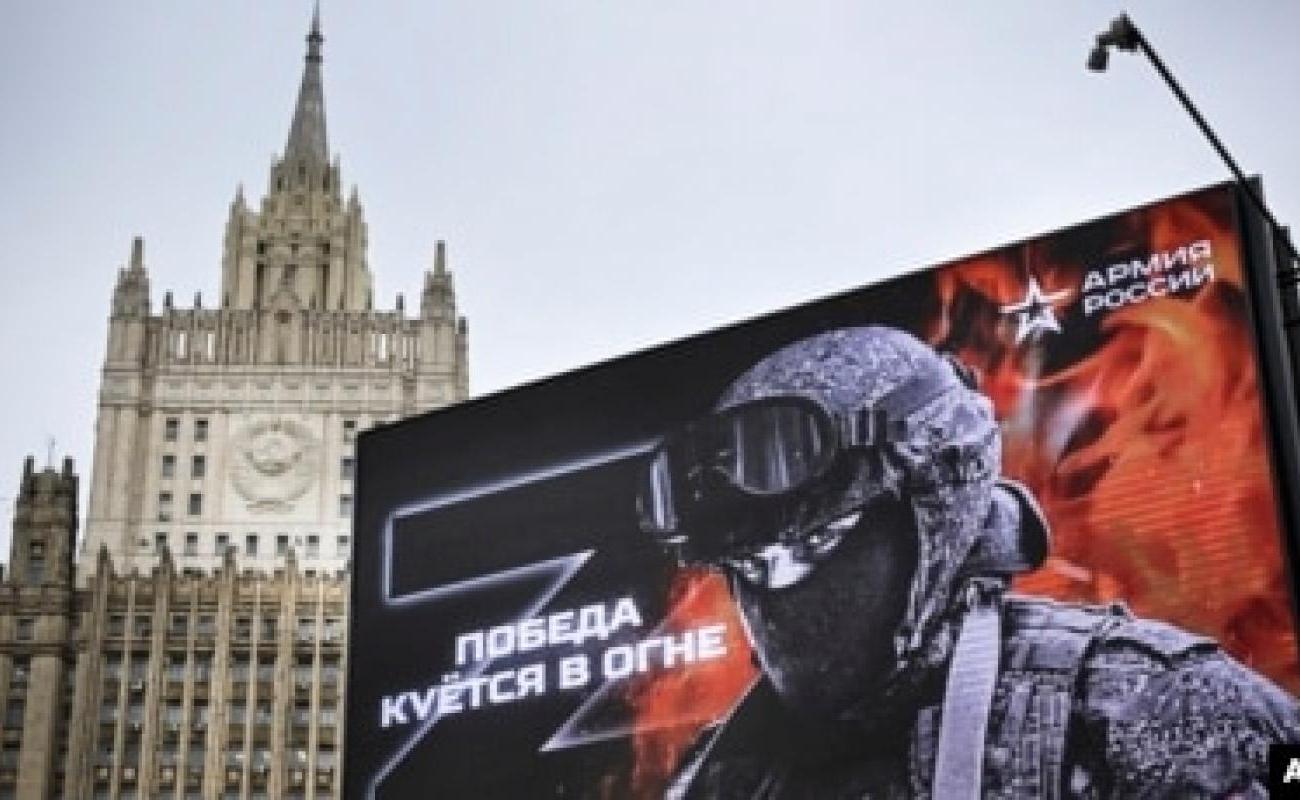
In Simferopol and other Crimean cities, there has been a significant increase in outdoor advertising urging Crimean residents to enlist for contract service in the Russian army.
A Public Figure from Crimea
According to a public figure from Simferopol—whose name the editorial team is withholding for security reasons—Russian authorities ramped up outdoor advertising for contract military service in the Russian army across Crimea immediately following the elections for the Russian State Duma.
"There has been a significant increase in outdoor advertising in Simferopol and other Crimean cities urging residents to enlist for contract service, promising substantial upfront payments. Furthermore, the style of these advertisements is constantly evolving; the current trend features visual ads displaying portraits of actual Crimean residents who are fighting against Ukraine. I must admit that the deepening economic crisis in Crimea, which has pushed many families below the poverty line, is driving desperate men to sign these contracts," the public figure told *Krym.Realii* on condition of anonymity.
*Krym.Realii* had previously reported on the emergence of this trend. "According to information from various sources, this summer many former entrepreneurs and employees of bankrupt businesses—who had lost their income due to issues with fuel, logistics, the interruption of the tourist season, price hikes, and market shocks—signed military contracts; they were left with families to support and outstanding loans and mortgages. The SMO ('Special Military Operation'—the term used in Russia for their full-scale invasion of Ukraine) became their only way out," writes Crimean blogger Vsevolod Radchenko.
Everything is ready in Crimea for a new wave of mobilization. They are just waiting for the green light from the Kremlin.
An activist with the international #LiberateCrimea campaign told Krym.Realii, on condition of anonymity, that Russian military offices in Crimea are fully prepared for a new mobilization wave.
"According to our sources within the occupation military commands and occupation authorities, everything is ready in Crimea for a new wave of mobilization. They are just waiting for the Kremlin's green light. Despite all assurances from the Russian leadership that there will be no mobilization yet, they are not trusted. Putin also assured Russians that the retirement age would not be raised, yet he did not keep his word. In this situation, Putin could resort to his old tricks: we remember how, in September 1999, apartment buildings in Russia were blown up—allegedly by 'Chechen terrorists'—an event that served as one of the main triggers for the start of the Second..." ...of the Chechen war. "Now, such a scenario is entirely possible," the activist commented on the situation.
A Crimean human rights activist told Krym.Realii, on condition of anonymity, that advertisements for contract military service—hinting at imminent mobilization—are being posted within the Crimean segment of social media.
"Many advertisements for contract service in the Russian army have appeared in the VKontakte social media feed. Moreover, some promotional posts explicitly state—essentially—that one should hurry and sign a contract for big money, or else face imminent mobilization and end up fighting for free," a human rights activist noted in comments to Krym.Realii.
Speaking to Krym.Realii, a public figure from Yalta—whose name is being withheld by the editorial team for safety reasons—reported that many Crimean residents are already leaving Russian-controlled territory due to fears of mobilization.
"It seems people can sense the 'coming wave' in their very marrow—as the line from a certain movie goes. Consequently, they have begun storming the Verkhny Lars border crossing with renewed urgency and intensity. Reports have also emerged that Uzbeks have 'picked up' on this 'wave' as well—men are leaving the Russian Federation by the thousands," the public figure reported.
French President Emmanuel Macron considers a scenario involving a new mobilization of around 300,000 people in Russia to be "quite likely." According to him, there are several signs that "Russia is organizing to do just that."
In September 2022, Russian President Vladimir Putin issued a decree on so-called partial mobilization. At that time, thousands of Russians were forcibly conscripted into the army. The document remains in force, but in recent years, the primary method for filling the ranks of the Russian armed forces has been the signing of indefinite-term contracts, which provide for substantial cash payments to volunteers.