
Big Brother' Is Watching Serbia: Why Belgrade Matters to Russian Intelligence Officers
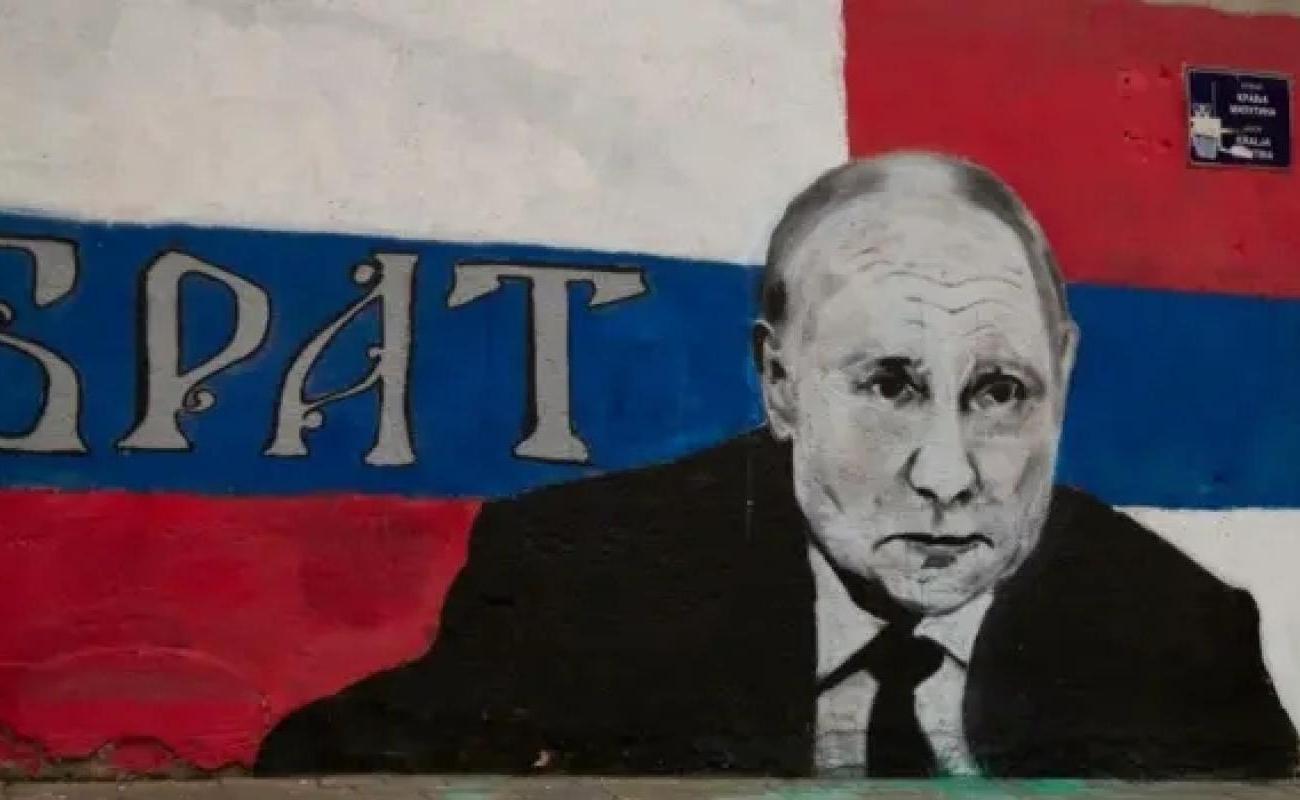
""It is quiet and peaceful here, the air is good, there are many gardens where nightingales sing—while spies lurk in the bushes," Maxim Gorky wrote to his friend Anton Chekhov from Nizhny Novgorod, Russia, in the early 20th century.
More than 120 years later, and 2,000 kilometers away, this iconic line from a giant of world literature might well describe the situation in Belgrade today.
A third of the staff at the Russian Embassy are linked to Russian security services, according to the news outlet *Agenstva*.
Their analysis is based on data from *Rupep*, a public database of officials connected to regimes in Russia, Belarus, Kyrgyzstan, Kazakhstan, Moldova, and Georgia.
"The large number of intelligence officers points to the significance of the station in Belgrade.
"It serves as a key hub for operations in the Balkans, especially following the mass expulsion of intelligence officers from European Union (EU) countries in 2022," a member of the *Rupep* team—who requested anonymity—told BBC Serbian.
The Russian Embassy in Belgrade did not respond to a request for comment from the BBC. Neither did the Serbian Ministry of Foreign Affairs, whose diplomatic protocol department is responsible for accrediting staff at foreign diplomatic missions. The BBC also sent questions to the Security Information Agency (BIA)—tasked with detecting, monitoring, and neutralizing the activities of foreign intelligence services—and to the Military Security Agency (VBA), which is responsible for military personnel in embassies.
"If journalists manage to uncover their identities, there is no doubt that the Serbian government knows who is in the country and who has been working at the Russian embassy," assesses Samuel Jones, an expert on terrorism and Eurasia at the Jamestown Foundation in Washington.
What do the data show?
Along with Belarus and Bosnia and Herzegovina, Serbia is the only European state that has not imposed sanctions on Russia since the beginning of the invasion of Ukraine in February 2022—a stance that has frequently drawn criticism from the United States (US) and the EU toward the authorities in Belgrade.
The government in Belgrade, which has declared EU membership as its goal, has also maintained air links with Moscow, St. Petersburg, and several other Russian cities, effectively serving as a gateway from Russia to the West.
According to data from the Serbian Ministry of Foreign Affairs—utilized by Rupep—there are 78 people employed at the Russian embassy and the Russian trade mission.
It is claimed that 29 of these individuals can be linked to intelligence services.
"We focused specifically on analyzing the registered addresses of these 'diplomats'; in some cases, these point to the headquarters of the military intelligence service (GRU) or to residential complexes designated for personnel of one of the intelligence services.
"In certain instances, it is possible to directly trace salary payments from the FSB, SVR, or GRU to specific embassy staff members," explains a member of the Rupep team. The portal Agenstva claims that the first secretary of the embassy in Russia is registered at an address in Moscow where official GRU residences are located.
As another example, they cite the wife of one of the embassy secretaries, who received a salary from military unit 44408 in Khabarovsk—a unit that is part of the GRU.
Aleksandar Vučić, the former president of Serbia, has spoken publicly on several occasions in recent years about the activities of foreign intelligence services—including those of Russia—within Serbia.
While he has revealed alleged espionage scandals, he has also highlighted successful cooperation and expressed gratitude toward Russian services.
"Ties between security services—the GRU, SVR, and BIA—have existed for a long time, though circumstances have shifted since 2022," says Samuel Jones.
One example of these ties is the request made to the Federal Security Service (FSB) to conduct an investigation into claims that the authorities used a "sonic cannon" during an anti-government protest in Belgrade on March 15.
In EU member states, there are limits on the number of personnel permitted to work in Russian embassies; no such restrictions exist in Serbia.
"Serbia has become a hub for Russian sabotage or hybrid campaigns directed against Europe," asserts Jones.
In early August, at the airport in Leipzig, Germany, a drone carrying explosives struck the wing of a Ukrainian cargo plane parked on the tarmac.
According to a joint investigation by the German newspaper *Welt am Sonntag* and the British *Telegraph*, the explosives used in this incident were transported via Bulgaria and Serbia.
In September 2025, several individuals were arrested in Serbia on charges of espionage and inciting racial and religious hatred in Germany and France; authorities in Paris alleged that they were likely acting under the direction of Russian intelligence. Three years earlier, in 2022, opposition activist Vladimir Kara-Murza accused Aleksandar Vulin—then Minister of the Interior—of ordering that he be wiretapped while he was in Serbia; Vulin denied the allegation.
That same year, following a meeting in Moscow with Nikolai Patrushev, Secretary of the Security Council of Russia, Vulin stated that cooperation between the two countries' intelligence services had been significantly enhanced.
"It is clear that Russia is concerned about the activities of opposition figures abroad, and there are currently many Russians in Belgrade," says Jones.
More than 370,000 Russian citizens entered Serbia between the start of the Russian invasion of Ukraine in February 2022 and the end of April 2023, the Ministry of Internal Affairs (MUP) stated at the time to BBC Serbian.
The Belgrade–Vienna–Budapest Triangle
If Serbia is viewed as Russia’s primary regional ally, then Hungary has been considered the EU member state that maintained the best relations with Moscow—even after the invasion of Ukraine began.
However, that changed when Viktor Orbán lost power in the elections this April, ending his 16-year tenure.
"Hungary used to have a significant Russian presence. Now, while it hasn't completely severed ties with Russia, it has begun expelling certain diplomats on charges of espionage," says an American expert.
In early September, Hungary announced the expulsion of 10 Russian embassy staff members, stating that they had "engaged in activities unacceptable for diplomats under the Vienna Convention."
Nevertheless, Vienna still holds the title of "spy capital."
In May, Austria expelled three employees of the Russian embassy for allegedly using the diplomatic mission to conduct illegal intelligence gathering.
"Ever since the Second World War, Vienna has been known as the European capital of espionage, due to the nature of local laws and the presence of various international organizations," explains a member of the team behind the Russian database Rupep.
Among the major organizations headquartered in Vienna are the Organization for Security and Co-operation in Europe (OSCE), the International Atomic Energy Agency (IAEA), and the Organization of the Petroleum Exporting Countries (OPEC). "The Iron Curtain did not fall through Vienna in the same way it fell between Western and Eastern European capitals," observes Jones from the Jamestown Foundation.
This organization was founded in 1984 by Arkady Shevchenko—the highest-ranking Soviet official to defect to America during the Cold War—who left his position as Under-Secretary-General of the United Nations.
Which intelligence services operate in Serbia?
It is not only Russian services that are present in Serbia.
In 2025, Vučić stated that the country "must not become a testing ground for the activities of foreign intelligence services."
He claimed that intelligence officers from both the East and the West are active in Serbia, adding that "this is all fine, until you reach the stage where you are providing combat training to certain individuals."
One of the questions raised by the list of alleged Russian intelligence officers is whether an increase in the number of agents from other countries' services might be expected.
Given the significant Chinese investments and reports regarding the use of mass surveillance technology in Serbia, it would be worth paying attention to Beijing's influence, suggests Samuel Jones.
He also notes that in 2024, William Burns—then-director of the U.S. Central Intelligence Agency (CIA)—visited the Balkans and Belgrade; this move "could be viewed as a step toward improving relations with local intelligence services."
Back in 2018, Alex Younger, then-chief of the British intelligence service, visited Belgrade to discuss cooperation with Vučić and Gašić, who was the head of the BIA at the time.
In April 2026, the governments of Serbia and Israel signed an agreement that includes the formal and direct exchange of sensitive intelligence and defense-related information. According to the agreement, the relevant security authorities allow visits by security experts from the other country "when it is mutually convenient."
There is clearly no shortage of cooperation—nor of intelligence activities—in Serbia.
Or, as Maxim Gorky might put it: "Spies lurk in the bushes."