
ANALYSIS: Ukraine’s Energy System Faces ‘Hardest Period of the War,’ Analyst Warns
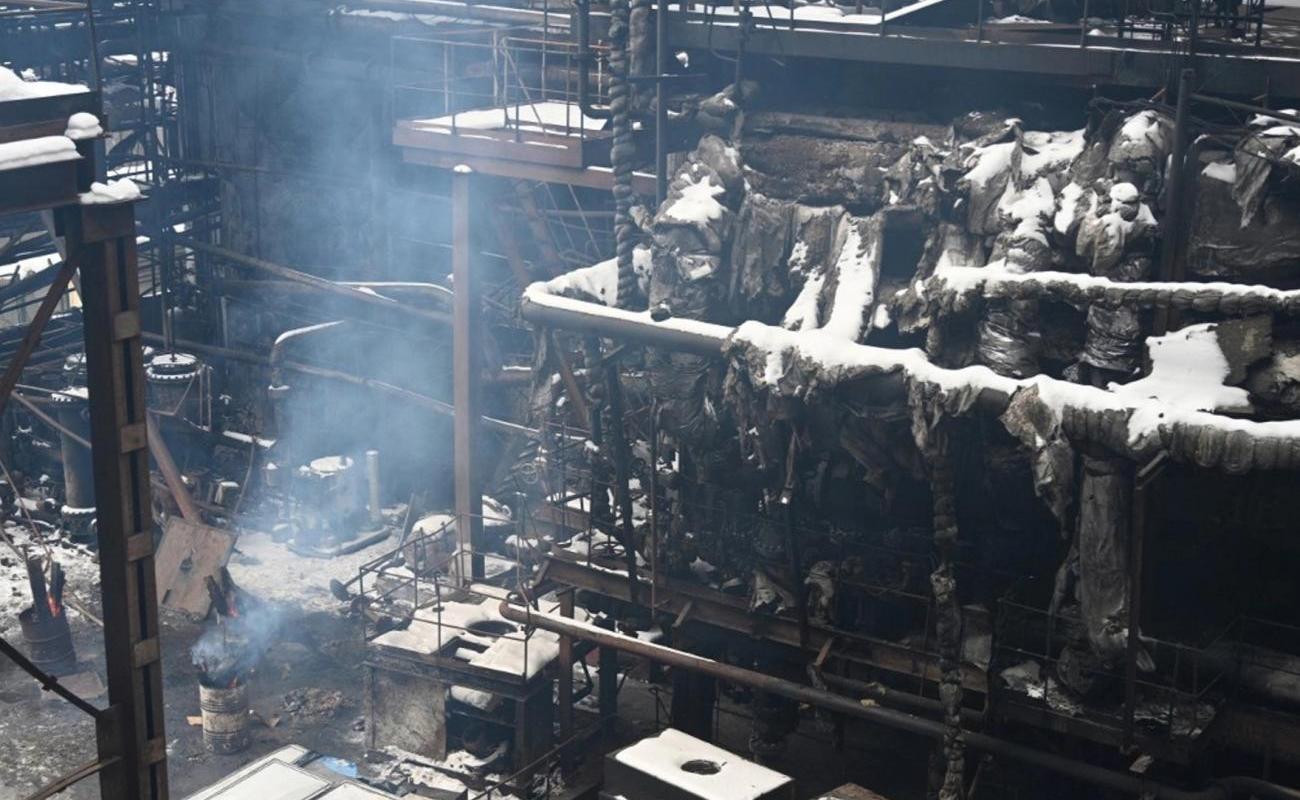
Ukraine is enduring the most severe strain on its energy system since the start of Russia’s full-scale invasion, with freezing temperatures, sustained missile and drone strikes, and the loss of local generation in Kyiv creating what one energy analyst described as a uniquely dangerous phase for the country’s power and heating networks.
A cascading electrical disruption over the weekend – which energy officials said was triggered by load imbalances and weakened transmission links – forced emergency power cuts across parts of the capital, even as Moscow publicly floated what it called an “energy ceasefire.”
Speaking at a Media Center Ukraine briefing on Wednesday, Jan. 28, Oleksandr Kharchenko, director of the Energy Research Center, said the capital is now being supplied almost entirely from outside the city – a task he called “a complex technical challenge even in peacetime,” made far more difficult by ongoing damage to transmission networks.
“This is the hardest stretch of the war for Kyiv’s energy system,” Kharchenko said, warning that the next several weeks of winter cold would be critical.
Heat and power restored “from fragments”
Kharchenko said heat supply remains the most urgent problem in the capital, where crews are attempting to rebuild damaged boiler systems and auxiliary equipment under constant threat of renewed strikes. DTEK, Ukraine’s largest private energy company, reported that two of its workers were killed over the weekend while conducting emergency repairs in a frontline region, after their crew came under fire while restoring damaged power infrastructure.
“The work is literally being done from fragments,” he said, adding that he hoped buildings currently without heating would be reconnected in early February.
Even after heat is restored at the system level, he warned that many residential buildings face additional risks because of aging internal networks and years of deferred maintenance, which could lead to leaks and failures as systems are restarted.
Electricity supply, he said, presents a different kind of challenge. With local generation in Kyiv effectively offline for months, engineers must reconfigure a grid originally designed around combined heat-and-power plants that are no longer producing electricity.
At present, Kharchenko said, the city can physically receive only about 650–700 megawatts of power, while winter demand ranges from 1.5 gigawatts in moderate cold to as much as 2 gigawatts during severe frosts.
Individual schedules and “queue” power cuts
To manage the shortfall, Kyiv has shifted to individualized, building-by-building outage schedules rather than the familiar rotating “queue” system used earlier in the war.
Kharchenko described the approach as an “achievement,” saying it reflects detailed technical work by grid operators to determine which districts can accept power and when.
“Even if electricity reaches the city, many neighborhoods cannot distribute it internally,” he said, citing capacity limits in local networks.
He said a return to standardized, queue-based schedules could be possible in one to three weeks, depending on air defense performance and the pace of network repairs – a timeline he said would remain unchanged by any diplomatic statements about a pause in energy strikes.
Regional disparities under fire
Kharchenko identified four major urban areas under sustained attack: Kyiv, Odesa, Kharkiv, and the Dnipro-Kryvyi Rih industrial corridor.
In Kharkiv, he said, electricity supply had remained comparatively stable for much of the winter, but recent strikes have created serious heat shortages. In Dnipro and Kryvyi Rih, repeated attacks have knocked out boiler houses and power infrastructure, leaving specific districts in prolonged outages.
By contrast, some western cities are experiencing fewer cuts, not because of surplus generation, but because electricity cannot be physically transmitted to heavily damaged regions in the east and south.
Imports help western, not frontline cities
Ukraine is currently using nearly its full permitted capacity to import electricity from Europe, Kharchenko said, a move facilitated by government decisions to shift large state consumers such as Naftogaz and Ukrzaliznytsia onto imported power.
The strategy has eased pressure in western regions, he said, but has had little effect on cities such as Kyiv, Kharkiv, and Odesa, where transmission bottlenecks and damaged infrastructure remain the primary constraint.
Governance and donor bottlenecks
Beyond physical damage, Kharchenko pointed to institutional and political barriers slowing international assistance.
He criticized what he described as slow, bureaucratic donor mechanisms, noting that standard funding channels can take a year or more to move from contract signing to equipment delivery – a timeline he said Ukraine cannot afford during wartime.
He also highlighted corporate governance as a key factor in unlocking faster and more flexible support, referencing the government’s recent appointment of a new supervisory board at state nuclear operator Energoatom.
While welcoming the move, he questioned the delays in finalizing contracts and extending governance reforms to other key companies, including Ukrenergo and the gas transmission operator.
“Partners need to see that this work is actually happening,” he said, arguing that transparency and communication are essential to sustaining international confidence.
Call for state-backed private investment
Asked how people in the United States and other Western countries could help Ukraine’s energy sector, Kharchenko urged governments to go beyond emergency aid and focus on enabling private investment through political risk insurance and institutional guarantees.
“Private investment in wartime needs protection,” he said, citing the European Union, the US government, and the World Bank Group as potential backers.
With such guarantees, he argued, private capital could become “the most efficient tool” for rebuilding, modernizing, and future-proofing Ukraine’s energy system.
“Crawl to spring”
Kharchenko said Ukraine is likely to “crawl to spring,” when warmer temperatures, lower consumption, and increased solar and hydro generation will ease pressure on the grid.
But he warned that without major reconstruction of generation capacity, transmission networks, and municipal heating systems, the country risks entering the next winter in no better condition – even if Russian attacks were to subside.
“I am personally convinced they will not,” he said of the strikes.
As forecasts predict continued subzero temperatures and officials warn of renewed missile and drone attacks, Ukrainian energy workers and international partners face a narrow window to stabilize the system before the coldest weeks of winter set in.