
A year after the loud announcements: why there was no return of Western business to Russia
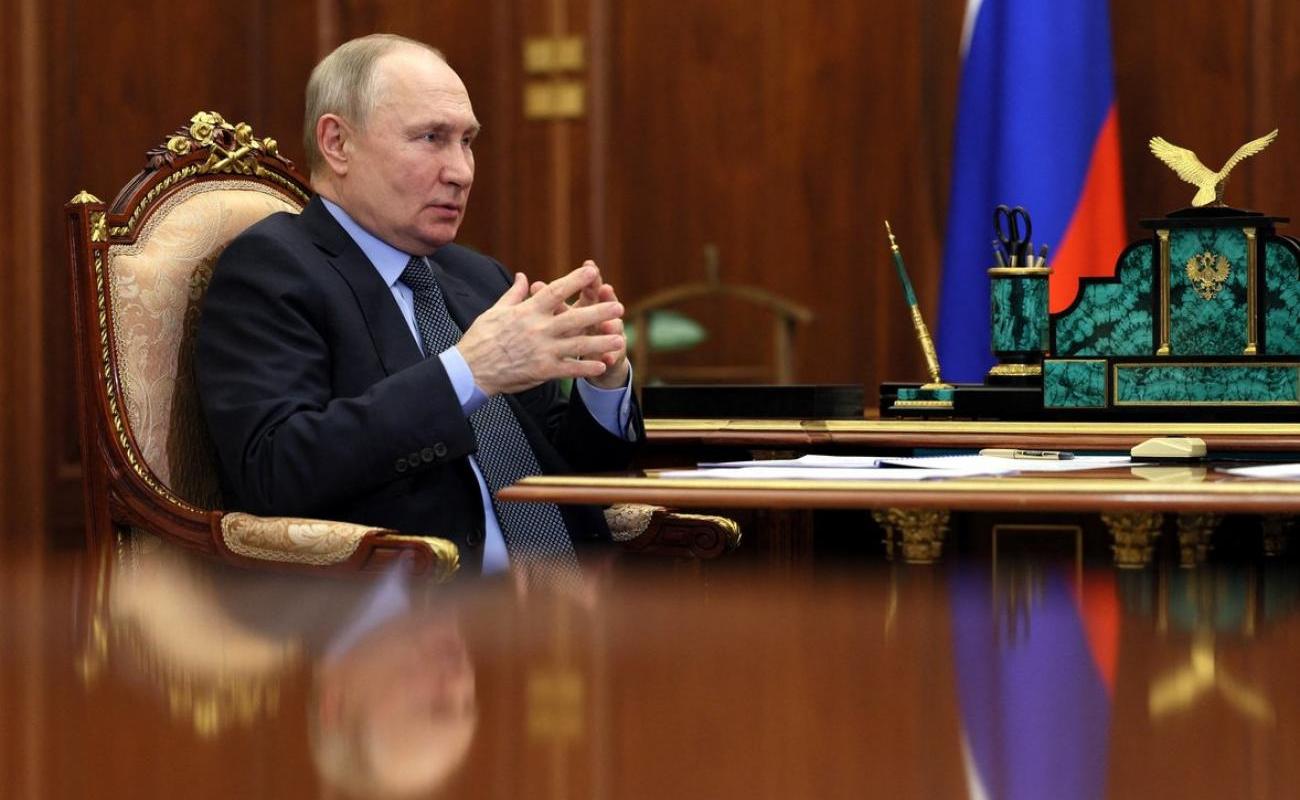
A year has passed since the telephone conversation between Vladimir Putin and Donald Trump, as well as the Kremlin's public statements about the alleged preparation for the return of Western companies to the Russian market and the Russian government's instructions to create the conditions for this. However, during this period, none of the international companies that actually left Russia and sold their assets ever returned.
To date, there have been no recorded cases of an international company that completely sold its business or assets in Russia, left the market, and later officially returned as an owner or operator. That is, the "went out - came back" scenario did not actually happen, and this is fundamentally important for a correct assessment of the situation.
What the public sometimes calls "the return of companies to the Russian market" is not so in most cases. The most common talk is of companies that, after the beginning of a large-scale war, temporarily suspended their activities, waited for the development of events, and later partially or gradually restored individual elements of their business. These can be deliveries, production operations or work through distributors or third countries. We also see such scenarios in the LeaveRussia database, but this is more of a "pause - limited recovery" model than a return after a full exit.
Mazda is a great example. The company announced its intentions to leave the Russian market, but at the end of 2025, information appeared about the continuation of its activities. At the same time, it is important to emphasize: Mazda did not completely leave Russia - the company did not sell its assets and did not transfer the business to another owner, but only temporarily suspended operations. Therefore, it is more correct to speak not about a "return", but about the continuation of work after a break.
In particular, the continuation of operational activities should be distinguished from the re-registration of trademarks. In the past three years, a significant number of international companies have re-registered their brands in Russia. (Christian Dior, Starbucks, Hyundai, Microsoft, IKEA). In most cases, this is a legal mechanism to protect the trademark, not to prepare for a return to the market. Russian legislation provides for the loss of brand rights in case of prolonged non-use, so companies try to prevent the use of their brands by third parties and minimize reputational risks. Some companies do retain long-term hope of returning after the end of the war and the lifting of sanctions, but at the current stage such actions are primarily of a protective nature.
At the same time, international companies are in no hurry to return to Russia due to a significant increase in risk. Every year, the Russian authorities complicate the rules for foreign business: additional conditions, criteria and informal agreements appear. In fact, this is no longer a classic business decision, but a political agreement, which makes any return unpredictable.
A good illustration of the risk is the case of Rockwool, whose operations in Russia were eventually transferred to Russian control. Such cases are not isolated and show the threat of loss of assets, even for companies that have not completely exited the market.
In addition, some international companies are physically unable to return to the Russian market. Their factories and production assets have been sold, the new owners - Russian companies - have already started production, and in the conditions of the declared policy of supporting local producers, it is unlikely that the state will give priority to foreign business.
As a result, despite the fact that the Russian market remains large and potentially attractive, there is no mass return of international companies. What sometimes looks like a "return" in practice is either a continuation of activities after a break, or legal action to protect brands - against a backdrop of high political, sanction, property and reputational risks.
The exit of foreign companies from Russia is still happening, albeit at a slightly slower pace than in previous years, but in 2025 at least 80 international companies will have left the country, an average of 20 companies per quarter.
The KSE Institute's analysis also shows that the practice of forced confiscation of foreign companies in Russia is on the rise. Russia continues the practice of forced confiscation of foreign assets, applying it even to companies that have been operating on the Russian market for years. The latest examples are the assets of Rockwool and CanPack, as well as the restructuring of the previously confiscated business of Baring Vostok Capital Partners - the oldest foreign investment company in Russia. A total of 80 companies left the Russian market during 2025, and 547 international companies since the beginning of the large-scale invasion.
This is stated in the monitoring of the KSE Institute within the project "Self-sanctions / Leave Russia", which studies the impact of the departure of foreign companies on the Russian economy.
In mid-January 2026, the Russian assets of Rockwool, a Danish manufacturer of thermal insulation materials, were transferred to the management of companies from the Russian Federation in accordance with the decisions of the Russian authorities adopted at the end of 2025. Similar decisions were applied to the assets of the Polish-American company CanPack, specializing in the production of metal containers for drinks, which also came under the control of Russian structures. All relevant decisions entered into force on January 13, 2026.
It is worth mentioning the situation with Baring Vostok Capital Partners, an investment company that has been operating in Russia since the 1990s and specializes in direct investments in the financial, consumer and technology sectors. Its previously confiscated business was restructured into the Russian legal entity Ozon Holdings, which ultimately further exacerbated the loss of control by foreign owners.
At the same time, in November 2025, the Russian branch of the American financial group Citigroup - Citibank, which worked in the field of corporate and retail banking, began the final phase of exiting the Russian market. The bank wrote off outstanding loans for about a thousand clients in preparation for its complete closure and announced the cessation of operations in Russia. Its Russian "subsidiary" will be sold to the financial group Renaissance Capital; the amount of the sale has not been announced, and the transaction is expected to be completed in the first half of 2026.
As of mid-January 2026, only 547 international companies (~13 percent) have completely left Russia. An additional 32 percent (or 1,369) are in the process of leaving or have suspended operations, while more than 55 percent (2,348) of companies still remain on the Russian market.
In the end, the discussion about the "return" of foreign companies to Russia boils down to the main point: the Russian war against Ukraine continues in full scale and therefore any business activity in the Russian Federation remains morally, legally and reputationally toxic. At the same time, there is a whole package of risks for companies - sanctions, pressure from investors and consumers, the threat of nationalization and interference in asset management, as well as increasingly strict and less predictable business rules in Russia. It is this combination of factors, rather than political statements, that determines why the story of the "return" is still only a story, while the actual scenarios remain isolated and fragmented.