
A one-way ticket for Russia. A war of attrition did not lead to the fall of Ukraine.
Putin’s expressionless face
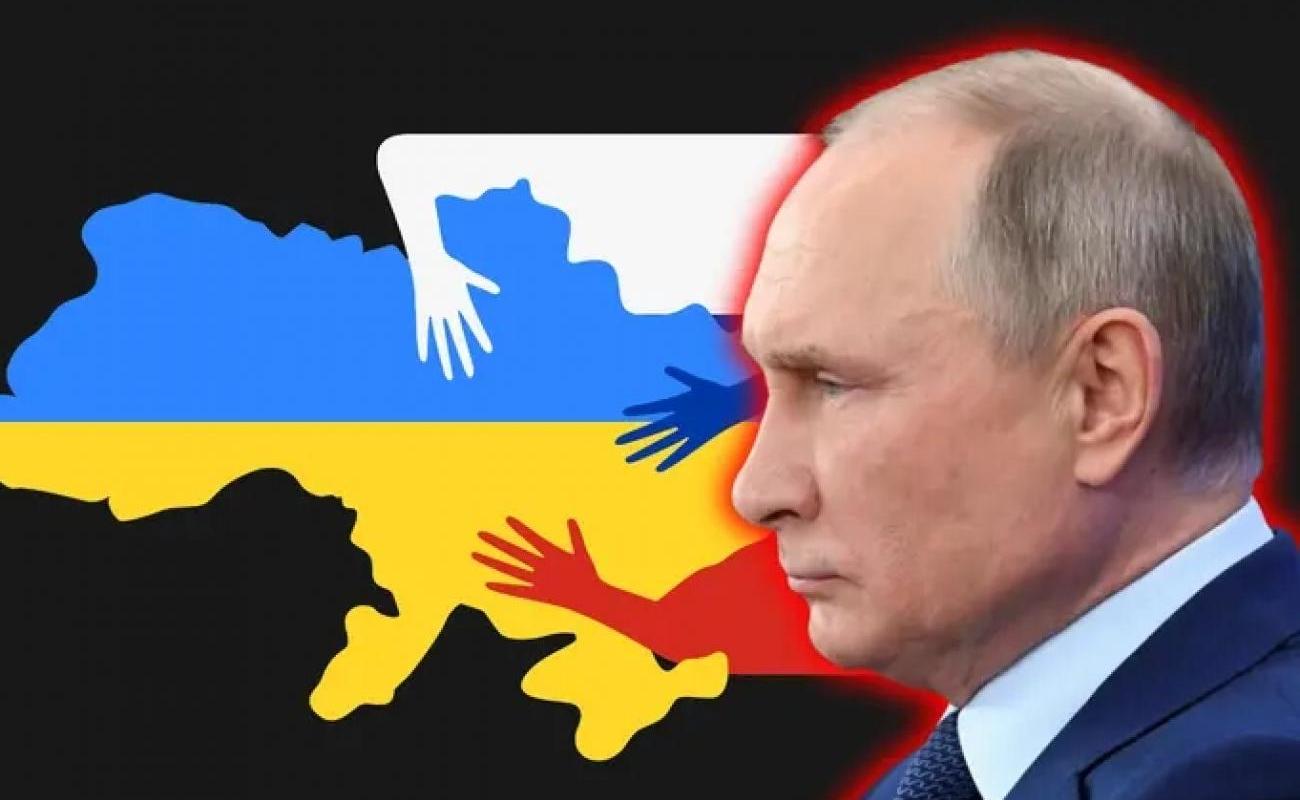
Three times in the past four years, events have not unfolded according to the scenario that seemed most likely.
In early February 2022, the most likely scenario seemed to be that there would be no large-scale war. The Russian gains from a major invasion were enormous, but the risks of everything going wrong were even greater, and the Russian losses (economic, geopolitical, etc.) in the event of failure were enormous. The most likely scenario looked like this: by rattling weapons, Russia would negotiate some political concessions with Ukraine, and then end the “military exercises.” In poker parlance, “taking the pot” means fixing the win, minimizing the loss.
In early April 2022, the most likely scenario seemed to be that there would be no war of attrition. The blitzkrieg of the regular army failed, and the transfer of the economy to military rails, mass mobilization and war in general in the logic of a large-scale and long-term not only military, but also industrial, resource, demographic and psychological confrontation was too risky. The most likely scenario looked like this: Russia would transfer the war to the stage of a frozen conflict with a battle line that significantly differs in its favor from 2014-2021. Take the pot - fix the gain, minimize the loss.
In early November 2025, the most likely scenario looked like Russia would enter peace negotiations. The war of attrition did not lead to the fall of Ukraine, but it exhausted the resources accumulated by Russia in previous periods and approached the point of inflationary financing, which is a one-way ticket. The most likely scenario looked as follows: Russia bargains for maximum political concessions in Ukraine and Europe, using US President Donald Trump's commitment to the idea of a quick end to the war under any conditions, and switches to a regime of pressure on Ukraine in the political sphere (and there are huge opportunities here). Take the pot - set up the win, minimize the loss.
Such a systemic deviation means that we underestimate several parameters of Moscow’s decision-making: first, the understanding of this war as existential not only in Ukraine, but also in the Kremlin; second, the distorted picture of reality in the authoritarian vertical; third, a different logic of decision-making - prison, Chekist, and not rational. Three times during the large-scale war, points of discord arose, and three times the Kremlin chose escalation and raising the stakes, although strategically it would have been more advantageous to choose to fix the gain and minimize the loss - but according to its logic this means recognizing the limits of power, which is tantamount to defeat.
This logic is well known to poker players. It is not that the Kremlin is constantly mistaken in its assessments - instead, it consistently chooses a strategy that is not optimal in terms of victory, but is aimed at escalation, because setting up a victory contradicts self-identification. Decisions are made not on the basis of profitability or lack, but on the principle of “what does not contradict our image of ourselves”. Not having a guaranteed victory - it plays as if it were. Such a strategy is called table dominance – not to gain certain benefits, but to intimidate, crush and force everyone else to leave the game.
It is not that the Kremlin is bad at calculating the odds – it simply does not follow them. It cannot refuse escalation on principle, because refusing to escalate is considered a loss, despite the benefits gained. The Kremlin is not irrational – it is consistent in its logic.
Conclusion: The Kremlin cannot be forced into rational negotiations, no matter what Ukraine, Europe, America or China do. It can only be forced into losing – when the resources run out, it will leave. This is bad, because the war will continue, no matter what we do. This is good, because the Kremlin’s strategies are predictable and self-destructive.
Two consequences of this conclusion. First, there will be no peace agreement. Even if Ukraine makes maximum concessions, the Kremlin will set additional conditions and apply pressure, and then again and again. Second, there will be a war in Europe outside of Ukraine. Standing at the next crossroads, the Kremlin will choose not the optimal strategy of fixing the gain, but a strategy of escalation, because it cannot afford to refuse to raise the stakes. The same logic will work for the fourth time. We will have to act in this strategic space next year.
P.S. An important note. A typical reaction to this analysis is the fear that a strategy based on inexorable escalation will eventually lead to nuclear war. However, this conclusion is based on a conceptual error. The escalation practiced by the Kremlin is not endless. It is limited by the main goal of the regime: preserving its own survival and its role as a key player on the international stage. Nuclear war would not be the peak of escalation, but its negation - not a strong move in the game, but the destruction of the game itself.
The Kremlin escalates to stay at the negotiating table, to intimidate others and force them to make concessions, not to overthrow the negotiating table altogether. Nuclear weapons therefore function primarily as a means of deterrence and regime preservation, not as a means of winning a war. This distinction is important: recognizing the inherent limitations of the Kremlin’s logic of escalation does not diminish the danger of continued aggression, but it refutes the fatalistic belief that continued pressure inevitably leads to nuclear catastrophe. Escalation is dangerous precisely because it remains in play, not because it seeks to end it.