
A New Peace Plan: What’s Missing and Where the Line Is Drawn for Ukraine
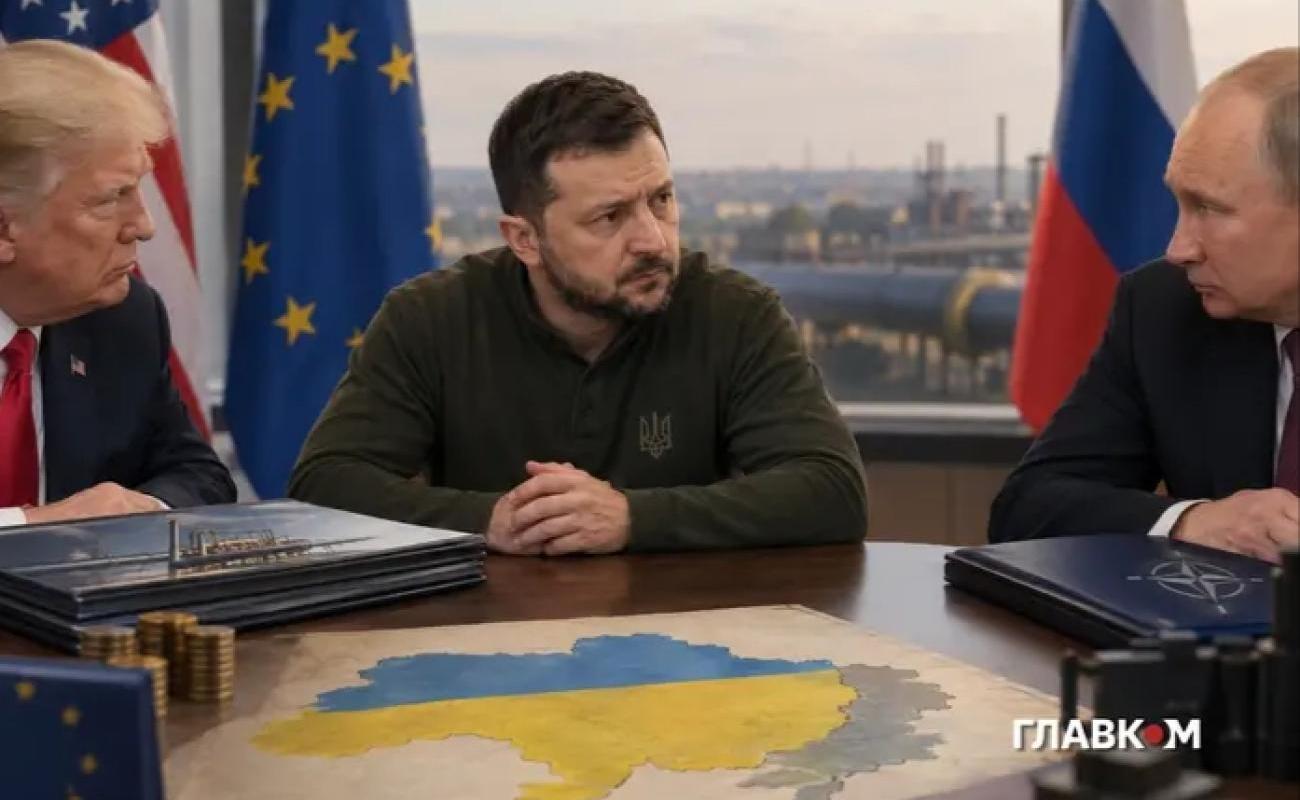
The key detail of the plan isn’t the Donbas or NATO—it’s the "waiting line."
The new American plan, as reported by *The Economist*, differs from previous proposals not by what it includes, but by what it omits. There is no demand for a withdrawal from the Donetsk region. There are no limits on the size of the military. There is no constitutional renunciation of NATO membership.
Yet, it also lacks what Ukraine has most adamantly sought: security guarantees. The territorial issue—which a year ago was the core of every proposal—has been quietly relegated to the background, while economic matters have taken center stage: sanctions, agreements with the U.S., gas supplies for Europe, and Nord Stream.
This shift is not merely cosmetic. Last year, Washington attempted to purchase peace through Ukrainian concessions. Now, it is attempting to do so through American—or rather, European—concessions, given that the gas market to which they wish to reintegrate Russia is not an American one.
The logic is straightforward: Moscow is not budging, and Kyiv has already made significant concessions—leaving no room for further pressure on Kyiv—while the current administration has no desire to exert pressure on Moscow. The only remaining option is to pay the price using a third party.
Ukraine has indeed come a long way. Zelenskyy has signaled openness to a ceasefire along the current front line—as suggested in Oslo—and has proposed a trilateral meeting involving Putin and Trump. For a nation that, just two years ago, demanded a complete withdrawal of troops as a prerequisite for any negotiations, this represents a significant shift. The Kremlin responded the following day, after American envoy Steve Witkoff had spent three hours in St. Petersburg: there is "little of use" in the proposals, but discussions could take place in November. In other words, they bought themselves time without abandoning any of their demands.
Therefore, the key element of the plan is not Donbas or NATO, but the sequence of actions—specifically, what Russia receives and when. If the easing of sanctions, the granting of diesel licenses, and the conclusion of gas contracts occur *before* a ceasefire and the withdrawal of troops, then Moscow secures everything it needs to continue the war well before anything is even signed.
The diesel license issue has already demonstrated how this works: sanctions were eased without any reciprocal measures—simply because diesel is expensive in the U.S. and elections are approaching. Furthermore, in this sequence, guarantees for Ukraine are not merely an afterthought—they are entirely absent. They propose abandoning NATO now, yet offer no alternative to take its place.
The promise of investments and EU membership concerns prosperity, not the question of who might prevent the next blow. *The Economist* explicitly states that Ukrainian negotiators fear precisely this—that the Americans might strike deals with Russia before the war has even ended. The fact that Wittkoff was met at Pulkovo Airport by Dmitriev—rather than a diplomat—does little to dispel this fear.
Will the parties reach an agreement? Ukraine—perhaps, provided there is a ceasefire along the current line (without that line implying formal recognition), provided a demilitarized zone in the Donbas entails the withdrawal of *both* armies (not just the Ukrainian one), and provided that guarantees are explicitly written into the text rather than offered merely as verbal assurances.
Europe—partially: Brussels is open to providing loans and offering membership, but the Nord Stream issue directly affects Germany and Poland—where it is not merely a technical matter, but a domestic political one. Russia—no, not as long as it can secure the lifting of sanctions without needing a formal agreement. This is why *The Economist* anticipates a delay rather than a breakthrough.
Whether the U.S. will refrain from such a scenario is the only true unknown in this story—and it carries more weight than all the other points combined.
One should not expect a swift peace. Some form of peace—yes—but in a different guise: not a formal treaty, but a ceasefire along the line of contact, leaving political issues unresolved. In itself, this is neither inherently good nor bad. The Korean armistice, for instance, was not a peace treaty, yet it has remained in effect for 70 years—sustained by the presence of American troops and a mutual defense treaty. In the current plan, there is nothing beyond a ceasefire.
And what about a just peace? It is absent from these documents, and it is more important to state this honestly than to pretend otherwise. A just peace entails reparations, a tribunal, and the return of all territories. None of the parties—including the mediator—are currently proposing this. However, there is a significant distinction between a just peace and capitulation; Ukraine’s task is to ensure that the situation does not narrow down to an "all-or-nothing" choice.
A ceasefire without recognition, sanctions without automatic lifting, a military free from external constraints, and security guarantees established *before*—rather than after—the signing of an agreement: this does not constitute justice, but it does provide a starting point from which one can move toward justice, rather than fleeing from it.
On Wednesday, we will present a report by the "United Ukraine" center, detailing exactly where the boundaries lie regarding each specific issue—territory, the military, security guarantees, elections, the EU, assets, and sanctions. The report covers this in detail, outlining the positions of all four parties.