
Xi Jinping’s Grip on the Military Is Getting Stronger, Not Weaker
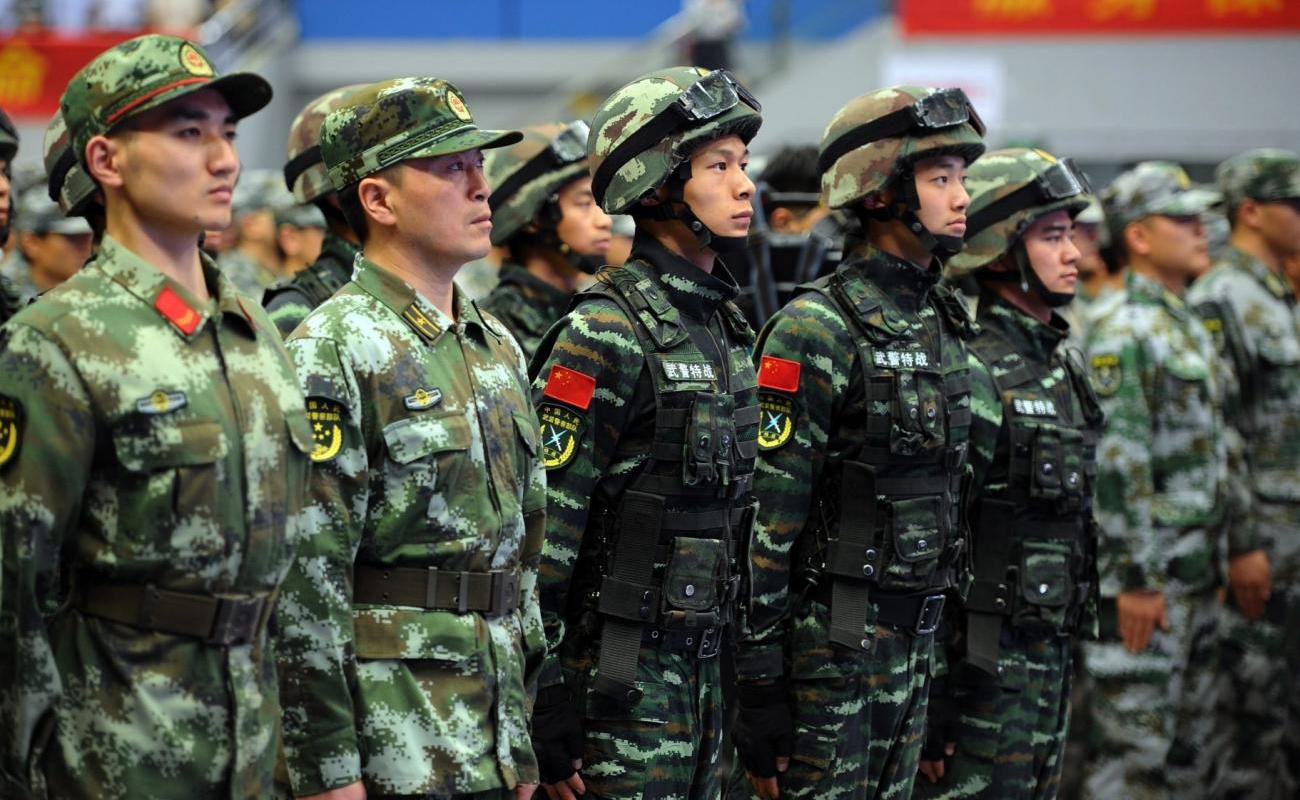
On October 17, nine senior officials in the People’s Liberation Army (PLA) were dismissed due to corruption allegations, including Vice Chairman of the Central Military Commission (CMC) He Weidong and Director of the Political Work Department Miao Hua. Instead of signaling political struggles among military elites, this move reflects Xi’s preference to prioritize loyalty over competence by eliminating factional military networks, even at the expense of operational capability.
This unprecedented removal of the sitting CMC vice chairman shocked China observers. Since the start of the reform era, no sitting CMC vice chairman has been dismissed, making this purge extraordinary even by CCP standards. The recent CCP Fourth Plenum suggests more removals may be coming, as dozens of other PLA officers were notably absent from the meeting.
The CCP described the series of purges as part of a centralized campaign to eliminate corruption within its ranks. However, some China observers see the purge as a result of the political rivalry between Zhang Youxia, a princeling military elder, and He Weidong, whose career connections to Xi trace back to Fujian. They suggest that He’s downfall indicates a political victory for Zhang, potentially weakening Xi’s influence over the military.
It’s an intriguing story and might even contain some elements of truth. However, it’s also important to recognize that no one outside Zhongnanhai would have enough evidence to confirm it. Also, some facts, such as Zhang Youxia’s return in 2022 after reaching retirement age, could complicate this narrative.
At the very least, the latest purge suggests that elite consensus and leadership stability in the PLA might be less firm than publicly portrayed. Still, it doesn’t necessarily mean Xi is losing influence. A more plausible explanation, instead, lies in history.
When Xi first took power in 2013, the PLA was dominated by the patronage system of two former CMC vice chairmen, Guo Boxiong and Xu Caihou, both of whom were promoted by Jiang Zemin. To regain command authority, Xi launched a purge of both Guo and Xu to restructure personnel flows within the military by removing factions inherited from Jiang’s era. In other words, their downfall was not merely an anti-corruption cleanup effort but a step by Xi to consolidate regime power.
Factionalism within the PLA remains a persistent problem. It has traditionally been maintained through informal networks and regional connections, often linked to corruption. Corruption fuels factional divisions within the military, compounded by widespread nepotism and the trading of official positions. This system not only promotes unqualified generals and reduces overall combat readiness but also poses a serious threat to Xi, as declining loyalty could lead to disobedience and weaken the authority of the CMC chairman – that is, Xi himself. Therefore, Xi will not permit any factions to form within the military, except for his own, even among his trusted allies. These are the underlying logics that drive Xi to launch large-scale anti-corruption campaigns since taking power in 2013, with the scope expanding over time.
A recent editorial in the PLA’s mouthpiece noted that the nine PLA generals, including He and Miao, who were recently removed, were suspected of crimes involving “extraordinarily large sums of money” and had “undermined the principle of the party commanding the gun.” This suggests that their crimes might be linked to the development of patronage networks, indicating loyalty issues rather than a political struggle. More importantly, even if political rivalry exists within the CMC, it only reinforces why Xi purged them. Xi previously removed Guo and Xu to dismantle patronage networks; he now seems willing to target those forming under his own watch.
In short, He’s and Miao’s downfall was not due to political rivalry with Xi or other senior military leaders. Rather, it stemmed from Xi’s intense sense of urgency to maintain military loyalty, driven by his conviction that He’s or Miao’s faction-building efforts threaten that allegiance.
This also highlights Xi’s preference for maintaining military loyalty over operational capability, particularly in the context of military actions against Taiwan. The majority of those purged, including He Weidong, played key roles in planning and executing Taiwan-related operations. As a result of these purges, China’s capacity to carry out an invasion of Taiwan is likely to be diminished.
The promotion of Zhang Shengmin, who has no record of participating in military operations, underscores this trend. Zhang Shengmin gained Xi’s trust by successfully rooting out corrupt officials since 2023. With Zhang’s rise as the CMC vice chairman, Xi will have more direct control over the military than any Chinese leader since the 1950s. However, there is a paradox: as Xi’s power becomes more secure, the stability of the institutions beneath him may become more fragile. The lack of command stability and staffing shortages suggests that the PLA will face short-term challenges in strategic planning and coordination, potentially making prolonged conflicts riskier.