
Xi Jinping’s forever war on corruption
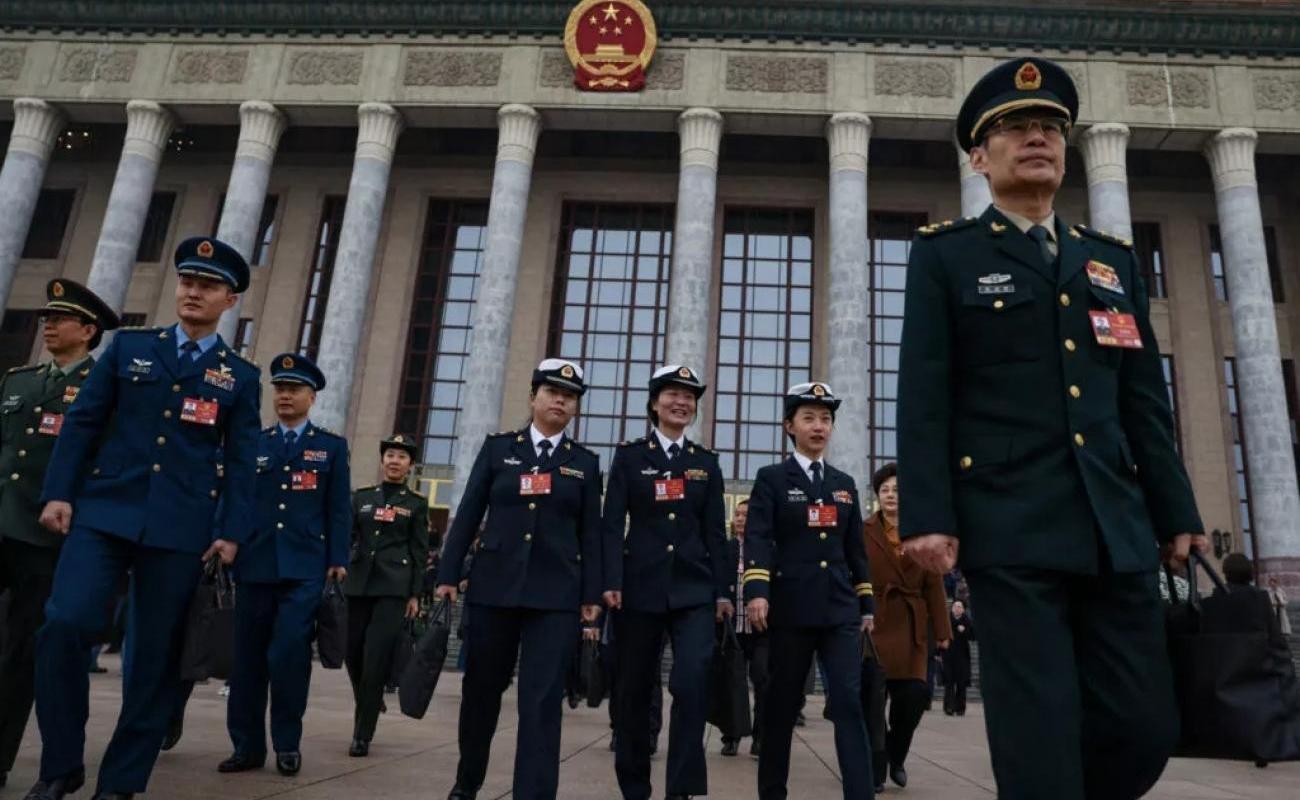
Chinese President Xi Jinping’s escalating anti-corruption campaign has swept through China’s military and political elite. But the scale and persistence of punishments suggest he is trapped in an unwinnable ‘forever war’ that undermines the cohesion and credibility of the People’s Liberation Army. Despite purging millions of party members since taking power, Xi continues to uncover corruption among his own appointees, indicating that his strategy has failed to deter misconduct yet cannot be abandoned without risking a resurgence that could threaten his rule.
In 2023, Chinese President Xi Jinping’s long-running war on corruption began to heat up again. By early 2026, perhaps as many as 100 senior military officers — including five of the six members of the Central Military Commission — had been detained or had gone missing. Whether they were guilty of disloyalty, corruption or, most likely, a mix of both, Xi’s purge likely leaves China’s high command in disarray, rendering the People’s Liberation Army (PLA) less credible as a threat to Taiwan and a counterweight to US military power in the Pacific.
The attack on the PLA’s leadership comes alongside a more general surge in the drive against corruption. Since 2023, over 190 senior party cadres and state officials have been detained, with the annual number breaking records three years in a row. The number of ordinary party members disciplined jumped from 600,000 in 2022 to just under a million in 2025. Based on the first quarter and the detention of politburo member Ma Xingrui in early April, 2026 could prove to be yet another record-breaking year. The re-intensification of the war on corruption raises critical questions about whether Xi is winning this battle.
The data suggest that intensified anti-corruption efforts are not simply a ‘new normal’, as some claim, but a sign that Xi is trapped in a ‘forever war’ that he is not winning but cannot afford to stop fighting.
Xi seems mired in a similar quagmire to that faced by then US president Lyndon Johnson during the Vietnam War. In the mid-1960s, US strategists believed that aggressive offensive operations to search out and destroy enemy forces would lead to massive battlefield casualties and would break North Vietnam’s will to keep fighting. Success on the battlefield, they claimed, would also lead to success in the psychological battle to lure the population away from the communists. Running up what was known as ‘the body count’ was thus integral to the so-called battle for hearts and minds.
Xi faces a similar dual struggle. On the one hand, he needs to search out and punish those who are corrupt. At the same time, he needs to deter others from giving in to the temptation to seek self-enrichment. If the latter does not happen, then the ranks of the corrupt are apt to be refilled as quickly as arrests and prosecutions create gaps. In the fight against corruption, searching and punishing go hand in hand with a psychological battle for the hearts and minds of officialdom.
The aim is both to intimidate those who have not yet turned corrupt and, combined with enhanced political education and indoctrination, convince them to serve the people honestly and be good communists.
Since coming to power in late 2012, Xi’s war on corruption has certainly produced an imposing record of removals and punishments. His investigators have taken down nearly 500 senior civilian officials, sacked upwards of 200 senior PLA officers and punished over seven million party members. As Johnson and General William Westmoreland discovered when the Tet Offensive erupted in January 1968, inflicting heavy losses did not necessarily mean they were winning the more important psychological battle.
The purge of the PLA starting in 2023 is Xi’s second concerted attempt to cleanse its ranks. But while Xi removed generals promoted by his predecessors in the earlier purge, in 2026 he is removing the officers he selected to replace the putatively corrupt and disloyal officers promoted by former presidents Jiang Zemin and Hu Jintao.
The same is true of the senior party cadres and state officials — popularly known as ‘tigers’. Xi has been trying to cleanse the senior ranks of the party-state for over a decade. Not only are more tigers being detained each year than at the start of the anti-corruption drive, Xi is also finding that those he promoted from the middle ranks are as dirty as those who preceded them.
The surging number of rank-and-file party members accused of malfeasance suggests that Xi’s prolonged drive against corruption and push for a neo-Maoist ideological rejuvenation have failed to eliminate the hedonism and political rot that critics claimed infected the party under Jiang and Hu. Xi finds his anti-corruption effort being undermined by his own supposed loyalists and by rank-and-file party members who seem to stubbornly resist a decade of sustained pressure to obey Xi’s demand for an end to the widespread abuse of authority.
Even if he is not winning, Xi cannot stop fighting so long as he remains determined to sustain socialism with Chinese characteristics. The fact that ‘his generals’ and ‘his tigers’ are apparently as dirty as those they replaced implies that he has not made substantial inroads against corruption and insubordination.
Xi may face risks if he tries to pursue a Nixon-style ‘peace with honor’ in his war on corruption. If he eases the campaign, corruption could surge again. He could then find himself cast, like Mikhail Gorbachev, as a leader who failed to save a ruling communist party from decay and disloyalty.