
Xi Jinping and the Crisis of Confidence in the Chinese Military
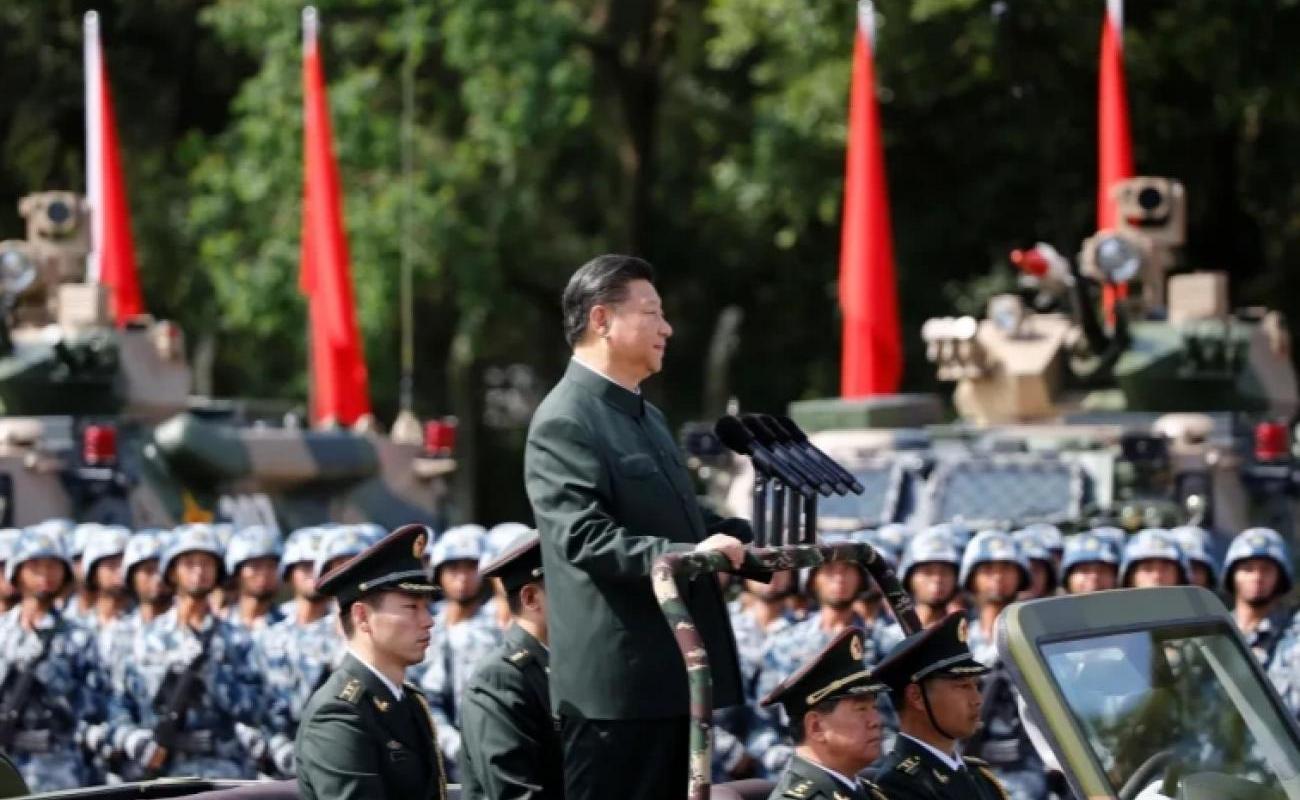
On paper, the Chinese military has never been as strong as it is now. New aircraft carriers are continuously being launched. Hypersonic missiles are being showcased. Drones, artificial intelligence, and combat robots are part of China's grand ambition to build the most modern armed forces in the world.
However, behind the grand military parade, there is unease at the center of power in China: President Xi Jinping seems to be increasingly struggling to trust the generals he himself appointed.
Over the past 13 years, Xi has restructured the military and personally selected his generals. Now, however, Xi appears to distrust those very generals—even the ones closest to him.
On paper, China's military has never been stronger. New aircraft carriers are being launched continuously. Hypersonic missiles are being unveiled. Drones, artificial intelligence, and combat robots are all part of China's ambition to build the world's most advanced armed forces.
Behind the impressive military displays, however, there is growing unease at the center of power in China: President Xi Jinping appears to be increasingly struggling to trust the generals he personally appointed.
The paradox is evident in the wave of purges within the military elite over the past few years. Several senior officials of the People's Liberation Army (PLA), including figures directly promoted by Xi, have become embroiled in corruption investigations or have disappeared from public view.
Names such as Li Shangfu and Wei Fenghe, two former defense ministers, have become symbols that even membership in Xi's inner circle offers no guarantee of security. Why has Xi lost confidence in his own military?
Many observers believe there is a more fundamental problem: Xi wants to build the world's most modern military without sacrificing political control over it. The New York Times reported on Saturday (May 9, 2026), citing a speech Xi delivered in 2016, in which he stated: "The key to building a strong military lies in selecting the right people."
Xi explained how he personally chooses and interviews candidates for promotion.
"Senior and mid-level officers are the backbone of building and managing the military, and as Chairman of the Central Military Commission, I must personally oversee this process," Xi said.
Xi is also believed to carry a historical trauma stemming from the collapse of the Soviet Union. In his view, a ruling party can fall when it loses control over the military and security apparatus. The Wagner Group's rebellion in Russia also demonstrated how armed organizations can become a political threat.
For this reason, Xi considers loyalty a matter of political survival. The problem is that in an authoritarian system, genuine loyalty is often difficult to distinguish from pretense. Many officials may appear obedient in public while building their own networks behind the scenes. At that point, Xi begins to question even his own generals.
In a recent development, China sentenced Liu and Wei to death with a two-year suspended sentence for bribery offenses. Such sentences are typically commuted to life imprisonment without the possibility of parole, but they nevertheless underscore the seriousness of the corruption cases involving China's military elite.
Liu's case is particularly sensitive because he previously headed the PLA's procurement department. Investigators alleged that he accepted substantial bribes and abused his authority in military procurement projects.
Meanwhile, Wei, the former commander of China's Rocket Force, was accused of accepting bribes and manipulating military promotions. The most striking aspect of these cases is that they involve the Rocket Force, the elite branch responsible for China's nuclear arsenal and strategic missile forces.
The corruption investigation within the Rocket Force has since expanded. The PLA has banned nearly 200 suppliers and project evaluators after allegations emerged of corruption in weapons procurement over almost a decade.
This suggests that the problems within the PLA are no longer limited to individual misconduct but point to allegations of systemic corruption throughout the military procurement chain and strategic defense projects. For Xi, this represents a serious national security concern.
If missile, logistics, or defense system projects are compromised by corruption, the quality of military equipment may be undermined, combat readiness could be falsified, and military reports may no longer be reliable.
Military Control
The center of military power in China is the Central Military Commission (CMC). Formally, the CMC consists of seven members: a chairman, two vice chairmen, and four senior military officers. However, many members appointed during the 2022 term have since been dismissed, investigated, or are no longer active.
At present, those remaining in the CMC include Xi, who serves as chairman and holds China's highest military authority, and Zhang Shengmin, widely regarded as Xi's key anti-corruption figure within the armed forces.
Several senior generals implicated in corruption investigations include Zhang Youxia (formerly the PLA's second most influential figure), He Weidong (who was expelled from both the Communist Party and the military), Liu Zhenli, and Miao Hua (the former head of the PLA's Political Work Department). As a result, the current state of the CMC is considered the most unstable since the Cultural Revolution.
Unlike in many other countries, China's military is not a national army in the conventional sense. The PLA is controlled directly by the Chinese Communist Party through the CMC rather than by the Ministry of National Defense. Consequently, Xi's most important position is not merely that of president, but also that of commander-in-chief overseeing the entire military chain of command.
Under Xi, this structure has become increasingly centralized. Major military reforms launched in 2015 established a command system that is more direct, more integrated, and more firmly loyal to the political leadership.
Xi aims to transform the PLA into a world-class military force by 2049. The focus extends beyond conventional warfare to include artificial intelligence, cyber warfare, unmanned aerial systems, combat robotics, satellites, space capabilities, and integrated joint operations. China is also pursuing military-civil fusion by encouraging technology companies to support defense modernization.
Given current strategic priorities, China is expected to continue accelerating military technological development, which has become a central component of its national strategy. At the same time, Xi is likely to intensify ideological education, strengthen loyalty screening, and expand internal military oversight.
This means that advancement within the PLA will increasingly depend not only on military competence but also on political reliability and loyalty to the central leadership.
The chain of command is also likely to become even more centralized. Many critical decisions may increasingly depend directly on Xi and a small circle within the CMC. While this provides Beijing with tighter political control, it may also make the system more rigid and slower to respond during an unexpected crisis.
A culture of "keeping the boss satisfied" could also emerge. In a system where officials fear political punishment, commanders may submit overly optimistic reports. If that occurs, Xi may no longer receive an accurate assessment of the PLA's actual combat readiness.
China may therefore remain cautious about engaging in major military conflicts. Although Beijing's rhetoric toward Taiwan has become increasingly assertive, the extensive internal purges within the PLA suggest that Xi himself may believe the military is not yet fully prepared for large-scale modern warfare. Modern war requires logistics that function effectively, commanders capable of making independent decisions, an honest flow of information, and mutual trust throughout the chain of command.