
Vucic, Moscow and the elections in Serbia: How Russian influence is being used in the battle for power
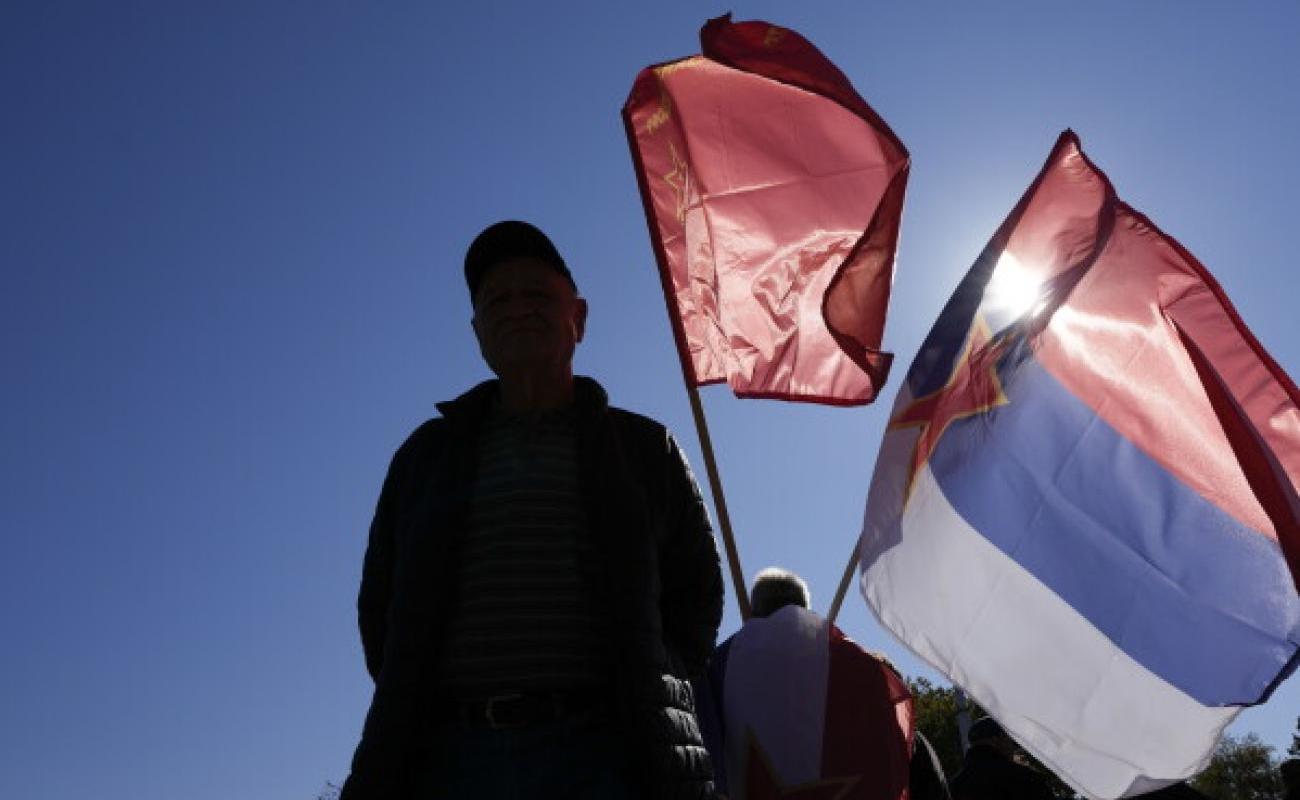
Close ties to the Kremlin, narratives of a "color revolution," parties registering as representing the Russian minority, and accusations of election interference are putting Russian influence at the center of the political battle in Serbia.
Aleksandar Vučić faces the challenge of the student movement, while Moscow has an interest in maintaining relations with the current government in Belgrade.
The elections are not just a contest between the government and the opposition. They take place in an environment where domestic interests, relations with Russia and the West, control over the media, and efforts to influence citizens' perceptions of the opposition and the protests are intertwined.
To understand Moscow's role, one must distinguish documented Russian influence from the shared interests of Belgrade and the Kremlin and accusations of direct electoral coordination.
For Vučić, relations with Russia go beyond foreign policy. They are part of a model that combines domestic power, the support of a pro-Russian electorate, and maneuvering between Moscow, Brussels, and Washington.
The interests of Vučić and the Kremlin may coincide on one essential point, preserving the current model of governance in Serbia.
Belgrade and Moscow have a shared political and security interest in preserving this model and in portraying the mass protests as attempts to destabilize the country from outside. Thus, a change of power would create uncertainty for Moscow, as a government with stronger institutions and greater parliamentary control would be a less predictable partner for the Kremlin.
This does not prove that Moscow directly controls Vučić, but it does indicate a convergence of interests that could make Russia a factor in maintaining the current political balance.
Protests and the “color revolution” narrative
One of the most obvious manifestations of this alignment is the way Belgrade and Russian officials present the anti-government protests.
Following the death of 16 people from the collapse of a tent at the Novi Sad railway station, Serbia was engulfed in widespread protests, led mainly by students, who are demanding institutional accountability, the rule of law and changes in governance.
Serbian authorities have described the protests as an attempt at a "color revolution," a term used for movements aimed at changing power and often associated with Western intervention in Russian discourse.
Moscow has also expressed similar concerns.
In August, the Russian ambassador to Belgrade, Alexander Bocan Kharchenko, stated that the Serbian leadership could not rule out the risk of a “color revolution” after the elections, regardless of the outcome. Earlier, the Kremlin had said that it could not rule out the possibility that the protests were part of such an effort.
This language creates a common framework of interpretation, where protests are not presented as an expression of civic discontent, but as an externally driven process.
For the Serbian government, this narrative could shift attention from the protesters' demands to allegations of foreign interference. For Moscow, it aligns with opposition to the expansion of Western influence in the region.
Russian minority parties and electoral mechanisms
Another dimension of Russian influence is related to parties that register as representing the Russian national minority.
The establishment of the Russo-Serbian Unity Party, led by Rade Savić, and the participation of the Russian Party in the elections have revived the debate on the use of minority status to benefit from electoral advantages.
In Serbia, minority parties are not subject to the general electoral threshold of three percent, making it easier for them to be represented in parliament. However, this mechanism has raised concerns about potential abuses.
In the case of the Russian-Serbian Unity Party, the question marks relate to the real representation of the Russian community, ties to Moscow, and the purpose of participating in the elections.
The Russian community in Serbia has just over 10 members, while the new party is the eleventh to be registered in its name.
However, if parties that present themselves as representing the Russian minority are used to mobilize the pro-Russian electorate, minority representation can become an instrument of political competition.
The case of the Russian Party in Niš shows how a mandate won through this mechanism can affect local balances.
After the June 2024 local elections, the Russian Party won a mandate in the Niš municipal council and entered into a coalition with Vučić's Serbian Progressive Party, changing the balance of power in favor of the ruling coalition, which until then had as many mandates as the opposition.
This case shows that small minority parties can play a crucial role in the formation of political majorities.
Councilor Tihomir Perić, previously a member of the Serbian Radical Party, was part of the Russian Party's list for the parliamentary elections.
This development fuels suspicions of connections between Russian minority parties and power structures, but the alignment of interests does not prove a direct agreement between Vučić and these parties.
Disinformation and information space
Beyond parties, the information space is one of the main channels of Russian influence in Serbia.
Moscow influences the electoral environment through disinformation campaigns on social media, pro-government media outlets, and Russian state media outlets such as Sputnik and RT.
Unlike the European Union, Serbia has allowed these media outlets to continue broadcasting their programs.
Pro-Russian content is also distributed through anonymous accounts and portals that republish messages from Moscow.
One example is the website "Govorit Moskva", which publishes speeches by Vladimir Putin in Serbian, spreading messages about Russia's alleged successes in the war against Ukraine and criticism of the West.
In this environment, pro-Russian narratives can be intertwined with the political communication of the Serbian government, especially when both sides present the West as a destabilizing factor.
Thus, citizens can be exposed to similar messages from different sources, without it being necessary for there to be direct coordination between them.
Another development that has raised questions is the statement by Branimir Nestorović, leader of the parliamentary movement "We, the Power of the People", that Moscow is seeking the unification of pro-Russian forces in Serbia.
On September 16, Nestorović stated that he had been received in Moscow at the "highest level" in late August and that there was a real possibility for the unification of pro-Russian parties.
If it materializes, such a union could create a more organized pro-Russian political bloc. However, it remains unclear whether it would aim to support Vučić, compete with him, or create a separate force to exert pressure on the government.
For the Kremlin, the union could serve to maintain influence in Serbia. For Vučić, these forces could be both a source of support and a factor to be managed in relation to the pro-Russian electorate.
Relations between Vučić and the Kremlin
Relations between Vučić and the Kremlin have been built over the years through political, energy, and security cooperation.
Serbia continues to rely on Russian gas imports and refuses to join European Union sanctions against Moscow for its invasion of Ukraine.
Gazprom Neft is the main owner of the Oil Industry of Serbia (NIS), while negotiations for the sale of the company, which is under US sanctions due to Russian ownership, have been ongoing for months.
In Serbian politics, figures close to Moscow have held important positions in the government and security institutions.
Aleksandar Vulin, who has headed the police, defense and Security Intelligence Agency (BIA), has maintained close ties to Russian structures. He left the BIA leadership a few months after being included in the US sanctions list.
Meanwhile, politician and businessman Nenad Popovic, who has a network of companies in Russia, is part of the outgoing Serbian government.
These connections show that Russian influence is not limited to propaganda or support for pro-Russian parties, but also includes institutional and economic relationships that can influence the orientation of foreign and security policy.
The loss of pro-Russian representatives in the government would reduce Moscow's direct access to decision-making centers, without eliminating its influence on Serbian society.
Unlike parties that place relations with Russia at the center of their programs, this list is focused on domestic problems, the rule of law, and civic discontent.
This makes it difficult to determine what stance a future government led by her would take towards Russia, Kosovo, Bosnia and Herzegovina, or Ukraine.
For Moscow, a change of power could mean the loss of some direct channels of influence on Serbian institutions.
For Vučić, the elections are a showdown over the continuity of his governance model, at a time when protests have called into question the legitimacy of power.
The GeoPost