
US Renews Ukraine Peace Push, But Former Ambassadors See No Breakthrough
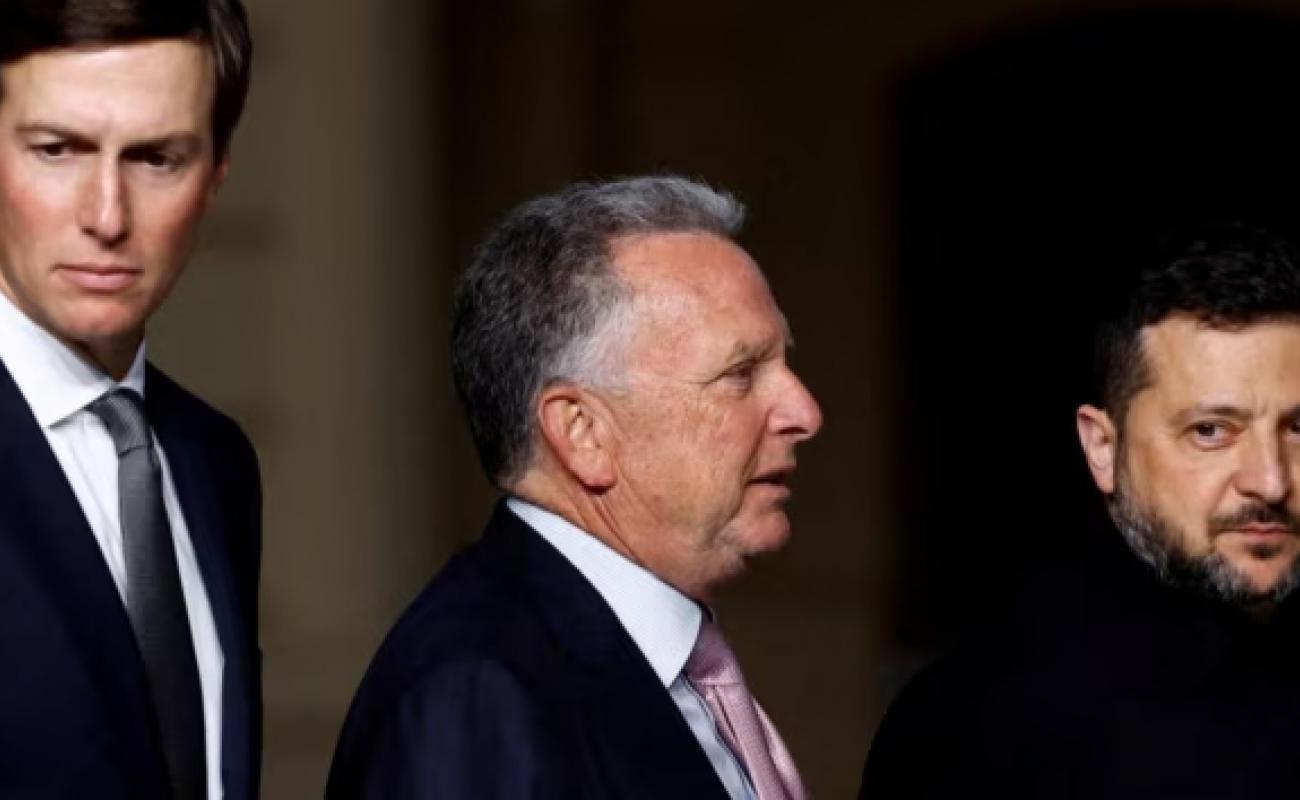
WASHINGTON -- The Trump administration has revived its diplomatic drive to end Russia's war in Ukraine, as US envoys Steve Witkoff and Jared Kushner traveled from Moscow to Kyiv in a high-profile effort to restart negotiations.
But after separate meetings with Russian President Vladimir Putin and Ukrainian President Volodymyr Zelenskyy, the central question remains: Has Moscow changed its position enough to make a settlement possible?
Judging by a statement from a top Putin aide, no.
Three former US ambassadors to Ukraine interviewed by RFE/RL also said they saw no sign of any concession from the Kremlin.
The weekend marked the first time Witkoff and Kushner traveled to Kyiv together for talks with Zelenskyy, after meeting Putin in Moscow the previous day.
Witkoff, who has met Putin eight times, described discussions as constructive and said Washington had heard "new ideas" from Moscow. Kushner said the United States was working on a broader "peace package."
Zelenskyy, for his part, called his discussions with the Americans "very substantial" and said Ukraine was prepared to move toward trilateral talks involving Kyiv, Washington, and Moscow. National security advisers from Britain, France, and Germany also joined part of the Kyiv discussions.
The diplomatic activity is significant. But the former ambassadors cautioned against confusing movement with progress.
William Taylor, who served twice as US ambassador to Ukraine, said the Kyiv visit was "good news" but argued the crucial test lies elsewhere.
"The real problem in diplomacy is not Kyiv. The real problem in diplomacy is not Washington. The real problem in diplomacy is Moscow," Taylor told RFE/RL.
He said he had heard nothing from the Kremlin suggesting that Putin had moved away from his maximalist demands.
In comments late on September 6, Putin's foreign policy adviser, Yury Ushakov, said Putin told Witkoff and Kushner that Russia was confident of achieving its goals, and stressed the necessity of addressing "all the root causes of the conflict."
"Root causes" is a phrase representing a grab bag of Russian grievances dating back to before the 2022 invasion, including the assertion that Zelenskyy is not a legitimate president and the Ukrainian government was oppressing native Russian speakers in Ukraine.
It's a signal that Moscow's position is unchanged.
John Herbst, who preceded Taylor as ambassador under President George W. Bush, offered a similar assessment. He said the current effort is arguably the most substantial US diplomatic initiative in months simply because there had been little comparable activity since January.
"The question is: Is there something serious here? And the answer is: We don't know," he said.
That uncertainty is likely to dominate the next phase of the diplomacy.
Geoffrey Pyatt, who served as US ambassador to Ukraine from 2013-16, also welcomed the renewed American engagement while warning that the fundamental obstacle remains Russia's willingness to de-escalate.
The Missing Piece
The most intriguing claim emerging from the weekend is Witkoff's assertion that the Americans heard "new ideas" in Moscow. Neither he nor Kushner has publicly explained what those ideas are. That leaves a crucial distinction between new language and a new Russian position.
For Taylor, the test would be concrete military de-escalation.
A Russian agreement to a cease-fire along the current lines, a halt to long-range strikes, an end to attacks on energy infrastructure, and an understanding covering shipping would represent a genuine departure from Moscow's current position, he said.
Without such steps, the word "new" risks describing proposals that merely repackage existing Russian demands.
Herbst also pointed to a history of unfulfilled expectations. American officials have previously suggested that Moscow was prepared to compromise, only for the substance of those supposed compromises to remain unclear or fail to materialize.
That history makes the details of this weekend's meetings particularly important.