
The Kremlin's "capture strategy": how the Russian Federation finds loopholes in sanctions and why they cannot be completely closed
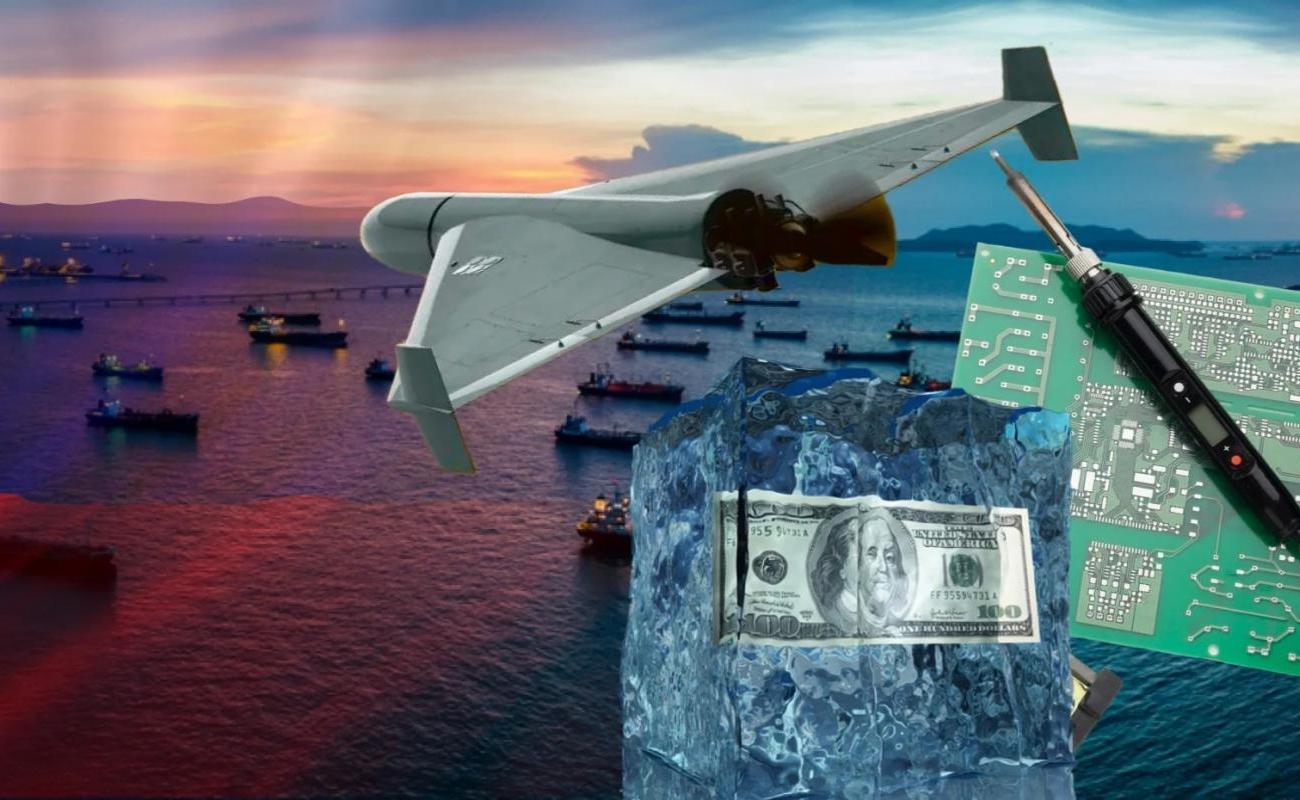
While Brussels is preparing a new package of sanctions against Russia, Moscow continues to sell oil, find workarounds and import Western components for weapons. Does this mean that the Western war on sanctions has failed? Is it having an effect, but it is not so noticeable at first glance? Focus found out which restrictions are really affecting the Russian economy, and which exist more on paper.
Early next week, the European Commission may present the 21st package of sanctions against the Russian Federation. This is reported by "Social" citing its sources in European diplomatic circles. The next package of sanctions may include measures to further pressure cryptocurrencies, as well as restrictions against financial institutions in third countries (especially Central Asia), which help Russian banks circumvent sanctions.
According to Politico, the Russian shadow fleet, which transports sanctioned oil, continues to operate with the de facto support of European financial markets. Although Western insurers have officially left Russia, ships are insured through Russian intermediaries, and payments are made through European banks. European officials and experts acknowledge that Russia has created alternative maritime insurance schemes that operate in a way that circumvents international norms. This problem is exacerbated by the preparation of the 21st package of EU sanctions, aimed at structures that help Moscow circumvent restrictions.
Despite all the variety of sanctions, none of them are working as they should, says economic expert Gennady Ryabtsev. The only thing that has really worked is what was not included in the sanctions packages, namely the refusal to buy Russian gas. This was the biggest blow to the Russian economy, and they have never been able to find a replacement for it, the economist noted in a commentary for Focus.
“The fact that sanctions are more of a political step and do not significantly affect the Russian economy is confirmed by the fact that Russian missiles and drones still contain components manufactured by European companies. Moreover, these components were sold back in 2025. What kind of sanctions are they if even the supply of dual-use goods cannot be stopped?” Ryabtsev asks.
Of course, everything that has been introduced can have an effect when Russia does not have sources of income from its traditional export routes. In particular, if Trump had not started the Iranian adventure, one could expect a fairly significant impact from the fall in energy prices, especially oil components. Then various targeted sanctions against individual Russian companies would also begin to act. But what has been introduced now is like a poultice on a dead body, Ryabtsev emphasizes.
"I would not rush to assess new sanctions initiatives, since there is often a big difference between loud statements and final decisions. Often, measures announced as extremely strict turn out to be much milder than expected. Therefore, in my opinion, the effectiveness of already existing restrictions is more important than the number of new sanctions packages. If European countries were to ensure the full implementation of previously introduced sanctions, this would have a much greater effect than adopting subsequent packages with loud promises," the expert believes.
Successful sanctions against the Russian Federation exist and are working
Economist and former presidential advisor Oleg Ustenko has the opposite opinion regarding the effect of sanctions against the Russian Federation. In particular, as the expert noted in a commentary for Focus, there are very successful sanctions that have really hit hard and continue to have a serious impact on the economic situation in Russia.
First of all, there are financial sanctions that have cut off Russia from the external capital borrowing market. Neither the state itself nor Russian companies can enter the external market and borrow money there, as they did before. Because of this, they have serious problems.
"The Russian Federation is facing problems related to the fact that the state budget deficit is significant. In the first quarter of this year, it exceeded the mark of $ 50 billion, and based on the results of the first half of the year, it will be in the range of $ 80-100 billion. Russia does not have the opportunity to finance this deficit from external sources, as all countries usually do. Therefore, they are constantly looking for money to patch up the holes," Ustenko emphasizes.
At the same time, financial sanctions and a ban on entering foreign markets also affect Russian business - private and state-owned companies cannot enter foreign markets, borrow capital and develop their business. There is no money, there is nowhere to get it, and without money you cannot develop companies. Placing shares on international markets for Russian companies is a thing of the past. If there is no money, then investments and development of the private sector are minimized.
"In my opinion, one of the most effective steps could be putting Russia on the blacklist of the FATF, an international organization that combats money laundering and financing of illegal activities. Ukraine has been pushing for such a decision since the beginning of the war in full force, but it seems to me that this position has not been sufficiently sharp and consistently promoted on the international stage. In general, the sanctions that were introduced against Russia were correct in their essence, but in the future the pressure should have been more actively increased," Ustenko noted.
The second group of sanctions, which was very important, concerned everything related to the exclusion of Russia from the global technology and equipment sector. First, a ban was introduced on the export of military technology and equipment to Russia, then dual-use technology, and then practically any transport of technology and equipment from Western countries.
“If you don’t have equipment and technology, you can talk about import substitution as much as you like, but in reality it’s not like that. The country has no opportunity to get new equipment, technology and exchange scientific information. There is no access to research and development (R&D). It is clear that the gap from the world level has been growing since the first year of the war and continues to grow. For the Kremlin, import substitution is a story that doesn’t work, especially when it comes to high-tech products,” Ustenko believes.
The third group of sanctions is everything related to the energy resources market, and most importantly, oil.
In December 2022, the G7 introduced a cap on the price of Russian oil at $60 per barrel. This has severely affected Russia's revenues and reduced its ability to finance its military and civilian budgets.
“As for gas, unfortunately, it is still being sold to the EU. The deadline for a complete rejection of Russian gas is set for 2027. This means that the Europeans, on the one hand, have financially helped Ukraine, but on the other hand, they have continued to give money to the Russians, buying their gas. This is always the subject of heated discussions during the development of new sanctions packages,” the economist emphasized.
Also, according to experts, measures to freeze the assets of individuals have proven themselves quite well. Another thing is that Russia has been learning how to circumvent sanctions for all these years. According to Ustenko, the Russian Federation is using the so-called “cockroach strategy.”
"They are constantly looking for loopholes, like in a student dormitory: they find a loophole, they try to squeeze through it, when a new package of sanctions is introduced. Then they plug the loophole, but they look for another one. Each new package of sanctions must close the loophole that the Russians found in the previous one. It is a constant process. You should not think that you can completely close all the loopholes. To do this, you have to move out of this dormitory, but I do not believe that a student has the opportunity to move out," the expert continues.
What sanctions have been imposed against the Russian Federation
The sanctions against Russia are unprecedented in scope and are coordinated between the main partners: the European Union, the United States, the United Kingdom, as well as Japan, Canada and other G7 countries. The main goal is to undermine the economic base that allows Russia to wage war against Ukraine by restricting access to technology, finance and energy markets.
First, the assets of the Central Bank of the Russian Federation worth hundreds of billions of euros have been frozen. In the EU alone, about 210 billion euros have been frozen, which has deprived Russia of the opportunity to use its gold and foreign exchange reserves to stabilize the economy and finance the war. Based on the interest income from these frozen assets, a mechanism has been created to lend Ukraine about 45 billion euros.
Secondly, key Russian banks, including Sberbank, VTB, Gazprombank and many others, have been excluded from the international interbank payment system SWIFT. This has greatly complicated international settlements.
Third, dozens of Russian banks have been subject to sanctions and blockades. This means that all their assets in the territory of the initiator countries are frozen, and citizens and companies of these countries are prohibited from conducting any transactions with them. Transactions with the Russian analogue of SWIFT, the Financial Messaging System (FMSS), are also prohibited, and since 2026 the list of transactions using cards of the national payment system Mir has been expanded.
Fourth, crypto exchanges and services that helped circumvent the restrictions have been sanctioned. For example, in 2025, OFAC (the US Office of Foreign Assets Control) imposed sanctions on the Garantex exchange and its successor Grinex for aiding money laundering and evading sanctions.
The export of energy resources, which are the main sources of financing for the Russian budget, has also been subject to sanctions.
The EU has imposed a ban on imports of Russian oil transported by sea, as well as coal. The US and the UK have imposed a complete ban on imports of Russian oil, gas and coal.
In addition, the G7 countries and the EU have introduced a mechanism that prohibits Western companies (insurers, carriers) from providing maritime transport services for Russian oil if it is sold at a price higher than a set limit.
And in 2025, the EU has banned the import of Russian LNG (with a gradual introduction) and its re-export from EU ports to third countries. A ban on the provision of transshipment services for Russian LNG has also been introduced.
In the same year, the US and the UK have imposed sanctions on the largest Russian oil companies - Rosneft and Lukoil, as well as their subsidiaries.
The sanctions have also affected the interruption of deliveries of critical technologies and components needed by Russia to produce modern weapons and maintain its industrial potential. A virtually complete ban on exports to Russia of dual-use goods and technologies, microelectronics, aircraft engines, CNC machine tools, drone components, as well as chemicals and navigation equipment has been introduced.
A ban or severe restrictions have been imposed on imports from Russia of a wide range of goods: steel, non-ferrous metals (copper, aluminum), precious metals (gold, diamonds), wood, cement, chemical products, alcohol, and seafood.
Thousands of individuals and legal entities involved in the war have been subject to personal sanctions - statesmen, oligarchs and businessmen, propagandists, military personnel, etc.
In addition, the EU has suspended the broadcasting licenses of several major Russian propaganda media outlets (RT, Sputnik, etc.), accusing them of systematic disinformation. Russia has been banned from participating in many international cultural and sporting events.
Separate measures have been taken to isolate Russia and stop circumvention of other sanctions.
The EU, the US, the UK and other countries have closed their airspace to all Russian aircraft and ports to Russian ships. In addition, the fight against the "shadow fleet" - the appearance of old tankers with unclear country of registration and owners - has begun. Hundreds of such vessels have already been added to the sanctions lists and are banned from entering ports.
As a reminder, the media has previously reported that the Russian "shadow fleet", which helps Moscow circumvent oil sanctions, has itself become a serious threat to the global environment.