
Putin has a new bet in the war against Ukraine. Will he succeed?
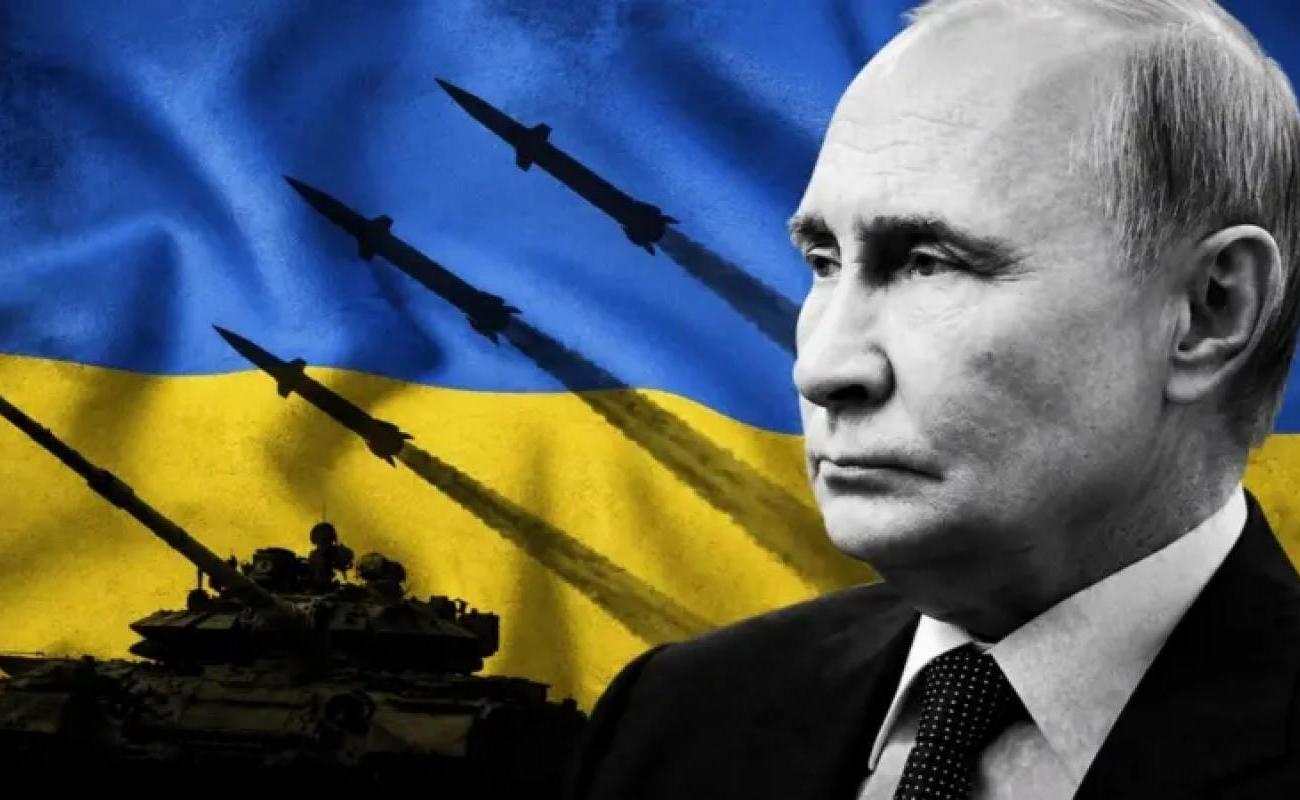
Moscow has entered a new phase of the war, increasing the production of drones and increasing the volume of air strikes. However, the cost of the war is also growing: both for the economy and for the Kremlin, Western publications note.
A bet on drones
As Bloomberg points out, the Russian aviation industry is booming due to the demand for drones.
In April, production in this sector increased by 117 percent compared to the same period last year. For comparison, the average growth rate in 2025 was 68 percent.
The publication notes that Moscow is adapting to the new military and economic reality. The production of tanks and heavy equipment is increasingly facing restrictions, while drones remain one of the few areas where production can be increased quickly and cheaply.
“DPV drones are now the main element of ground combat operations. And long-range drones have allowed Moscow to compensate for its limited arsenal of ground-based cruise missiles and continue its campaign against Ukraine’s critical infrastructure,” explains Douglas Barry of the International Institute for Strategic Studies.
Detailed data on the volume of military production have not been published.
According to data cited by Bloomberg, citing Ukrainian military intelligence, by 2026 Russia plans to produce 7.3 million FPV drones and 7.8 million combat units for drones of various types.
For comparison, during the entire period of the full-scale war, Russia received 64 new Su-34 and Su-35 fighter jets and another 12 Su-27 fighter jets. Such data are given by military analyst Sam Cranney-Evans.
Cranney-Evans.
At the same time, the development of the defense industry is becoming less uniform. While the production of drones and aircraft products continues to grow, the production of heavy equipment and ammunition is slowing down.
According to official forecasts, the growth rate in these sectors may decrease to four to five percent compared to about 30 percent in previous years.
Drones already occupy a central place in Russian military operations and enhance the effectiveness of cruise and ballistic missiles, says Douglas Barry.
The cost of war is growing - both for the economy and for Putin
Despite the successes in the production of drones, war is becoming more expensive for Russia. Moreover, the problems are piling up not only in the economy - they are increasingly creating difficulties for the Kremlin itself.
As Bloomberg writes in another article, representatives of the Ministry of Finance and the Central Bank of the Russian Federation have warned Vladimir Putin that it is becoming increasingly difficult to maintain current military spending.
According to the agency's sources, government economists fear a further increase in the budget deficit and believe that the longer the war lasts, the harder it will be to return the economy to normal. This is causing disputes within the Russian government.
Some officials insist on cutting spending, while the Defense Ministry is demanding that the current level of funding be maintained and even additional funds be allocated.
According to Bloomberg, Putin has already ordered a reduction in almost all state spending, except for military spending. However, even the rise in oil prices has not yet saved the situation. Russian economists believe that in order to significantly ease the pressure on the budget, oil would have to cost more than $100 per barrel for a long time.
Meanwhile, the budget deficit has already reached 2.5 percent of GDP - about half the planned amount. To find additional money, the government is raising taxes, looking for new sources of revenue and cutting spending in other areas.
Additional problems are caused by Ukrainian attacks on oil refineries, enterprises and transport infrastructure. As Reuters notes, representatives of big Russian business are increasingly calling on the Kremlin to find a way to end the war.
According to Financial Times columnist Gideon Rahman, all this is gradually turning the war into a problem for Putin himself. Economic difficulties are growing, and Russia has not had any noticeable military successes.
"The division within the Russian elite is the way to remove Putin," believes Rahman.
He reminds that in Russian history, military failures have repeatedly become the impetus for political crises.
In addition, the consequences of the war are increasingly difficult to hide from ordinary Russians.
Drone attacks are closing airports, disrupting communications and introducing other restrictions that are felt even by Moscow residents.
And attacks on oil infrastructure affect the domestic fuel market and prices.
Ukraine is changing the course of the war
In this context, Foreign Affairs writes that the war in Ukraine has reached a turning point.
The publication notes that after the failed Ukrainian counteroffensive in 2023, the conflict entered a relatively predictable cycle of Russian offensive actions. However, in 2026, the situation changed.
According to Ukrainian commanders, Russian attacks continue, but no longer create the same pressure as before. At the same time, the effectiveness of the actions of Russian troops is gradually decreasing.
Journalists attribute this to several factors.
First, Ukraine has completed the formation of an army corps, which has allowed for improved personnel training and command of troops.
Second, the Armed Forces of Ukraine have strengthened the interaction between infantry, artillery, armored vehicles and drone units.
Third, Ukrainian forces are developing medium-range strikes on Russian logistics up to 100 kilometers from the front, which makes it difficult to supply troops.
According to Foreign Affairs, a combination of organizational reforms, tactical adaptation, and increased capabilities of Ukrainian drone units helped Ukraine overcome the crisis of 2024–2025. At the same time, the publication emphasizes: it is too early to talk about Ukraine's victory. Russia still has more than 600,000 military personnel and retains significant production potential.
However, the authors believe that the Kremlin is finding it increasingly difficult to implement its military plans. Without a major reorganization of the army and the commitment of new resources, Russia is unlikely to be able to fully occupy the Donbas in the foreseeable future.
In addition, optimism is growing in Kiev that Ukraine will be able to force Russia to agree to a ceasefire, journalists say.
In these conditions, Foreign Affairs notes, two scenarios are gradually emerging before the Kremlin: either a new large-scale mobilization with serious political and economic consequences, or a transition to a defensive strategy and a prolongation of the conflict.
According to the authors, if Ukraine manages to maintain the current momentum and strengthen its position by the end of the year, Kiev and its allies can convince Moscow to agree to a ceasefire, demonstrating to Putin that this is a less risky option for it.