
OPINION: Russia the Arsonist Wants to Play Firefighter
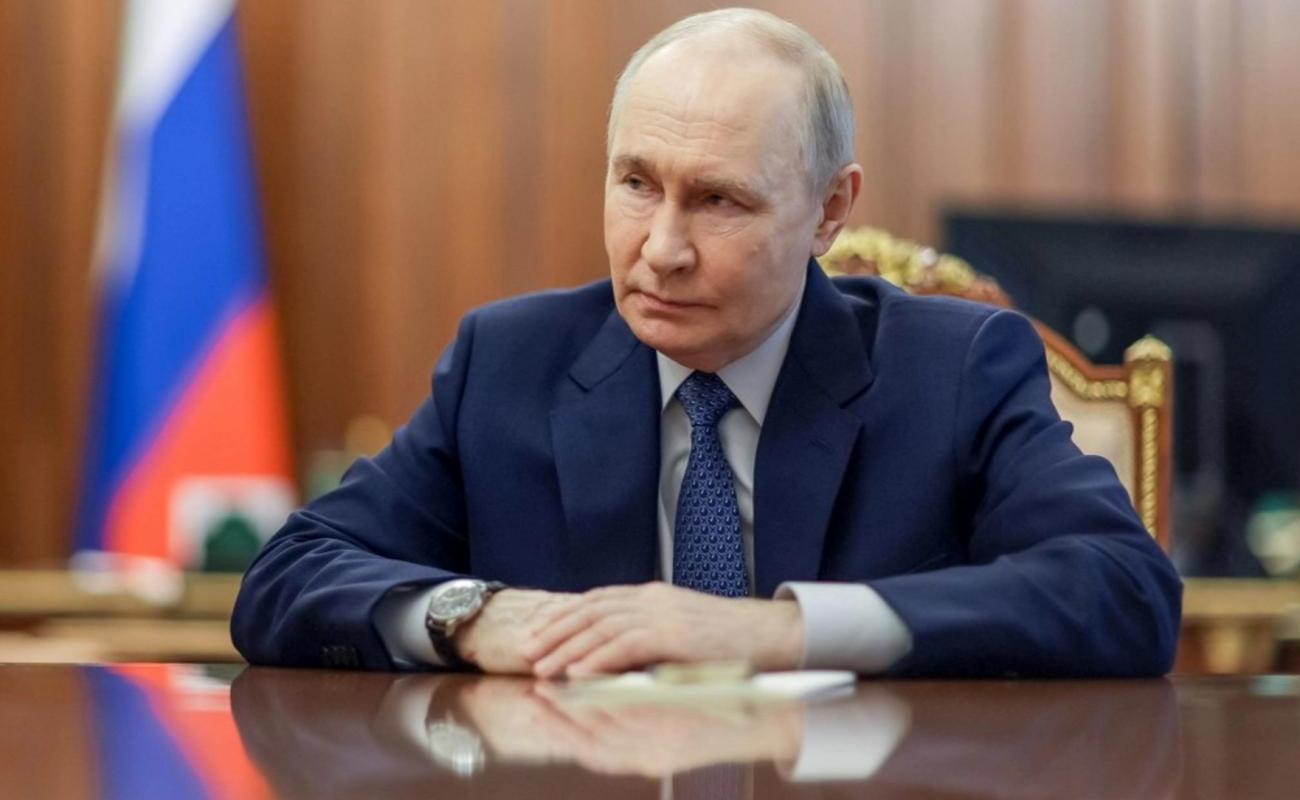
Russian President Vladimir Putin has offered to use Moscow’s close ties with Iran to restore calm in the Middle East after the US and Israeli strikes on Iran, which he condemned as “unprovoked aggression.” Now, Putin is pretending to a new role for himself: the world’s peacemaker.
Putin’s strategy is working. President Trump held a call with Putin on Monday, the first such call since the beginning of the war with Iran. According to Putin’s foreign affairs adviser Yuri Ushakov, the Russian president “voiced a few ideas aimed at a quick political and diplomatic settlement,” based on his own conversations with Iranian and Arab Gulf leaders.
The irony is hard to miss. At the same time, Moscow is providing intelligence to Iran to abet its targeting of American military installations. It may also be providing weapons, depending on one’s interpretation of the Iranian foreign minister’s statement that Russia was supporting Iran “politically, and otherwise.”
Seeing Moscow step in to “cool things down” is like watching the arsonist volunteer as a firefighter.
Ahead of the conflict, Washington brushed off Russia, whose senior diplomats believe that America is handling the Iran situation “very poorly.” This is not Putin’s first attempt to mediate. He also offered his mediation service during his call with President Trump in June 2025, when the Kremlin restated its willingness to take uranium from Iran as part of a nuclear deal. Trump wisely rejected that offer, saying: “Vladimir called me up. He said, ‘Can I help you with Iran?’ I said, ‘No, I don’t need help with Iran. I need help with you.’”
So, why is Putin so persistent in his attempt to be the world’s peacemaker? After years of deepening ties with Tehran, seeing Moscow step in to “cool things down” is like watching the arsonist volunteer as a firefighter.
Russia’s offer is less about peace than about power. Putin is, again, seeking to present himself as the Iran whisperer, as he did during the Obama era nuclear talks. By hosting talks and facilitating ceasefires, Moscow would position itself as a necessary diplomatic actor and project the image of a major global decision-maker, reinforcing its claim to great-power status. Participation in negotiations would allow Russia to shape political settlements, ensure that a friendly government remains in power in Iran and secure outcomes favorable to Russia’s interests.
Facing an impasse on Ukraine talks, Moscow might trade away some of its “ally” Iran’s red lines in exchange for better conditions in Ukraine while improving US-Russia relations. That is, Moscow cynically treats both Washington and Tehran as bargaining chips to extract greater concessions in the ongoing negotiations over Ukraine.
Russia has a long history of falsely portraying itself as an impartial mediator in conflicts ranging from civil wars in Syria, Libya, Afghanistan, and the Central African Republic to the conflict between Israel and Palestine, and even to the Nagorno-Karabakh conflict between Armenia and Azerbaijan.
Moscow and Tehran’s partnership warmed after Russia’s 2022 full-scale invasion of Ukraine, with Iran supplying drones and Russia offering defense cooperation, including potential Su-35 sales. But Russia’s reliance on Iran has waned – China and North Korea now play a far bigger role in supporting Moscow’s war effort. Between Dec. 27 and Jan. 1, Russian and Belarusian Il‑76 transport planes flew to Tehran carrying undisclosed cargo, highlighting ongoing but limited military ties. Iran could seek help rebuilding its air defenses, but that would take time, and Moscow remains focused on its own needs in Ukraine.
Moscow lacks both the credibility and the intention to act as an honest broker in the Middle East. Vladimir Putin’s outreach is less about peace than about reshaping US-Russian relations on terms favorable to the Kremlin. No one should be fooled by this diplomatic theater. Russia’s gambit is leverage, not diplomacy. Allowing Moscow to mediate would only reward that strategy amounting to handing the keys to the burglar.