
"Not on the List." How Kidnappings by Russian Security Forces Have Become a Daily Phenomenon in Crimea
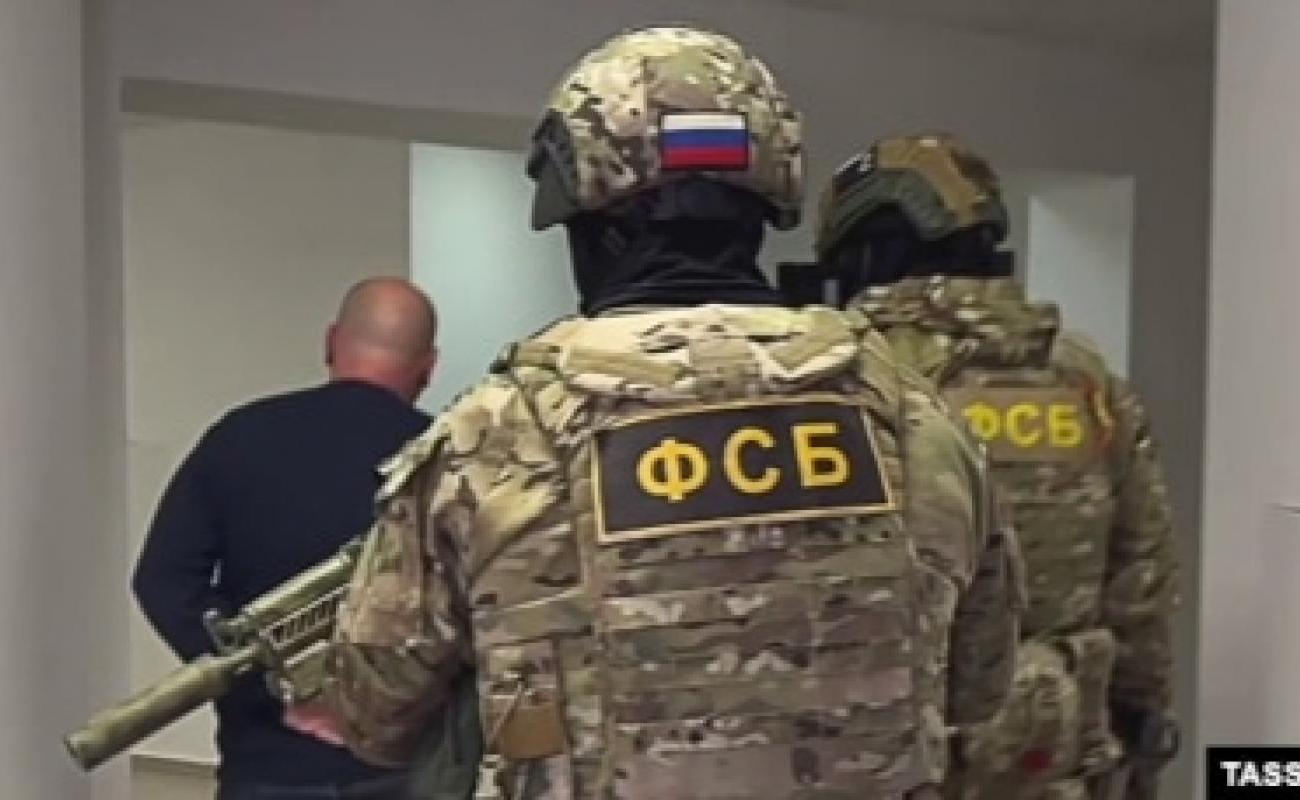
They posed as FSB officers and took him to an unknown location. Seven months ago, Sergei Grishchenko was abducted in Sevastopol, and his family still has no news of his fate. Human rights activists say such situations are becoming more frequent and have become routine practice for Russian intelligence officers. Krym.Realii writes about the impunity with which Russian security forces operate, what is known about the subsequent fate of the missing, and why such actions are considered more serious than war crimes.
Not on the List
As Sergei Grishchenkov's daughter told a Krym.Realii correspondent, there is currently no information about her father's whereabouts or his legal status. And Russian security forces deny any involvement in his disappearance.
This is a typical practice faced by relatives of kidnapped residents of Crimea. The FSB Directorate for Crimea and Sevastopol gives the same answer: the person abducted by security forces "was not detained in accordance with the Criminal Procedure Code, and according to the investigative unit, no criminal proceedings have been initiated." Detention centers also respond to inquiries with the same standard response: "The database of suspects, accused and convicted persons... does not match."
Reporting the abduction to the police yields no results: after confirming that FSB officers are involved, investigators hand over the investigation materials to the military prosecutor's office, which "sees no violations." An appeal to higher prosecutorial bodies results in the appeal being returned for reconsideration to the prosecutor with whom the appeal was originally filed.
Found in court
The fate of Crimean residents abducted by FSB officers can be seen in the court testimony of human rights activist and journalist Irina Danilovich, who was held for a week in poor sanitary conditions in the basement of the special services building, periodically tortured in order to fabricate a criminal case. According to her, people are tortured in this basement
for weeks, then forced to record videos claiming they have no complaints against the FSB, and then criminal charges are filed.
But there is another category of abductees who disappear for longer periods. Part of their fate has become clear from several letters from Lyudmila Kolesnikova, who spent three months in complete isolation in Detention Center No. 2 in Simferopol. According to available information, all this time she was detained without hygiene products and without the opportunity to inform her family. She was subsequently charged with treason for an alleged donation to the Armed Forces of Ukraine.
Moreover, the combination of "kidnapping" and "treason trial" has occurred several times over the past year. According to the Crimean process, Sevastopol resident Dmitry Miskov was convicted of treason 11 months after the LizaAlert search team began searching for him as a missing person.
In May 2024, security forces advised relatives not to search for Lera Dzhemilova, a resident of the Dzhankoy district, and the following August she was sentenced to 15 years in prison.
The kidnapping of Ismail Shemshedinov by security forces became known in January 2024, and the following July he was "found" in the Supreme Court of Crimea with a verdict of treason.
Oleg Budnik, a resident of Olenivka, was kidnapped in 2023 and later found guilty of alleged ties to Ukrainian intelligence.
During his arrest in January 2024, Russian security forces searched Shemshedinov's home and then took him to an unknown location.
More than a war crime
The above list is far from complete, but it is also important to emphasize that not all Crimeans kidnapped with the participation of the FSB subsequently ended up in the dock on charges of treason.
Nothing is known about Farhad Soliev and Server Aliyev, who were kidnapped in Sevastopol more than two years ago.
There is no information about three women from the village of Lenino – Larisa Gaidai, Elvira Ablyazova and Tamara Simonenko (Pavlenko), as well as Sevastopol resident Tatyana Dyakunovskaya, who were abducted in 2024. In addition, Yevpatoriya resident Tatyana Shtrifanova, a couple Natalya Polyukh and Oleg Platonov, and ambulance worker Tamara Chernukha, who were abducted by security services this year, remain missing.
“And these are only the cases for which there is at least some public information. However, practically nothing is known about the majority of abductions, because relatives are afraid that publicity could only harm. Even under the condition of anonymity, they refuse to reveal the details,” explains Andrei Zubarev, director of the public association “House of Human Rights Crimea”, which, in partnership with the Educational House of Human Rights in Chernihiv, documents and studies enforced disappearances in Crimea.
As the human rights activist explained to the correspondent of Krym.Realii, the number of enforced disappearances significantly exceeds the number of publicly reported cases. And there are compelling reasons to classify this, essentially everyday practice, as a “large-scale or systematic attack on civilians”. And a large-scale or systematic character, in turn, is one of the key characteristics of crimes against humanity.
“There is such a thing as a crime against humanity. It is more than a war crime. Among all the actions that fall under the definition of crimes against humanity, enforced disappearances are also included. Moreover, this term quite accurately describes what we are currently witnessing in Crimea. When the time comes, the evidence collected will help us to properly assess all these actions and bring the perpetrators and those involved to justice,” Andrei Zubarev emphasized.
In early October 2024, the representative of the Zmina Human Rights Center, Tatyana Zhukova, during a session of the OSCE International Conference on the Human Dimension in Warsaw, called for sanctions against those responsible for imposing politically motivated sentences and denying medical care to Crimean political prisoners. She named Vadim Bulgakov as one of those who should be held accountable for such actions.
On October 26, 2023, the Prosecutor's Office of the Autonomous Republic of Crimea filed an indictment against Vadim Bulgakov with a Ukrainian court. He was charged with "high treason" (Part 1 of Article 111 of the Criminal Code of Ukraine). The Prosecutor's Office of the Autonomous Republic of Crimea informed Bulgakov of the suspicion of high treason in late April of that year.