
Kidnapping of Ukrainian children: Russia changes approach
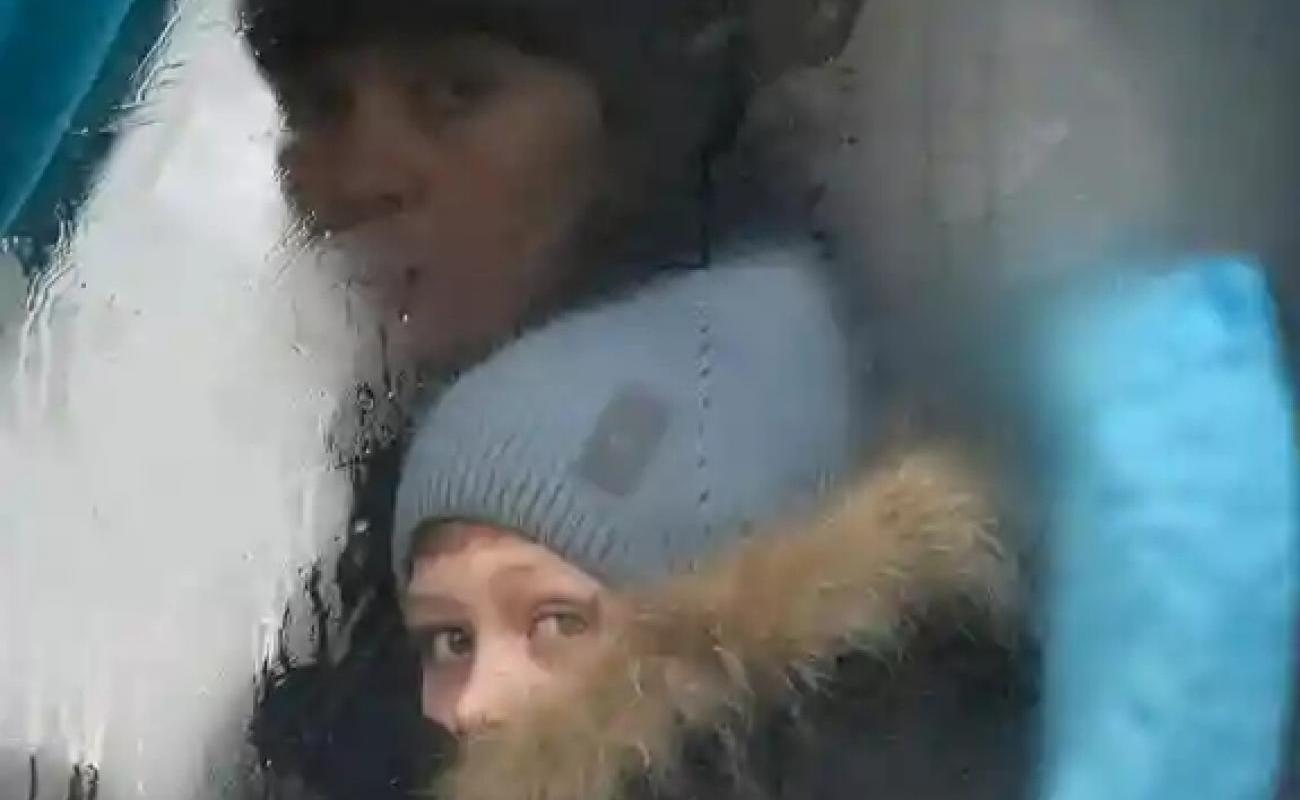
Russia has changed its tactics regarding the abduction of Ukrainian children. Instead of transferring them to the territory of the Russian Federation, the emphasis is on "re-education" and militarization in the occupied territories, notes the initiative "Bring Back the Children of Ukraine".
The return of Ukrainian children from the Russian Federation has become longer and more difficult. This was stated by the Verkhovna Rada Commissioner for Human Rights Dmytro Lubinets during the conference "Day of Civil Society and Experts". According to him, it took more than a year to return, for example, two twin girls from Kherson to Ukraine - Qatar acted as a mediator in negotiations with the Russian Federation. In 2022, at the beginning of the full-scale Russian invasion, these children, who were only one year old at the time, were left without their parents - who died during the Russian attacks. The children were taken to the territory of the Russian Federation, given Russian documents and transferred to a Russian family. After returning to Ukraine, the girls' uncle became their guardian.
"It has become much more difficult to return children. The system in the Russian Federation has become more complicated: they have introduced complete control over children, those who help find children, those who help relocate them," said Lubinec. "I remember the first child we returned - a boy named Serhij from Mariupol. From the moment we found this child to the preparation of the documents, about two months passed. From today, it is a long-term negotiation for every child. The return of a child can last a year or even more."
How many Ukrainian children are there in Russia?
Ukraine has verified data on more than 20,570 cases of deportation or forced displacement of Ukrainian children by Russia. This data dates back to the end of April 2026. "We are talking only about those cases where we have more or less sufficient data. Most likely, this figure does not correspond to the real scale of abductions. The number of real abductions is probably much higher," Maksim Maksimov, head of the presidential initiative Bring Kids Back UA, said in an interview with DW.
This is primarily indicated by statements from the Russian Federation itself. For example, in 2023, it was claimed that 744,000 Ukrainian children were "accepted" in Russia. In the same year, according to Maksimov, Russia reported to the UN Committee on the Rights of the Child that 46,000 Ukrainian children had received Russian passports. In addition, the children themselves, who manage to return from the Russian Federation, talk about other children who are not in the Ukrainian database. New information also appears in the media from time to time, according to Maksimov.
The Prosecutor General's Office of Ukraine (OGPU) told DW that identifying children and determining their whereabouts is a difficult task, since there is no access to the temporarily occupied territories of Ukraine.
"The Russian authorities (...) are taking measures for the long-term placement of children with the families of Russian citizens and in Russian institutions, and are also violating their obligations under international humanitarian law to facilitate the reunification of families separated during the armed conflict," the OGPU said.
How many children has Ukraine managed to return?
To date, Ukraine has managed to return 2,126 children - this includes children deported directly to Russia, those who were relocated within the temporarily occupied territories, and children who were not relocated but were subjected to Russian "re-education".
"We have two key ways of returning children. One of them is mediation. The Ombudsman's office plays an important role in this. This is essentially a quasi-negotiated indirect process, when lists of children are submitted, then negotiations are conducted through intermediaries, and the children end up in Ukraine. As far as I remember, the number of returns through mediation has never exceeded 10 children at a time," Maksim Maksimov tells DW. "There is another way - let's call it 'organized return'. Here, public organizations such as Save Ukraine, the Ukrainian Children's Rights Network, Helping to Leave, Plakhta, Humanity and others play key roles. Sometimes they manage to return a larger number of children. But how exactly this happens, I can't tell you."
What happens to children who are successfully returned?
“Children who are rescued return very disoriented. They don’t trust the world around them. They don’t trust adults. They can be disoriented about what is true and what is false, what is good and what is bad,” Maksimov says.
He adds that the influence of the ideological upbringing that Ukrainian children are exposed to in the Russian Federation is tangible.
“The longer a child is exposed to this influence, the more visible it is,” Maksimov emphasizes.
Ukraine is trying to combat this with a comprehensive approach to rehabilitation and reintegration, but not “re-education.” Initially, children who have managed to return home are taken to the Center for the Protection of Children’s Rights, where their condition and needs are assessed: do they have a family, documents, accommodation, what kind of psychological support is needed, do they need medical care, are there any educational gaps and how to fill them, etc. This information forms the basis of an individual plan, and each child is assigned a responsible person. The reintegration process is expected to take about three years in total.
Russia's changing approach: not displacement, but "re-education"
According to official Kiev, the last few years have been different from the first years of the full-scale invasion: Russia's strategic goal, which was the abduction of Ukrainian children, has not changed, but the approaches have changed.
In 2022-2023, mass deportations were more frequent, especially when children were taken in groups from orphanages to occupied Crimea or to Russia. After the International Criminal Court issued arrest warrants for Russian President Vladimir Putin and his representative for children's rights Maria Lvova-Belova, precisely on suspicion of participating in the deportation of Ukrainian children, the Russian side changed tactics, Maxim Maksimov tells DW.
"The tactic now is that in order to kidnap children in the broad sense of the word, they don't actually have to physically move them. That is, they have built and continue to build a system in the occupied territories that consists of several elements - from militarization to indoctrination, "brainwashing", Russification, issuing passports, which leads to the child growing up with a Russian worldview," says Maksimov.
This is one of the very important vectors of influence, Maksimov emphasizes, because the Russian authorities currently have access, according to various estimates, to from one million to 1.6 million children located in the occupied territories of Ukraine. In all these territories there are Russian schools and Russian paramilitary organizations. The so-called “heroes” of the war against Ukraine come to teach children, but they do not have access to Ukrainian sources of information.
Militarization of Ukrainian children by Russia
The Prosecutor General’s Office believes that such actions of the Russian Federation have a separate qualification: a special criminal case is being conducted on the facts of propaganda of service in the Armed Forces of Russia and military-patriotic education of Ukrainian children, holding events of a political nature and information activities dedicated to the military-patriotic movement. One of the main subjects here is the Russian military organization “Yunarmiya”, but not only it.
On April 28, the Prosecutor General of Ukraine Ruslan Kravchenko reported that an indictment had been sent to the court against the Deputy Minister of Education of the Russian Federation Andriy Omelchuk - he is accused of complicity in changing the borders of the territory and the state border of Ukraine. But, as Kravchenko emphasizes, it is essentially about more - an attempt to change not only the borders of the country, but also the consciousness of Ukrainian children.
"Under his supervision, Ukrainian schools and universities have been forcibly transformed into Russian institutions with Russian standards: re-registration of institutions, replacement of curricula, suppression of the Ukrainian language, history and culture. We see how education is systematically turned into a tool for the assimilation and militarization of children in the occupied territories of Donetsk, Luhansk, Zaporizhia and Kherson regions. Through the so-called "re-education" camps, the paramilitary movements "Yunarmiya", "Dvizhenie pervih", "Voyen" children are involved in ideological indoctrination, taught to handle weapons and forced to swear allegiance to the aggressor state. This is not about education. This is about preparation for war," Kravchenko declares.
According to him, the Russian Federation plans to increase the number of participants in such movements by 250,000 every year by 2030 - especially due to Ukrainian children who are under occupation. Some of them are directly trained for service in the Russian armed forces, Kravchenko emphasizes.
From 2019 to 2025, at least 6,000 Ukrainian children were involved in the "Yunarmiya", and there are already known cases when, after reaching adulthood, they fought against Ukraine, the Prosecutor General said. The OGPU qualifies this as a war crime. Ukraine has already reported suspicions of 18 people. In total, there are 30 suspects in this category, two have already been convicted, the Prosecutor General indicates.
The fact that the process of militarization of Ukrainian children is only expanding is emphasized by Andriy Pasternak, head of the Joint Center for Coordination of the Search and Release of Prisoners of War, Persons Illegally Deprived of Liberty as a Result of Aggression Against Ukraine at the SBU. According to him, there are already Ukrainian young men aged 19 to 20 in Ukrainian captivity who fought on the side of the Russian Federation. They were born in Donbass, but after the occupation they found themselves in the Russian retraining and militarization system, after which they ended up in the Russian army.
"Russia is not interested in our children. They understand that they are Ukrainians. They send Ukrainians to fight against Ukrainians," Pasternak said during the Civil Society and Experts Day conference.