
Cave tourism: exploring millions of years of history in Vlora
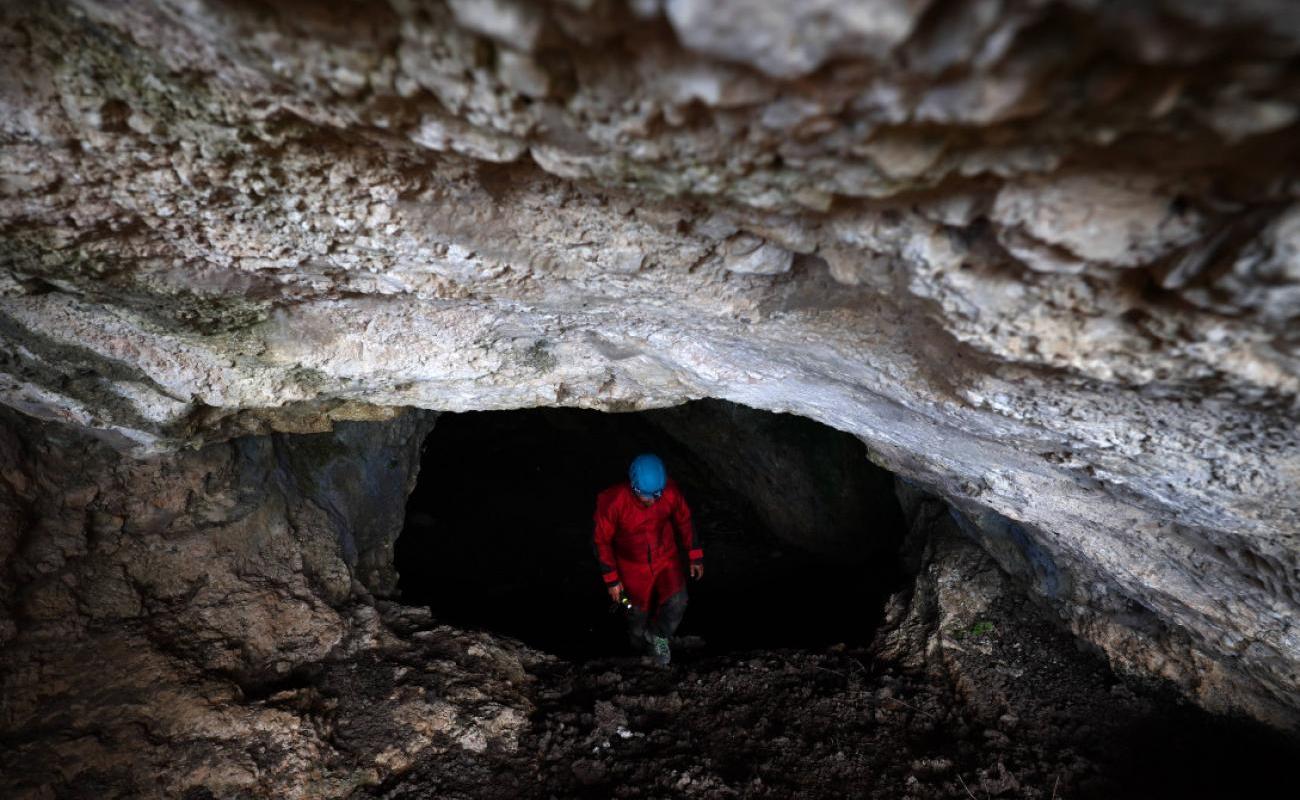
The road from Vlora to the village of Velça winds through lush greenery, revealing, bend after bend, mountain ranges, terraced fields, grazing cattle, and houses adorned with flower-filled yards. At the top of the village lies one of the area’s largest caves, known as Kala Cave. The residents recount with pride that it is ancient, noting that, before the war, the Italian archaeologist Luigi Cardini uncovered prehistoric stone and bone tools within it.
Warm and welcoming, they emphasise that the area is rich in caves of varying sizes and forms. Many believe that the two principal caves, Kala and Maçi, are interconnected, though the passage between them has yet to be discovered. However, entry requires the presence of a speleologist, not only to ensure safety but also to identify the passages that may lead towards one of the cave’s exits. The approach begins with a steep ascent, and from the entrance the village can be seen in the distance, offering a breathtaking panorama.
As the temperature outside rises above 36 degrees, beyond the entrance the climate changes completely. The cave is mostly explored on foot, but in certain narrow passages visitors must crawl, adding a touch of adventure to the journey. Inside, the air is cool and damp, and apart from the steady drips of water from the ceiling, nothing echoes through its labyrinths. Reliable electric lighting is essential, as the natural darkness is absolute, enveloping everything once you move away from the entrance. In some areas, because of the smooth rock surfaces, visitors may slide gently down short slopes. Given the rocks and bats, suitable clothing that protects the body and head, along with sturdy footwear, is indispensable. As the beam of an electric light switches on, shining rocks and formations of various kinds emerge from the darkness, leaving visitors amazed.
“In caves, we find stalactites hanging from the roof and stalagmites rising from the floor. Over millions of years, these formations can grow towards each other until they eventually meet, forming a column. A stalactite grows as water drips from the ceiling, depositing minerals. If we were to touch even a single drop of water on its tip, we could disrupt a process that has taken countless years. On average, it takes about 100 years for a stalactite or stalagmite to grow just 1 centimetre. They are extremely delicate, which is why visitors must never touch them when entering caves,” Ornold Bazaj explains while showing a drop of water hanging from the roof of Kala Cave, in Velça, 36 kilometres from Vlora.
After years of working as a guide, Bazaj wanted to broaden his exploration activities and turned to a new source of adrenaline: exploring caves, mostly in Vlora, home to dozens of them. As this is still a developing passion, he travelled to Italy for training and then returned to establish Speleotours, an initiative that ensures safe exploration through professional guidance and a focus on meaningful experiences.
“What we needed were suits and equipment, as caves have different levels of climbing and descending, various entrances, and different walking routes. Through the support of the Challenge Fund, we now have equipment for ten people. Each set includes specialised cave helmets equipped with lights, as well as suits and harnesses designed for rope-assisted descent and ascent. This particular cave, however, is accessible only on foot,” he explains.
Bazaj’s broader objective is to develop tourist packages ranging from the simplest caves, suitable for all visitors, to more demanding vertical caves that require technical skills and specialised equipment. “The initiative begins near Vlora, with the aim of expanding to other areas that have potential and feature caves of diverse sizes and forms,” he says.
The Challenge Fund, within the framework of EU4Innovation, has supported several initiatives aimed at improving and diversifying opportunities for Albanian start-ups. Speleotours was supported in order to introduce Albania’s hidden cave systems as a new sustainable tourism experience, ensuring safe cave walks for visitors.