
Bullying in the Russian army. Torture, beating, rape in the so-called "Putin's brigade"
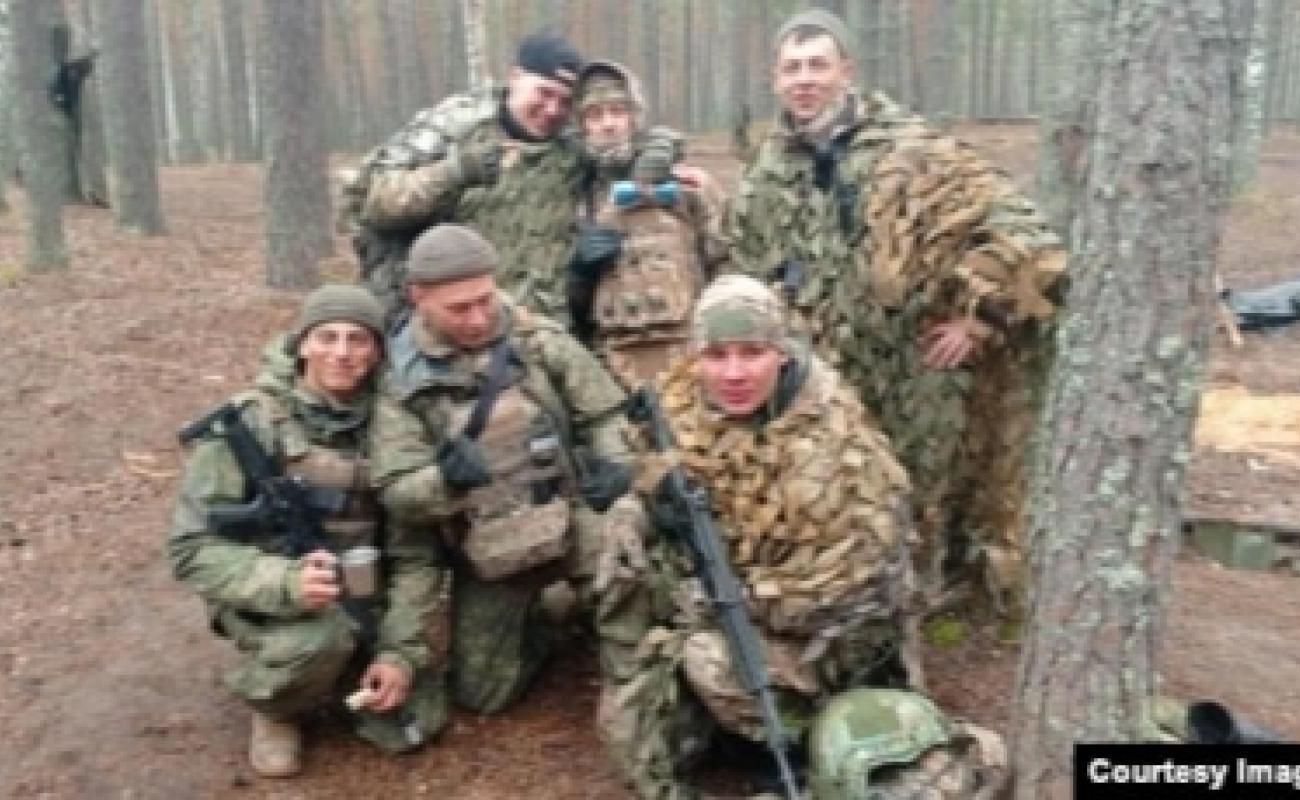
The reason why Artem Bykov ended up in the 273rd Artillery Brigade of the Russian Army was already unclear.
In November 2024, he sat in a police station in the Moscow region and listened to police officers threaten to plant drugs on him if he did not sign a contract to serve in the army.
Bikov was previously in a rehabilitation center for drug addicts. His mother, with whom he said he constantly argued over his drug use and sexual orientation, called the police after another serious argument.
"I was responsible for the police, my mother could always testify against me, so I chose the lesser evil," said the 24-year-old in an interview with the Russian edition of Radio Liberty. He reluctantly agreed to sign the contract and was sent to the brigade training ground.
He says the beatings really started when senior officers found out he was bisexual.
For decades, the Soviet and then Russian armed forces were a place where a system of bullying – the mistreatment and violence against recruits – was unofficially tolerated. This system is a serious cause for concern for Russian society and the families of young soldiers, but is disguised by commanders as an internal tool to ensure discipline among recruits and newcomers.
In August 2020, a senior Russian Defense Ministry official said that bullying had allegedly been “completely eradicated” from the armed forces.
Even before Russia’s full-scale invasion of Ukraine, organizations like the Committee of Soldiers’ Mothers had been drawing attention to the problem for years and calling on lawmakers and commanders to stamp out the practice.
Last September, President Vladimir Putin visited and inspected the 237th Brigade, as well as other units.
“If Putin had known about this chaos, the brigade would have been disbanded,” Bykov believes.
Good Cop, Bad Cop
In a series of interviews given in March and April from Georgia, where he went after deserting the Russian army and fleeing the country, Bykov spoke about his grueling 11-month stint at the 273rd Brigade training ground in Mulino, in the central region of Nizhny Novgorod Oblast.
Bykov also provided extensive correspondence, photographs, and audio recordings that RFE/RL’s Russian service and the Sistema project (Radio Liberty’s investigative arm) used to corroborate many of his accounts.
For years, his mother struggled to come to terms with the fact that he was bisexual, Bykov said. He also admitted to being addicted to drugs, which he attributed to “his own repressed traumas… serious psychological problems, including an inferiority complex.”
His mother placed him in a drug rehabilitation program, first in 2022 and then again in 2023.
The following November, when he returned home, they had an argument and she called the police, claiming that he was gay, that he was taking drugs, and that he was making her life unbearable.
The police took him to a local police station and convinced him to unlock his cell phone, where, he said, they found personal photos and videos.
He said he was threatened with drugs if he did not sign a contract to join the army, and was warned that gay and bisexual men in Russian prisons were treated with hostility or even violence.
“It was a game of ‘good cop vs. bad cop’. I was scared and decided I had no choice,” Bykov said.
“It seemed more rational to me to die in the war than to go to prison and be tortured and humiliated to death,” he added.
Within 10 days of signing the contract, he received a payment of two million rubles. The sum, which is huge for most Russians, reflects a system that Russian recruiters have set up to ensure a steady flow of volunteers while avoiding another unpopular mobilization order.
But for many soldiers, a significant portion of this money usually goes to bribes to senior officers.
“It was like hell”
Bykov joined the Russian army as a private. He received his basic training at the brigade's training ground in the town of Mulino, Nizhny Novgorod region. He said he was reluctant to participate in martial arts training, including sparring.
Then they found out he was bisexual.
“I was brutally abused, they put five bulletproof vests on me, it was very difficult to walk, I felt nauseous, I would faint, fall, they put a gas mask on me, they made me run, crawl, etc. It seemed like hell to me, but that was just the beginning,” Bykov said.
Bikov said he was assigned to a unit within the brigade, a formation similar to the military police, whose task was to maintain order and discipline, as well as search for soldiers who had deserted or abandoned the unit.
According to him, the unit’s commander, Junior Lieutenant Eldar Dadashev, was known for his sadism and outbursts of violence under the influence of alcohol.
People were beaten with sticks, their hands were cut off with hammers, they were handcuffed to a battery, they were deprived of water, they were put naked in a pit.
Dadashev’s whereabouts were unknown and he could not be reached for comment. Bykov noted that soldiers from the unit informed him that the commander had been sent to Ukraine.
Bykov’s claims of regular beatings and violence were partly supported by testimony provided to the regional military prosecutor’s office by one of the brigade’s soldiers, Aidar Gafarov.
In a statement reviewed by Radio Liberty, Gafarov complained that Dadashev ordered him to put his hands on the table and repeatedly hit him on the fingers with a meat mallet, then hit him on the forehead, chest, and legs with a shovel handle.
After one particularly painful blow, he heard a crunching sound and was unable to stand on that leg. Later, as punishment, he was thrown naked into a pit for an indefinite period.
After Dadashev’s transfer, Gafarov was released and deserted, and shortly thereafter he filed a written statement.
Rape and Threat of Rape
Additional evidence of the existence of institutionalized sadism in the unit was a small dossier of documents and written statements compiled by 34-year-old soldier Yan Nikashkin, who had previously served time in prison.
Bykov said that he and Nikashkin served in the same disciplinary unit.
Nikashkin systematically refused to carry out orders to beat other soldiers and was beaten himself.
After Nikashkin deserted from the unit last summer, he collected testimonies from other soldiers confirming the facts of sexual violence in the brigade. According to Bykov, this testimony was forwarded to him.
In a recording of a phone conversation between Nikashkin and another soldier provided to Radio Liberty, Nikashkin claims that Dadashev, the unit commander, forced another soldier to perform oral sex with a dildo, which was used as a public threat to intimidate the soldiers.
Bykov noted that while he himself had not witnessed the rape of a soldier with a dildo, it was common knowledge among the soldiers.
Later in the conversation, another soldier, Yegor Ryazansky, could be heard talking about another incident involving two of Dadashev's subordinates.
A senior soldier who had been returned to his unit after deserting was forced to lie face down, his pants removed, and his hands and feet pinned to the ground. Two officers then inserted a firecracker into his anus and set it on fire.
The incident was captured on video, Ryazansky said during the conversation, and was shown to soldiers in the unit.
Neither Ryazansky nor Nikashkin responded to a request for comment.
“Never dare touch the Supreme”
Sometime early last fall, Bykov said, his conflict with Dadashev reached a boiling point when Dadashev ordered Bykov to be raped.
Bykov said he was lucky: the other soldiers refused to carry out the order, although they “humiliated” him by isolating him and subjecting him to minor punishments such as not shaking hands.
Bykov himself filed a formal complaint with Dadashev’s superiors, after which, he said, he was transferred to a unit not under Dadashev’s command.
Later, Bykov said he learned that Dadashev had given the order to beat a colonel, a soldier of much higher rank.
Russian military police investigators opened an investigation and, after discovering a soldier with broken arms being held naked in a pit as punishment, arrested Dadashev in September and disbanded the disciplinary unit.
Bikov said that he deserted the brigade the following month and left the country.
On February 16, while in Georgia, Bykov spoke to Nikashkina again on the phone and recorded the conversation.
Nikashkin said that former unit commanders responsible for beatings and mistreatment can "go to hell." But, he said, Putin is untouchable.
"Never dare to touch the Supreme. No matter what, this person has brought Russia to a new level, there is no question about this person. I don't believe you even have such thoughts [negative about Putin]," the video was heard saying.
"You chose that side. Then I am forced to stop communicating with you. You decide for yourself whose side you are on," said Nikashkin. "If you are with them, we are not on the same path".
"Putin has created a brilliant system: governance through fear," Bykov said in an interview with Radio Liberty. "His whole system is built on fear. But Russia will run out of strength, and then people will see that it has no strength. It never was. A country of sufferers and martyrs."