
Belarus-Russia Relations After 2020: Subordination Through Integration
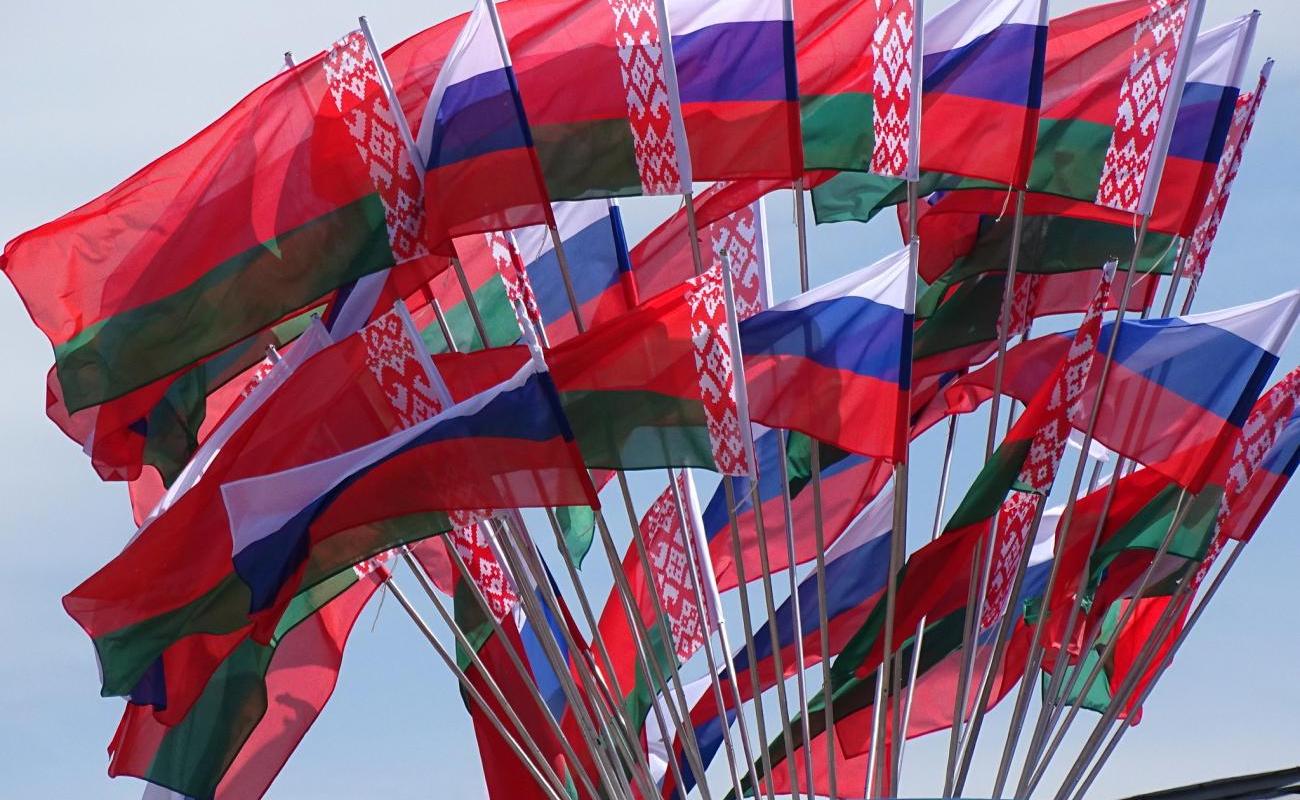
The 2020 post-election crisis in Belarus and Russia’s full-scale invasion of Ukraine in February 2022 did not simply strengthen ties between Moscow and Minsk. Taken together, these two developments fundamentally altered the nature of their relationship. The disputed presidential election of August 2020 triggered one of the largest protests in Belarus’s post-Soviet history and was followed by a sweeping crackdown on opposition figures, independent media, and civil society. The repression prompted new waves of Western sanctions and deepened Belarus’s international isolation, reinforcing its status as a pariah state and leaving the regime of Aliaksandr Lukashenka increasingly reliant on Moscow for political, economic and security support.
In this context, the Union State of Belarus and Russia – long dismissed as largely symbolic –has become the main instrument through which Russia has consolidated control over Belarus. This has not taken the form of formal annexation. Instead, it has unfolded through deepened integration across military, economic, political and socio-cultural domains. The result is a relationship best described as subordination through integration. Recent Union State summit which took place in February 2026 underscores this shift. What was once rhetoric about “deepening cooperation” is now concrete institutional practice. Integration has become structured, programmatic, and legally codified.
Military alignment as the core of integration
Security integration is the backbone of this transformation. The new Military Doctrine of the Union State adopted on 4 November 2021 marked a turning point in Belarus-Russia security cooperation. It formalized coordinated defense policy, joint exercises, procurement alignment and the development of shared military infrastructure. Just months later, Russia used Belarusian territory as a staging ground for its full-scale invasion of Ukraine.
Subsequent steps went further. Constitutional changes in Belarus in 2022 removed its formal neutral non-nuclear status. In December 2024, Minsk and Moscow signed an Interstate Treaty on Security Guarantees, which entered into force in March 2025 alongside a new Union State Security Concept. These documents commit both sides to defend each other’s sovereignty and territorial integrity and explicitly allow the use of all available means, including Russian tactical nuclear weapons. They also provide for the deployment of Russian forces and the establishment of additional military facilities in Belarus.
Before 2021, Russia had no formal permanent bases in Belarus beyond two Soviet-era facilities. An air base in Bobruisk proposed by Russia in 2015 was resisted by Aliaksandr Lukashenka at the time. That resistance, however, eroded in 2021, when Moscow established a de facto permanent air defense presence in Grodno under the label of a “joint training center.” In December 2022, both sides agreed to expand this model. Agreements ratified in 2023, and programs adopted in 2024 formalized additional joint centers and upgraded logistics infrastructure.
The distinction between Russia´s “temporary presence” and permanent basing is now largely nominal. In practice, Belarusian territory is embedded in Russia’s military planning, with infrastructure and legal frameworks in place to sustain a long-term Russian presence.
Economic lock-in
Economic integration reinforces this trend. Even before 2022, Belarusian industry was linked to Russian defense supply chains. Since then, that role has expanded sharply. Independent investigations indicate that over 60 percent of Belarusian defense-industrial output is now exported to Russia, while Russia accounts for more than 75 percent of Belarus’s total foreign trade. Belarusian supplies are estimated to constitute roughly 15 percent of Russia’s military procurement, directly supporting operations against Ukraine. This contribution extends beyond formally designated defense enterprises: civilian producers, such as the state-owned tire manufacturer Belshina, reportedly supply products to the Russian Ministry of Defense for use in military vehicles and weapons systems deployed on the Ukrainian battlefield. The electronics firm Integral, supported by substantial Russian investment, produces microchips reportedly used in Russian cruise missiles, while Planar provides precision equipment for military applications. In Orsha, Legmash has shifted from textile machinery to components for Grad multiple rocket launchers. This reorientation underscores how Belarus’s industrial base is being integrated into Russia’s wartime economy.
High-value sectors, such as the IT industry, once oriented toward Western markets, have contracted sharply since 2021, with exports falling and thousands of specialists leaving. Russian investors now hold a larger share of the sector, tying Belarus’s technological future to Russia’s more restricted digital environment, further eroding Belarus´s economic autonomy.
Integration is also moving beyond trade and finance into the core of economic governance. Under the banner of coordinated macroeconomic policy, Minsk and Moscow have agreed on joint procedures for drafting socio-economic forecasts and harmonizing statistical methodologies. In parallel, efforts to create a “common financial market” have produced agreements on tightening regulatory alignment.
In addition to that, a has become operational, overseen by a supranational tax body. Within the Union State framework, Minsk and Moscow have introduced common principles for the administration of indirect taxes, including customs duties, value-added tax (VAT) and excise payments. A joint Union State tax committee now coordinates positions in this area, including the alignment of minimum tax thresholds and the harmonization of exemptions and benefits. Alongside this institutional framework, the two states have developed an integrated digital system for administering indirect taxes, enabling real-time information exchange between tax authorities and strengthening oversight of cross-border transactions. The system is intended to reduce double taxation, combat tax evasion in bilateral trade, and create more uniform conditions for companies operating across the Union State market. While direct taxation formally remains under national control, the increasing coordination of indirect tax administration illustrates how integration is gradually extending into the fiscal architecture of both states.
Socio-Cultural Convergence and Identity Tension
Cultural and informational integration has become more structured and explicit since 2022. New areas have been added to the Union State integration agenda, including a “common information space,” cultural and humanitarian cooperation, scientific and technological integration, youth policy and elements of legal harmonization. In February 2023, the two sides adopted a Concept of Information Security that goes beyond technical coordination to include media policy, broadcasting alignment and the stated goal of countering the “destruction of traditional values.” In 2024, key documents on establishing a Union State media holding – bringing together a television channel, radio and three regular print outlets – were signed. The new media space of the Union States is planned to become fully operational in 2026. The direction is clear: closer coordination of narratives and the gradual construction of a shared platform for their dissemination.
This push toward a common information space is accompanied by a broader cultural and ideological agenda. Under the rubric of a “cultural and humanitarian space,” historical policy has become a focal point. Joint curricula and history textbooks aim to situate Belarus within the narrative of a “triune Russian people,” while World War II memory remains a central ideological resource. The creation of a bilateral historical commission underscores the political importance attached to this domain. Russian soft-power institutions – such as Rossotrudnichestvo, Russian Houses, and affiliated foundations – have expanded their activity in Belarus, reinforcing the diffusion of the “Russian world” concept into public life.
Scientific and technological integration follows a similar pattern. A Strategy for Scientific and Technological Development for 2024–2035 emphasizes import substitution and “technological sovereignty,” with priority sectors including microelectronics, machine building and nuclear technologies. Given Belarus’s Soviet-era industrial base and research institutes, cooperation in these fields is closely linked to defense production. As Belarusian research institutions and specialists become increasingly tied to Russian state corporations and military-industrial clients, scientific collaboration also acquires strategic and political weight.
Youth policy has been singled out as a priority area. A draft Union State youth strategy presented in 2025 promotes joint festivals and centers for civic-patriotic education, including facilities operating in Brest and Volgograd. Combined with tighter control over media and education, these initiatives seek to shape the socialization of a generation whose reference points lie within a shared Union State framework.
Taken together, the creation of a common information, cultural and scientific space moves integration beyond institutional coordination into the sphere of identity formation, extending to the management of narratives, memory, research priorities, and youth engagement.
Conclusion: Integration As Institutionalised Control
Belarus’s deepening integration with Russia should be understood in the context of its growing international isolation. Successive rounds of Western sanctions and the near-total breakdown of political dialogue with the European Union and the United States have entrenched Belarus’s status as a heavily sanctioned pariah state. As economic ties with Western markets contracted and diplomatic channels narrowed, the long-standing strategy of “multivector” foreign policy – balancing relations between Russia, Europe, and other external partners – became increasingly untenable. Under these conditions, Moscow has emerged as Minsk’s dominant political, economic, and security partner.
Within this context, the Union State of Russia and Belarus has become the principal institutional framework through which Russia consolidates its influence over Belarus. Military alignment strengthens Russia’s western posture, economic integration locks Belarus into Russian markets and infrastructure, while regulatory and informational convergence further reduce Minsk’s room for independent action.
This process amounts to absorption without formal annexation. Moscow gains strategic depth and industrial support without redrawing borders, while Belarus retains formal statehood but loses substantive autonomy. What has emerged is not a partnership of equals, but an institutionalised hierarchy – one that preserves the formal attributes of Belarusian statehood while progressively transferring substantive sovereignty to Moscow.