
A Hard Winter Awaits Russia: Putin’s Plan Is Bursting at the Seams
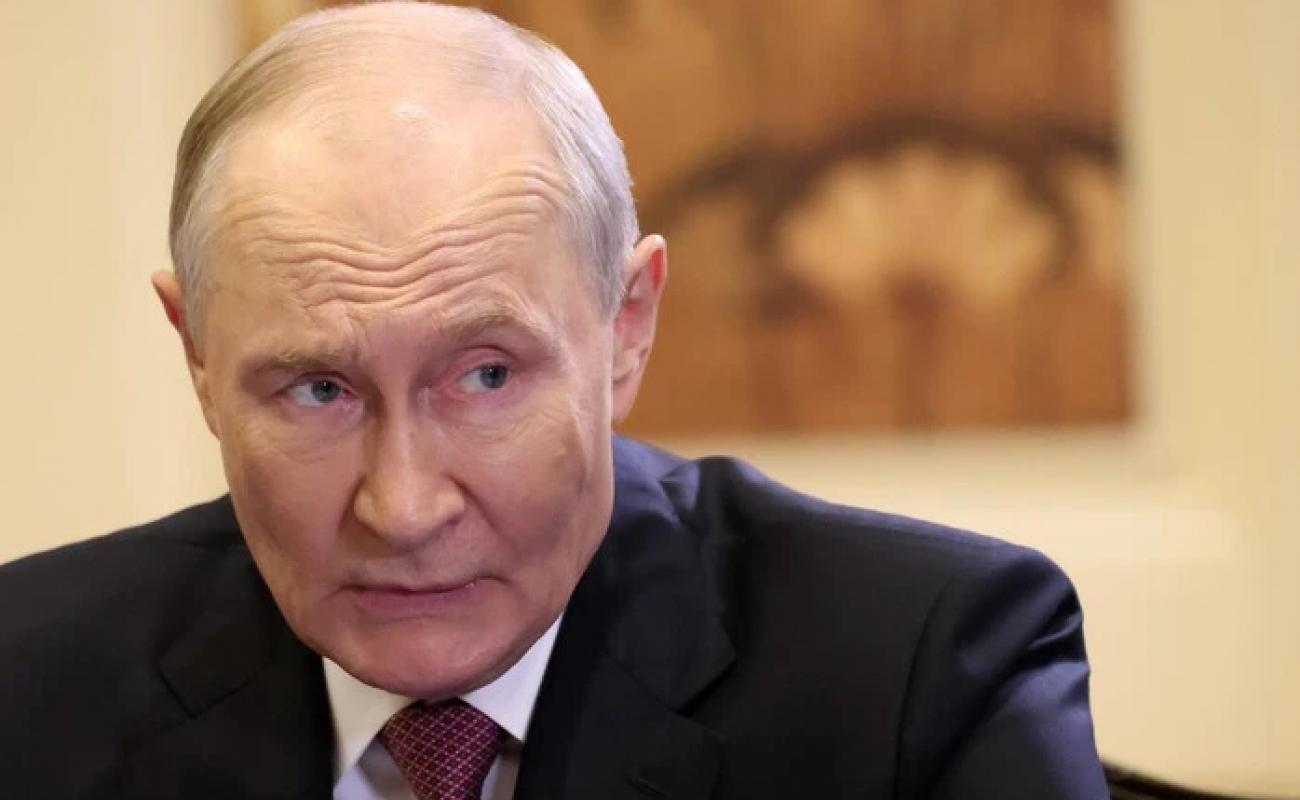
Putin’s "Victory" Plan vs. Reality
Putin’s Decrees
It is mid-September. Generally, the political season has begun without surprises—marked by aggressive rhetoric regarding "negotiations" and "peace." Let us take note of this.
- Russia is escalating terror in Ukrainian cities and expanding the scope of its attacks. Russia is setting fire to gas stations in the capital and checkpoints along the western border. Prime Minister Serhiy Koretskyi has declared a critical situation regarding state finances. We remain largely silent about the frontline zone (stretching from Chernihiv to Odesa); the situation there is plain for all to see.
News of Russian sabotage emerges almost daily across Europe. At the same time, proponents of normalizing relations with the Russian Federation—at the cost of surrendering Ukraine—are raising their voices.
The US (Kushner) is openly offering the Donbas to Russia. Lavrov repeats the same sentiment in different words: had the US not abandoned the "Anchorage" position (forcing Ukraine into territorial concessions), everyone would have been living in peace for a year. He is essentially saying: "Do something already!" Trump strongly recommends halting attacks on Russian refineries to achieve an "energy truce"... and so on.
If the global hegemon (the US) were viewed as a consistent and reliable ally of Ukraine in the fight against unjust aggression, the sum of these circumstances could be interpreted as follows: "Guys, you are in an extremely difficult situation; the outlook is grim. Cut your losses—we will provide security guarantees here and there—take a breather, recover, and in the next round, you’ll get what’s yours back." And, accordingly, make a decision.
But since the situation is different, we must delve into the context.
- What does the picture look like that Putin conveys to the masses and "sells" to international partners?
According to official reports from the Russian command (shown on public maps and broadcast by high-ranking officials), Russian troops are reportedly successfully outflanking four cities: Lyman, Sloviansk, Kramatorsk, and Druzhkivka.
On the Lyman axis, Sviatohirsk has reportedly already been captured, while Russian troops are said to be actively advancing southwest of Druzhkivka, with both groups converging on a shared objective: Barvinkove (Kharkiv Oblast).
The goal: to cut off supplies to Sloviansk and Kramatorsk. In the best-case scenario for the Russians, they would force a Ukrainian troop withdrawal; in the working scenario, they would engage in urban warfare by November, thereby increasing political pressure—threatening a humanitarian disaster in the rear, a refugee crisis involving millions, and so forth—and highlighting the futility of the defense.
In the realm of Russian wishful thinking, this implies that the main phase of the "Special Military Operation" could be brought to a victorious conclusion by year's end, followed by a shift toward negotiations punctuated by periodic escalations.
This is the narrative currently circulating in the public sphere.
The alternative (and more pragmatic) version of the plan involves breaching Ukrainian defenses on the approaches to the aforementioned cities before winter sets in, engaging in urban combat during the winter months, and simultaneously launching attacks on the life-support infrastructure of Kyiv and other major Ukrainian urban centers. It also entails ramping up sabotage operations across Europe, aiming to force Ukrainian concessions through the hardships of winter—specifically by undermining European support.
- What does it actually look like?
Read the details regarding the situation at the front (specifically in the direction of Lyman) provided by Konstantin Mashovets. The gist is roughly as follows.
Even before General Andriy Biletsky’s statements regarding certain movements by the Ukrainian side in the Lyman area, the Russian military community had been in a state of agitation due to alarming reports since late August.
Without going into the details of who is advancing or retreating and where, the bottom line is this: there is currently no Russian flanking maneuver around Lyman and Sloviansk, nor is one expected. Even Sviatohirsk has not been captured; that is a complete lie.
The situation southwest of Druzhkivka remains difficult, but the Ukrainian command is taking measures, including organizational ones (which have already been reported).
As a result, the entire narrative of victory that the Kremlin had crafted for its subjects and the international audience is being deliberately dismantled.
Unless some extreme cataclysms occur on the Ukrainian horizon (including regarding international support), Russian troops will not complete their maneuver by November, winter, or the New Year.
Moreover, in all likelihood, the Ukrainian army will leave them with only one option: to storm the cities head-on—and to do so from open fields in winter conditions.
Look at the map: while maintaining control of Lyman and using the Siverskyi Donets River as cover, Ukrainian defense forces will strike the flank of the Russian troops—who would be advancing frontally toward Sloviansk—using drones. The mission looks like a bloody prospect for Russian troops.
The Russian army is well aware of this.
We do not know how it will end. For instance, the Russians could intensify their attacks using KABs, leaving Ukraine with no means to stop them (although there is a possibility that the first Gripens equipped with proper missiles could appear by winter). Consequently, the aforementioned cities could be reduced to piles of rubble by spring.
However, one way or another, the most realistic scenario at this moment (!) is as follows: a grueling, months-long campaign on the outskirts of the cities and urban warfare that comes at an incredibly high cost to the Russians in terms of casualties. It is virtually impossible for the Russians to achieve success with their current troop composition without destabilizing the Ukrainian rear.
That is to say, if we proceed solely from the military objective, Putin ought to launch a forced mobilization. However, even if it begins in late September, its impact on the front lines would not be felt until the New Year.
Given that the objective is not merely military but politico-military, forced mobilization would, on one hand, amount to an admission that plans for a victorious outcome have failed. On the other hand, it would place Trump—who is pushing for an "energy truce"—in a very awkward position. His opponents would inevitably ask a logical question: what kind of truce is this if Putin is openly preparing for an escalation?
Thus, instead of a spectacular conclusion to the "Special Military Operation," the Russians face a bloody meat grinder with an uncertain outcome—at least until spring. After all, success is by no means guaranteed; there are simply too many variables. That covers the main narrative.
But there are other, equally important storylines. And that is where things get interesting.
- High-ranking officials from Russia’s economic bloc—who, according to the official narrative, were supposed to be operating under the assumption of a victorious outcome—have already PUBLICLY declared 2027 a "lost year" for the economy.
There is no positive benchmark whatsoever. None at all. How is that possible?
Against the backdrop of a 10 percent drop in investment during the first half of the year, Minister of Economic Development Maxim Reshetnikov stated that no investment growth is expected until 2028.
Despite alarming statements from Sberbank chief Herman Gref regarding the need to cut the key interest rate to at least 10–12 percent, the Central Bank of Russia kept the rate at 14 percent during its September 11 meeting.
At the same time, the head of the Central Bank of Russia, Elvira Nabiullina, stated bluntly: "every additional ruble of state-driven demand stimulus moves the Central Bank further away from cutting the key interest rate." In other words, until the structure of budget expenditures changes, capital will remain very expensive for Russian businesses. And it is not going to change.
In this climate, Russian banks are actively building up reserves for bad loans, realizing they will not be repaid. The Central Bank of Russia is also uneasy, as these reserves are insufficient.
Russian economic observers note that although it is already mid-September, there are still no indications regarding the shape of Russia's 2027 budget. In previous years, guidelines would have already been established, and expert discussions would have been underway.
Now, there is only a general assumption that the budget will remain in deficit until 2029. It remains unclear what surprises might be in store for next year, though there is a prevailing sense that they will be unpleasant.
We talk a lot about Russia's budget deficit, industrial problems, and so on. In short: against a backdrop of triumphant (!) military rhetoric, the outlook for the Russian economy—as seen by Russians themselves—is extremely alarming. What if we adjust these forecasts to account for the "reality on the ground": a prolonged, bloody meat grinder involving long-range strikes and potential issues in the Russian rear—problems of a scale never seen before?
- When capable drones began dismantling the system supporting the Russian military via commercial channels, many Russian émigrés claimed this would only rally the population around the Kremlin and against Ukraine.
Some may have rallied verbally. There are indignant videos asking, "Why ruin a vacation in Sochi?!" However, the fact remains that Russians driving luxury cars—the husbands of well-groomed Russian women currently suffering in resorts and gas station queues—did not join the army for the money. Nor will they go voluntarily. The pool of those willing to go to war is not growing. Casualties are mounting at a rate of 30,000 or more per month.
Fanciful notions that small business owners would drop everything to enlist in assault units have not materialized in reality. The prevailing sentiment—"let it all just end somehow"—is already shifting along a gradient: from "finally finish off this Ukraine!" to "just get it over with faster."
So, there it is.
A Russian military victory is unrealistic. That is a fact. The collapse of these illusions will occur in the winter, against the backdrop of a worsening economic situation.
- Parallel to this, a covert thought process is unfolding within the elite, alongside a battle for the "hardware"—the levers of power.
Specifically, reports recently emerged that the head of the FSB Security Service, Sergey Alpatov, has been removed from his post. Rumors suggest the reason was a professional blunder that resulted in unfounded allegations against Putin’s associate Ilya Traber and the Rotenberg clan.
For context:
This position is highly significant in itself, as it entails control over business dealings and state funds. The current FSB chief, Alexander Bortnikov, once headed this service. It was also the starting point for the most influential FSB officer of that era—First Deputy Director Sergey Korolyov.
Some observers view Alpatov’s departure as a blow to the prospects of Korolyov, whose influence had grown disproportionately. Personnel reshuffles within the FSB are expected in the coming months; Bortnikov’s departure is likely, and Korolyov had been a leading candidate to succeed him.
The FSB is objectively one of Russia’s key pillars. The aforementioned officials are more than capable of assessing the broader situation. Control over the FSB represents a critical strategic position within the Russian government ahead of a period of inevitable turbulence. Consequently, the struggle for this post is expected to be intense, bringing casualties and upheaval in every sense.
At the same time, reports have surfaced that Russian Defense Minister Andrei Belousov has ordered the dismantling of the political network surrounding the "Akhmat" criminal group, which operates outside the control of the Ministry of Defense and the General Staff. The defining feature is that "Akhmat" consists of a core loyal strictly to Ramzan Kadyrov and a sort of periphery that expanded the resources available to "Dondon" and his henchmen. While the core itself will remain untouched, Kadyrov’s reach outside Chechnya will be curtailed—specifically by limiting opportunities to plunder occupied territories and siphon off the military budget.
These rumors have surfaced amidst yet another round of allegations regarding Ramzan Kadyrov’s deteriorating health. In a worst-case scenario, a shift in the actual levers of power in Moscow could coincide with a leadership transition in Chechnya. This is one of those variables that heighten anxiety and instability...
The list goes on.
- So far, Putin's strongest "card" has been Trump's incoherent campaign against Iran. For eight comfortable months, Trump has effectively been "playing" for Russia. Without these maneuvers, the situation right now would be completely different. But this is how things stand.
If one were to construct an ideal picture of the situational interests of Putin and Trump, they appear to converge by November on a form of reconciliation achieved on Russian terms. However, there are no actual preconditions for this.
For their mutual satisfaction to be realized, one element is missing: an act—or series of acts—of pressure or intimidation that would force Ukraine to make concessions. This is something that could, in principle, be expected following the elections in Russia and Trump's meeting with Xi.
The catch is that none of this might work. Both Russia and Ukraine would then face the prospect of entering an extremely harsh winter. The consequences would be so traumatic that not even a hypothetical prize—such as the ruins of a hypothetical Kramatorsk—would save the Kremlin.
In general, the baseline scenario looks like this: an attempt to break Ukraine before winter fails, leading everyone into a grueling winter (in military, political, and economic terms) from which they emerge battered, with the risks of destabilization skyrocketing. The likelihood of such a scenario is obvious to everyone, and no one likes it.
Therefore, an intermediate option cannot be ruled out: freezing the line of contact alongside some form of escalating diplomacy, without dramatic concessions from Ukraine. On the contrary, this could involve a Russian withdrawal in exchange for economic normalization and some grand, triumphalist rhetoric.
"Negotiations" along these lines are ongoing. Last night, the Syzran refinery was prominently involved in these events. Before that, it was Togliattikauchuk. And so on. This is without even considering military facilities.
So, there is no reason to rule out the possibility of a harsh winter. We must prepare as best we can. However, there will be fluctuations for another month and a half or so. Then, the political reality in the US, the economic landscape in the Russian Federation, and the Russian objectives (or failures) at the front will become clear.
Claims that things are going well for Putin and that the situation suits him are clearly exaggerations. Things are not going well for him—and even less so for those around him.
Even considering hypothetical victories for Putin loyalists in Europe, this might worsen the situation for Ukraine, but it would not improve it for Russia. Dragging things out becomes increasingly damaging with each passing month.
A strategy of delay was quite effective a few years ago, or even a year ago. Now, however, it is accelerating not just degradation, but irreversible processes of Russian backwardness and future turmoil.
Overall, we still see reasons to believe (or hope) that the year will not end as the baseline scenario predicts. The opportunity has not been lost. The reality could be a freezing of the conflict in Ukraine set against a "heating up" in Europe due to intensified targeted attacks...
The cost of delay for Ukraine is obvious and terrible. Above all, people will die. Some will leave. Some will make the final decision not to return.
It is important to remember that, amidst objective hardships and shortcomings, attempts will be made to frame adverse circumstances as hopelessly apocalyptic—to cross the line between simply painful decisions and the process of losing statehood. We must not give in.
Strength to us all.