
War Spending Accelerating Russian Infrastructure Collapse – Analysis
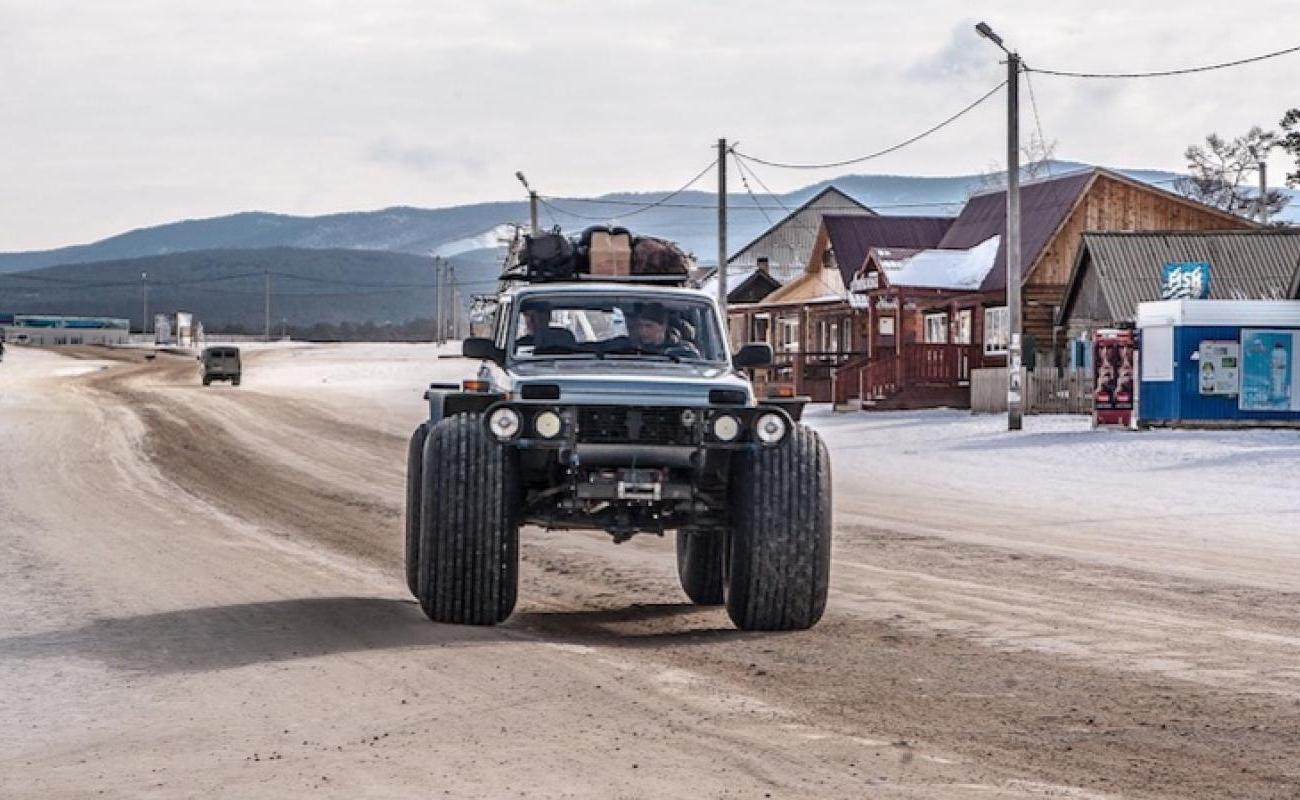
Most of the Russian Federation is situated in the Far North—permafrost underlies 60 percent of its territory. Cold weather during winters puts a strain on infrastructure, including flight and road delays and breakdowns in the delivery of heat, electricity, and even water to many homes, schools, hospitals, and other facilities. Russians have learned to expect this, although in the past they sometimes have bitterly joked that it is hard to believe the Kremlin’s promises that it is ready to cope with a nuclear war, something that has never happened, when it cannot deal with winter, something that occurs every year (Window on Eurasia, January 7).
This year, these problems have become much more serious as a result of Russian President Vladimir Putin’s war against Ukraine. Ukrainian drone attacks on Russian targets have destroyed key portions of Russian infrastructure (Sibir.Realii, January 6). Moscow has diverted most of the funding it had provided to reinforce and repair Russian infrastructure to its war efforts (The Moscow Times, January 4; Govorit Nemoskva, January 10).
As a result, developments this year have become a political issue, sparking small but widespread protests by those most immediately affected (see EDM, December 22, 2025). Commentators and even Duma politicians have criticized the Kremlin, warning that because of the war and Putin’s policies, Russia faces not only temporary problems but is on the way to an infrastructure collapse that will likely take decades to recover (see EDM, October 16, 2025; The Saratoga Foundation, January 1; Dialog.ua; Charter97, January 6).
As in the past, the arrival of winter in Russia has triggered widespread breakdowns in its infrastructure. In housing, thousands of people are now without heat, light, or even water. Public facilities, such as airports and hospitals, mostly outside of the politically sensitive Moscow agglomeration but also there, have experienced deterioration (The Moscow Times, December 11, 2025). Russians have come to expect such things, but this year, the situation is worse not only because of Ukrainian drone attacks that have disrupted air and rail transportation but also because of the Russian government’s cutback in spending on repair of dilapidated housing and the supply of heat, electricity, and water to residents and key facilities such as hospitals (RusMonitor, January 3; V Krizic.ru; Kavkaz.Realii, January 10).
While the exact number of people affected is unknown—the Russian government publishes no statistics on the matter—it appears to be many times larger than in the past. One reason for that is that airport disruptions have attracted enormous media attention inside Russia, something that has certainly sparked concerns among Russians and even a sense that this year they must simply try to survive (Idel.Realii, January 10). Such feelings were undoubtedly intensified by a Russian Accounting Chamber finding at the end of last year. When it comes to infrastructure repairs, almost 90 percent of the plans for improvements have not been completed as scheduled or at all (Nezavisimaya Gazeta, December 3, 2025).
If in earlier times Russians felt they could do little but put up with cutbacks and outages, this year marks a sea change. Not only have the problems at airports attracted more attention to this problem, but reports about how much money is going for Putin’s war against Ukraine instead of for the repair or replacement of their housing and the infrastructure are infuriating Russians more than in the past. According to several studies, the cost of the war is so great that if it was cancelled for only a few minutes, many Russian villages would not face service cutoffs and that if the Kremlin had not gone to war in 2022, it could easily have upgraded the heating networks throughout the country “at least twice” and that the program of replacing dilapidated housing instead of being postponed until the war is over would already be completed (Re-Russia, September 29, 2023; Sibir.Realii, January 6).
Russians across the country are protesting. These protests are not primarily against Putin and the war, which would be extremely risky, but against the breakdown of communal services, something that the regime does not view as political and thus is less likely to spark a draconian response from the state (see EDM, December 22, 2025). Moreover, it is clear that some of them, or at least politicians and commentators, are beginning to connect the dots, speaking out on their own or in response to questions from ordinary Russians about how the war is affecting their lives. In December, Leonid Ivashov—an outspoken Putin critic and hero for many Russians because he led forces that blocked a North Atlantic Treaty Organization (NATO) march on an airport in the former Yugoslavia in 1999—said that Russia was in real trouble because of the war. Ivashov referenced Russians suffering because of infrastructure problems and what the war has done to Russia’s standing abroad (YouTube/@geoanaliz, December 22, 2025).
More recently, Andrey Gurulyov, another former Russian general who has distinguished himself in his current position as a United Russia Duma deputy from the Transbaikal, was even more specific. He told voters in the Transbaikal earlier this month that neither Moscow nor the federal subjects will have enough money to address the problems Russians face. In response to a question from constituents, he acknowledged that “the programs for dilapidated housing have been stopped. To tell people we will solve this problem tomorrow would be a lie. Until we can breathe a little easier after [the war against Ukraine], we simply will not be able to push this issue through.” He added, “Today, the regional budget simply cannot cope. The deficit is enormous. We are told that ‘everything is fine’ … but look at the deficit figures—and everything becomes clear: there is simply no money” (Dialog.ru;Charter97, January 6).
Such comments, just like the small but increasingly numerous protests about infrastructure collapse in Russia this winter, do not mean that there are likely to be mass demonstrations against Putin or his war against Ukraine. Russians are clearly beginning to connect the dots between what is happening to them and what the Kremlin leader is doing in Ukraine; something that other Russian politicians are certainly conscious of and might very well decide to exploit if the war continues for much longer (see EDM, December 22, 2025). In that case, the absence of heat in many Russian homes could light a fire under the Kremlin much as the lack of bread in Russian cities in the winter of 1916–1917 led to the overthrow of the tsarist regime.