
Transnistria: Russia, the EU, and the Persistence of a Frozen Conflict
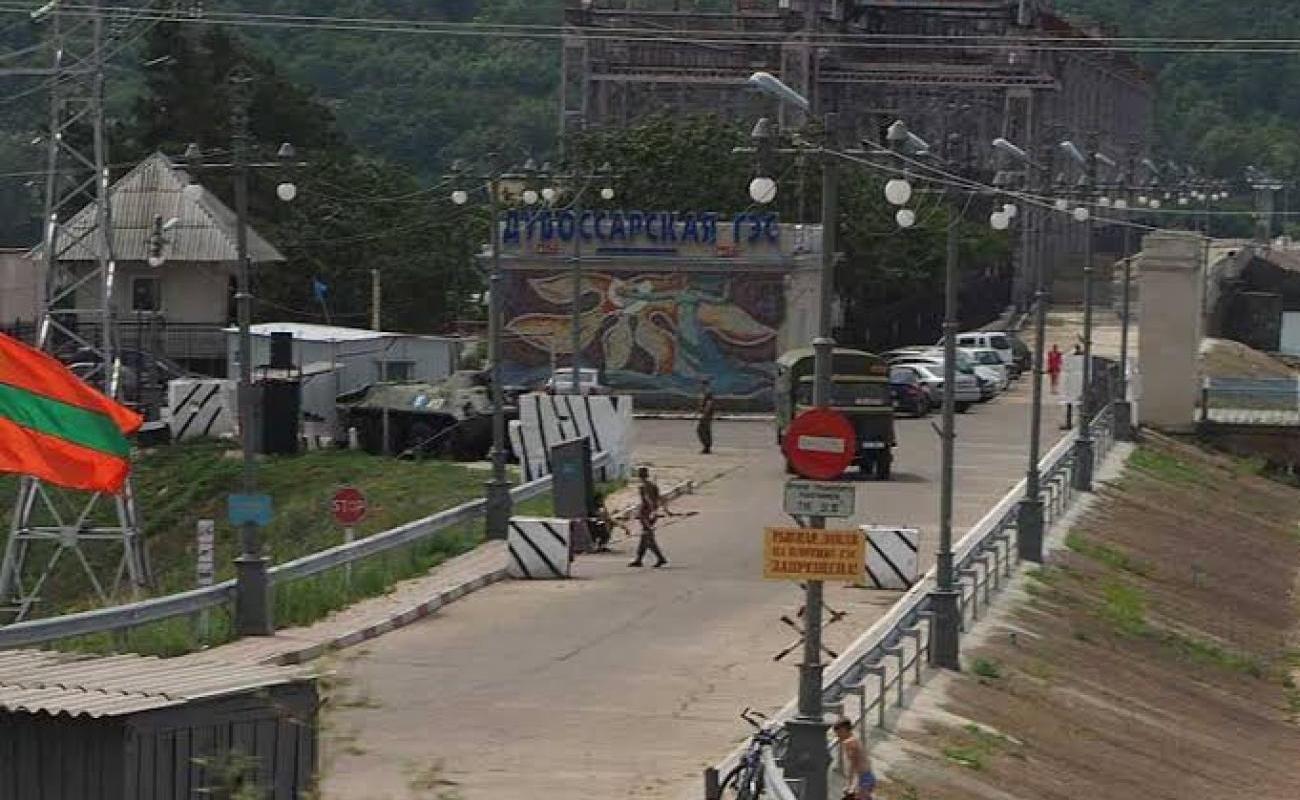
The Transnistrian conflict is a long-standing territorial dispute in Eastern Europe and has been ongoing since the early 1990s. Emerging from the collapse of the Soviet Union, this conflict has deep historical, political, and socio-economic roots, making it extremely complicated and ensuring that it has persisted. Ştiinca—The area east of the Dniester River, which is called “Transnistria” in Romanian. West of the Dniester River—i.e., in Bessarabia– resides 67% of Moldovans. 70% of Russians and 47% of Ukrainians live in the West Dniester riverside (Bessarabia). Transnistria is one of four ‘pseudo-states’ to have emerged as a consequence of carelessly drawn borders of Soviet Socialist Republics, which were the units granted independence by Moscow in the early 1990s. Transnistria has most of the features of an independent country, despite its reliance on Russian military and economic support: this country has hard and strictly applied borders that are also well technically controlled. It has its unique constitution, entirely controlled government, and its own money allocations, and all those with no citizenship in this country are deemed aliens. By giving such people passports, the pseudo-states merely guarantee they can do something, but only the journey to the other phantom ‘states’ is possible. Nearly all its citizens are also entitled to a Moldovan, Ukrainian, or Russian passport. That freedom of movement is symbolic of how what is one of the world’s longest-standing frozen conflicts has also become one of the least unpleasant. There is sometimes rhetoric that comes from people on both sides about how reasonless the other side is, and even more rare is crossfire, but the major confrontation certainly has not been a reality in the last 30 years. Russia, which is militarily supporting the peacekeeping force of 1000 troops from the 14th Army that is on the border and economically supporting the territory.
The economy has many problems, some of which are unique to the region, like the movement of the young and the smart people—those who are often the first to leave. At the same time, it is a situation that affects the rest of the country too. Russian subsidies, which pay up almost 60 percent
of the local people’s income, and remittances, which represent 20% of the émigré’s money, are crucial for this area. Agro-processing, industrial agriculture, and manufacturing for textiles are the main sources of foreign currency income. Since the area is poor in comparison to the European standard, even the Eastern European standard, the whole population is not in great need since almost all of them have adequate leisure time, minimal poverty, developed education systems, including universities, basic free healthcare, and even pensions, which are given to the community of the elderly and disabled. This paper seeks to offer a detailed examination of the Transnistrian conflict, highlighting its reasons, development stages, and the end state as it stands now.
Post De Facto Independence
The Russian influence was also enhanced through the continuing presence of Alexander Lebed, who became a member of the Transnistrian Soviet in 1993 (Refworld 2004) and was the nearest to a credible opposition figure to Smirnov in his early years. Tensions grew between him and Smirnov, whom Lebed described along with his associates as “corrupt war profiteers” (King 2000:200). Smirnov remained in power until 2011, amending the constitution in 2000 to remove the prohibition on a president standing for more than two terms (Isachenko and Schlichte 2007:86). He won the 2001 election with 82% of the votes (Roper 2003:265) and captured an almost identical amount in 2006 (Blakkisrud and Kolstø 2013:2000). In a 2006 referendum, 97.3% of those voting, on a turnout of around 80%, favored independence rather than reunification with Moldova. The then foreign minister, Valeriy Litskai, subsequently proclaimed that integration into Russia would take place within seven years (Sanchez 2013). It was eventually to be a souring of relations with Russia that led to Smirnov’s downfall and defeat by Yevgeny Shevchuk in the 2011 election. Dembinska and Kosienkowski (2013:316–317) identify four reasons for this: he had become an obstacle to discussions with Chisinau that Russia now wanted; as Moldova moved closer to the
EU and Romania, his rigidity would lessen Russian influence; there was a fear that there might be a ‘color revolution’ if he remained in office; and supporting his regime was having too high a price financially. The first two are more plausible. While it was a pro-Russian identity that Smirnov was constantly promoting, doing that was driving a greater wedge between Tiraspol and Chisinau. At the time, Russia was not supportive of either Transnistrian independence or a union with Russia. Smirnov was increasingly rigid in his position, thus reducing Russian maneuverability in the area. However, the removal of Smirnov had little input on the nation-building going on in Transnistria and did not impact on its separate development from Moldova.
Current situation
In the context of the Transnistrian conflict, the current status reflects a complex interplay of political, social, and economic dynamics. The European Union’s increased involvement in Moldova, particularly through the European Neighbourhood Policy and the EU-Moldova Action Plan, has positioned it as a key player in addressing the conflict (George Dura). Concurrently, analysis of economic integration between Moldova and the EU is crucial in shaping future policy directions and potential resolutions (Alexandru Stratulat et al.). Within this framework, civil society organizations (CSOs) in Moldova and Transnistria play a significant role in conflict transformation efforts. Understanding the domestic environment in which these CSOs operate provides valuable insights into their impact and effectiveness in addressing the conflict. As such, a comprehensive assessment of the current status of the Transnistrian conflict must consider the evolving dynamics of regional partnerships, economic integration, and the engagement of CSOs in conflict transformation initiatives.
Conclusion
In conclusion, the conflict in Transnistria is a complex and multifaceted issue that has persisted for decades due to a combination of historical, political, and economic factors. The region’s ambiguous status, rooted in its Soviet past and ethnic composition, has fueled tensions between various groups and external actors. The failure to find a lasting solution can be attributed to the lack of trust between the parties involved, as well as the absence of a strong, impartial mediator to facilitate negotiations. Moving forward, it is imperative for all stakeholders to engage in open dialogue and compromise in order to achieve a peaceful resolution. Only through addressing the underlying grievances and fostering a sense of shared identity can lasting peace be achieved in Transnistria. It is essential for the international community to continue supporting diplomatic efforts and peacebuilding initiatives in the region to prevent further escalation of the conflict